Power Cord Comparison
Power cords are among the most overlooked components of surge protectors, power strips, relocatable power taps, and uninterruptible power supplies. While marketing materials frequently emphasize surge ratings, outlet counts, and protection features, the power cord itself often provides valuable information regarding manufacturing practices, construction quality, safety certifications, and component sourcing.
The OldSurge Archive documents cord type, conductor size, manufacturer markings, approval identifiers, and related construction details whenever possible. Comparing cords across multiple products can reveal long-term trends in the power-protection industry, including changing wire gauges, common third-party cord suppliers, manufacturing locations, and evolving product designs.
All corded products presently documented by the OldSurge Archive utilize SJT 14/3 cord assemblies. The documented examples span multiple decades, manufacturers, product categories, and countries of manufacture, suggesting that 14 AWG SJT cordage was widely adopted throughout the power-protection and power-distribution industries represented within the archive. Examples documented by the OldSurge Archive include products manufactured by Tripp Lite, APC, PowerSentry, ACE, and Universal. Multiple third-party cord suppliers have been identified, including Bon-Eagle, Apollo, Hi-Pro, Chung Kwang, Baohing, I-SHENG, Kingtec, CWCO, QIAOPU, and Rhythm.
All corded products presently documented by the OldSurge Archive utilize 14 AWG SJT cord assemblies. This consistency spans multiple decades of production, numerous manufacturers, and several product categories including surge protectors, relocatable power taps, and power-distribution equipment.
Overview
Most power-protection products utilize flexible power cords identified by standardized designations such as:
- SJT
- SJTW
- SVT
These markings provide information regarding conductor count, insulation type, voltage rating, flexibility, and intended service conditions.
The majority of products currently documented by the archive utilize SJT cordage, reflecting its widespread use in consumer and office electrical products throughout the 1990s and 2000s.
Common Cord Types
| Cord Type | Meaning | Typical Use |
|---|---|---|
| SJT | Junior Hard Service Thermoplastic Cord | Surge protectors, power strips, office equipment |
| SJTW | Junior Hard Service Thermoplastic Weather-Resistant Cord | Outdoor-capable products, extension cords |
| SVT | Vacuum Cleaner Cord | Light-duty appliances and consumer products |
Documented Cord Manufacturers
Manufacturers identified through cord markings include Bon-Eagle, Apollo, Baohing, CWCO, Hi-Pro, Chung Kwang, Rhythm, QIAOPU, I-SHENG, and Kingtec.
- Bon-Eagle
- APC PRO7 (1994, 1996, 1998)
- Universal 71632 (1998)
- Universal 71637 (1998)
- PowerSentry 626 (2002)
- Radio Shack 61-2140 (Unknown)
- Apollo
- Universal 71641 (2004)
- Staples 33895-US (2011)
- Baohing
- APC PRO7 (2008)
- CWCO
- Model No. 2371, 0728, 2174 Relocatable Power Tap
- Hi-Pro
- APC PRO7 (2002)
- Chung Kwang
- APC PRO7 (2006)
- I-SHENG
- APC PRO7 (2015)
- APC PRO7 (2017)
- Kingtec
- Amazon Basics 270103-B (2026)
- CyberPower P704URC1
- QIAOPU
- Yun YY-6CS (2006)
- Rhythm
- Gemini Surge Model VG307 (1990s)
- Unidentified
- APC PRO7 (1999) - marked "N.S."
- Belkin F9H710-06 - Belkin-branded cord with no OEM identification
- S.L. Waber 952M (E135710) - Perhaps Bon-Eagle
Additional manufacturers will be added as more products are documented.
Supplier Timeline
| Manufacturer | Earliest Example | Latest Example | Documented Products |
|---|---|---|---|
| Bon-Eagle | 1994 | 2002+ | APC, Universal, PowerSentry, Radio Shack |
| Apollo | 2004 | 2011 | Universal, Staples |
| Baohing | 2008 | 2008 | APC |
| Hi-Pro | 2002 | 2002 | APC |
| Chung Kwang | 2006 | 2006 | APC |
| I-SHENG | 2015 | 2017 | APC |
| Kingtec | 2026 | 2026 | Amazon Basics, CyberPower |
| CWCO | Unknown | Unknown | Relocatable Power Tap |
| Rhythm | 1990s | 1990s | Gemini |
| QIAOPU | 2006 | 2006 | Yun |
Conductor Size and Construction
North American power cords commonly specify conductor size using the American Wire Gauge (AWG) system. In the AWG system, lower numbers indicate larger conductors. For example, 14 AWG conductors are larger and capable of carrying more current with less voltage drop than 16 AWG conductors.
Every corded product currently documented by the OldSurge Archive utilizes three-conductor 14 AWG SJT cordage. This consistency spans multiple decades of production, numerous manufacturers, several countries of manufacture, and a wide range of product types including surge protectors, relocatable power taps, and office power-distribution equipment.
Documented examples include products manufactured by APC, Tripp Lite, Universal, Belkin, PowerSentry, Staples, CyberPower, Amazon Basics, Radio Shack, Yun, Gemini, S.L. Waber, and other manufacturers. Despite substantial differences in age, construction, outlet count, intended market, and feature set, all documented examples presently utilize 14 AWG SJT construction.
The observed consistency suggests that 14 AWG SJT cord assemblies became a widely adopted standard for North American surge protectors and related power-distribution products during the period currently represented within the archive.
No examples utilizing 16 AWG, 18 AWG, or other conductor sizes have been identified among the corded products currently documented by the OldSurge Archive.
Certification File Numbers
Power cords frequently carry independent certification identifiers in addition to the approvals applied to the finished product. These markings can provide useful information regarding cord manufacturers, certification agencies, and supplier relationships across multiple product lines.
Common markings include UL (Underwriters Laboratories), CSA (Canadian Standards Association), and ETL (originally Electrical Testing Laboratories, now Intertek ETL). Although the organizations differ, each conducts product safety evaluation and certification for electrical equipment. Certification file numbers often remain associated with a particular cord manufacturer and can provide valuable clues regarding component sourcing and supplier relationships.
Examples documented by the archive include:
Archive Observations
All corded products presently documented by the OldSurge Archive utilize SJT 14/3 cord assemblies. The documented examples span multiple decades, manufacturers, product categories, and countries of manufacture, suggesting that 14 AWG SJT cordage was widely adopted throughout the power-protection and power-distribution industries represented within the archive.
Documented examples indicate that manufacturers frequently sourced cord assemblies from third-party suppliers rather than producing cords internally. Manufacturers identified through cord markings include Bon-Eagle, Apollo, Baohing, CWCO, Rhythm, I-SHENG, and Kingtec. A 2003 Belkin SurgeMaster F9H710-06 example bears BELKIN SURGEMASTER branding on the cord jacket but does not identify the underlying cord manufacturer, suggesting the use of a private-labeled cord assembly.
Bon-Eagle appears repeatedly among products documented by the archive, including APC, Universal, Radio Shack, and PowerSentry examples manufactured between the 1990s and early 2000s. All documented Bon-Eagle cord assemblies currently preserved by the archive utilize 14 AWG SJT construction. The recurring appearance of UL file number E135710 suggests widespread use of Bon-Eagle-manufactured cord assemblies across multiple brands, product families, and conductor sizes.
Apollo-manufactured cord assemblies have been documented on products manufactured in both 2004 and 2011. Documented Apollo examples include the Universal 71641 and Staples 33895-US. Although these products differ substantially in design and intended market segment, both utilize SJT cordage carrying UL file number E176194, suggesting continued use of Apollo-manufactured cord assemblies across multiple product lines.
Documented APC SurgeArrest Professional PRO7 examples reveal multiple cord suppliers over the product family's production life. Examples manufactured in 1994, 1996, and 1998 utilized Bon-Eagle-manufactured cord assemblies. A 1999 example utilizes a cord carrying UL file number E160081 and CSA file number LL86908 but does not identify the underlying manufacturer. A December 2002 example utilized a Hi-Pro-manufactured cord carrying UL file number E227088. A June 2006 example utilized a Chung Kwang-manufactured cord carrying UL file number E54024 and CSA file number LL65965. A 2008 example utilized a Baohing-manufactured cord assembly. Examples manufactured in 2015 and 2017 utilized I-SHENG-manufactured cord assemblies carrying UL file number E88265-C and CSA file number LL81924.
The APC SurgeArrest Professional PRO7 family presently documents one of the most extensive cord-supplier timelines preserved by the archive. Documented examples manufactured between 1994 and 2017 identify Bon-Eagle, Hi-Pro, Chung Kwang, Baohing, and I-SHENG as cord suppliers while the overall PRO7 enclosure and product identity remained largely unchanged. The newly documented 2015 specimen confirms APC's continued use of I-SHENG-manufactured cord assemblies prior to the archive's 2017 example and helps establish continuity within the final documented generation of PRO7 production.
The most recent examples documented by the archive include the Amazon Basics 270103-B and CyberPower P704URC1. Both utilize Kingtec (Vietnam) Technologies Co., Ltd. cord assemblies manufactured in Vietnam and marked with ETL certification identifiers rather than the UL and CSA file numbers commonly observed on many older products. Despite substantial differences in product design and feature sets, both examples utilize 14 AWG SJT cord construction.
Additional documented examples may reveal broader industry trends involving conductor size, supplier relationships, certification practices, manufacturing locations, and component standardization.
Documented Cord Markings
The following images document power-cord manufacturer markings, certification identifiers, conductor sizes, and related construction details observed on products preserved by the OldSurge Archive.
Bon-Eagle
-
 Bon-Eagle SJT 14/3 cord marking from Universal 71637.
-
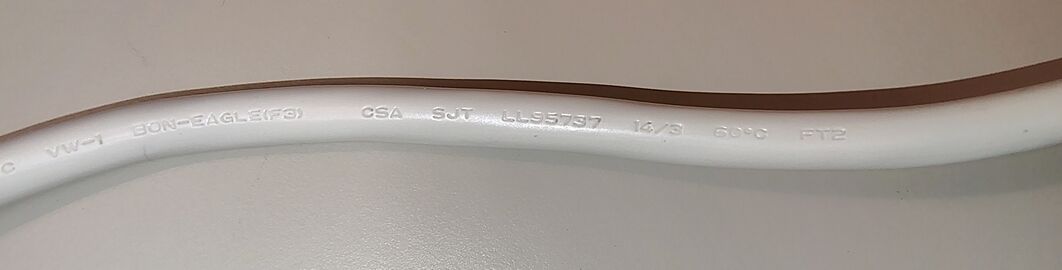 UL and CSA markings from Universal 71637 cord assembly.
-
 Bon-Eagle SJT 14/3 cord marking from APC PRO7 (1996).
-
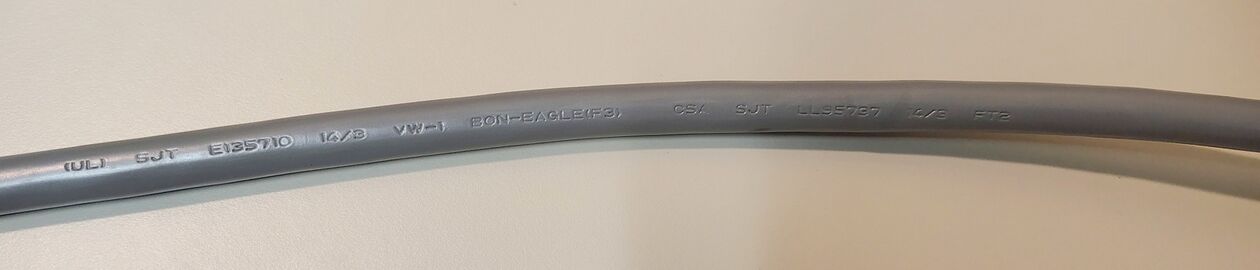 Bon-Eagle SJT 14/3 cord marking from PowerSentry 626.
-
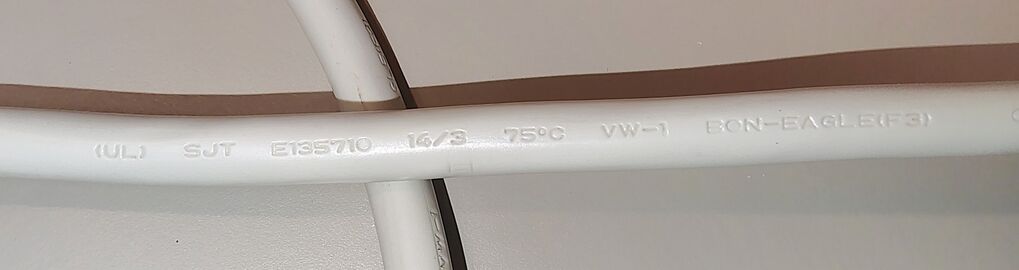 Bon-Eagle SJT 14/3 cord marking from Universal 71632.
-
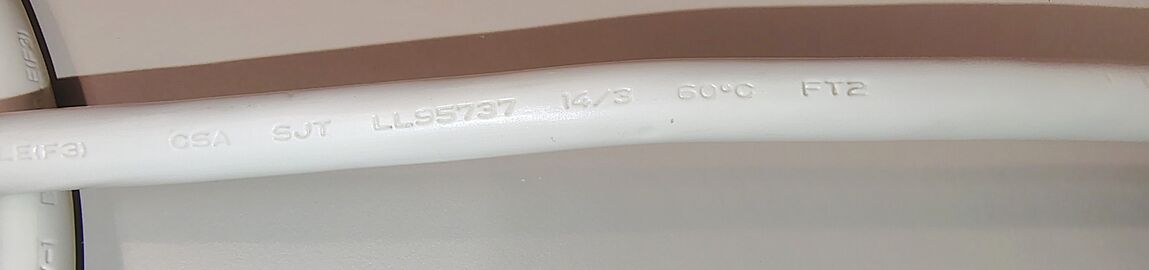 CSA LL95737 certification marking and FT2 rating from Universal 71632.
-
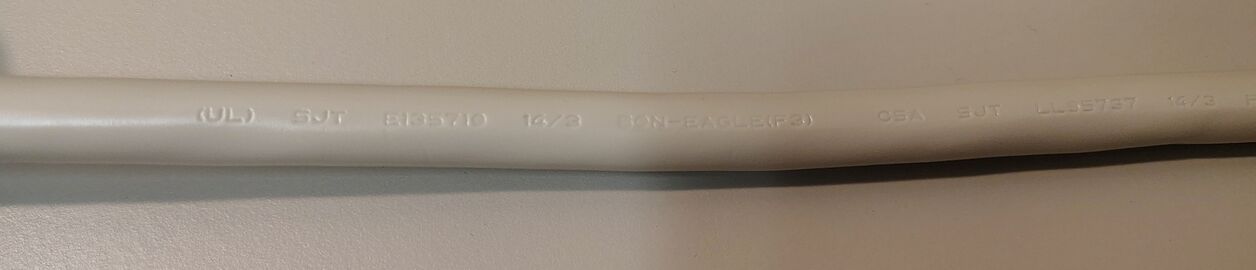 Bon-Eagle SJT 14/3 cord marking from APC PRO7 (1998).
-
 UL file number E135710 and CSA file number LL55737 from APC PRO7 (1998).
-
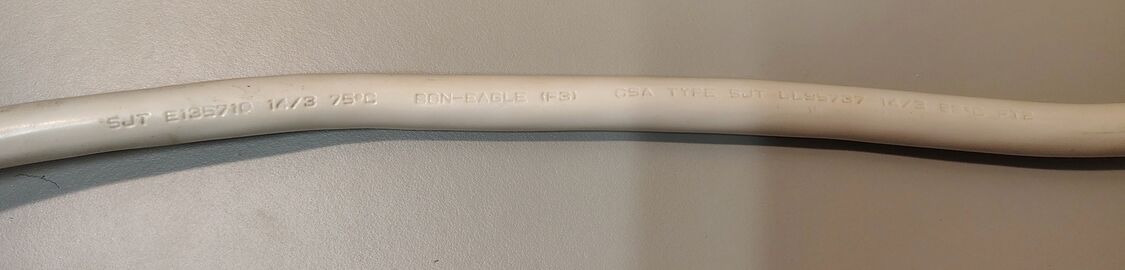 Bon-Eagle SJT 14/3 cord marking from Radio Shack 61-2140 Appliance Surge Protector.


Apollo
-
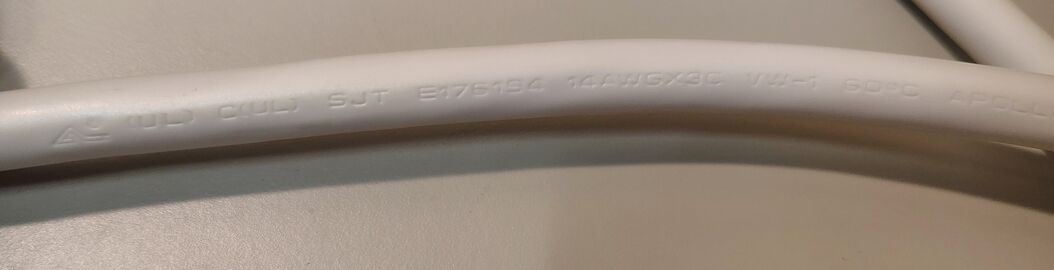 Apollo SJT 14/3 cord marking from Universal 71641.
-
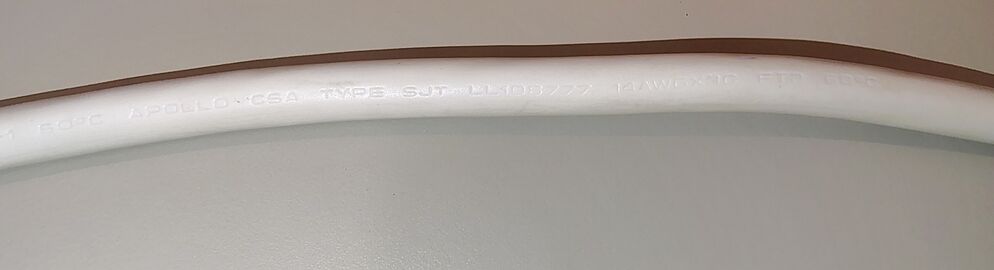 Apollo manufacturer marking and CSA file number LL109777 from Universal 71641.
-
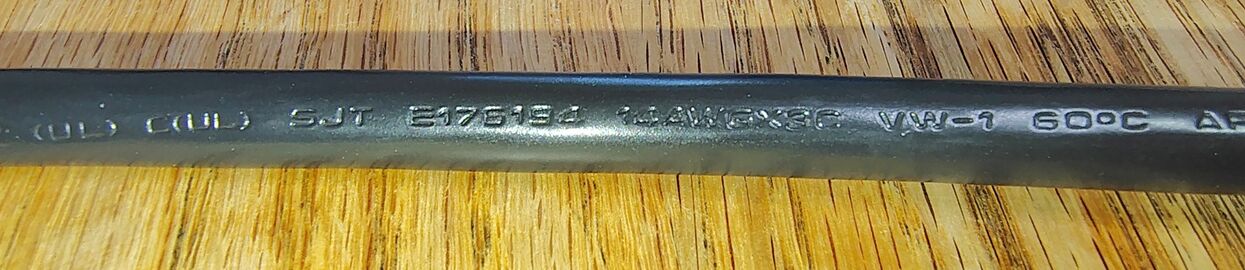 Apollo SJT 14/3 cord marking from Staples 33895-US.
-
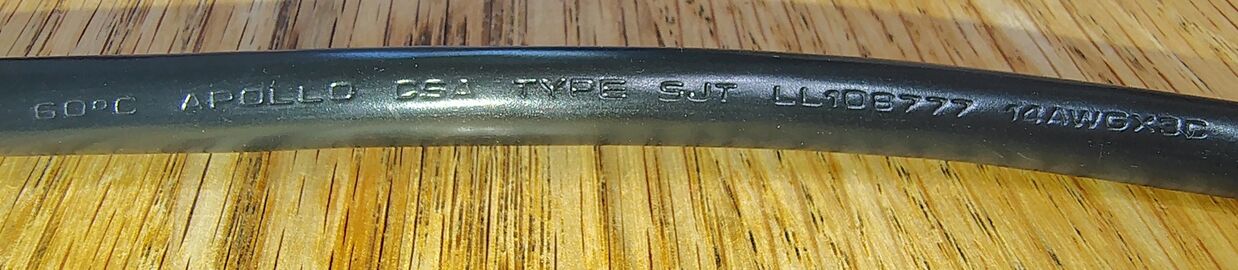 UL E176194 cord marking and electrical ratings from Staples 33895-US.
-
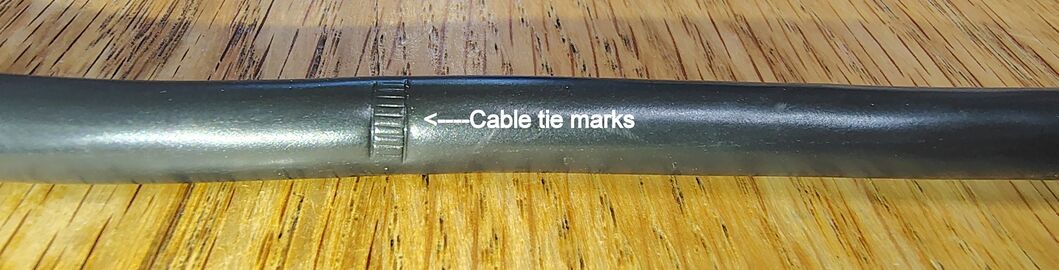 Apollo manufacturer marking and CSA file number LL196777.


Baohing
-
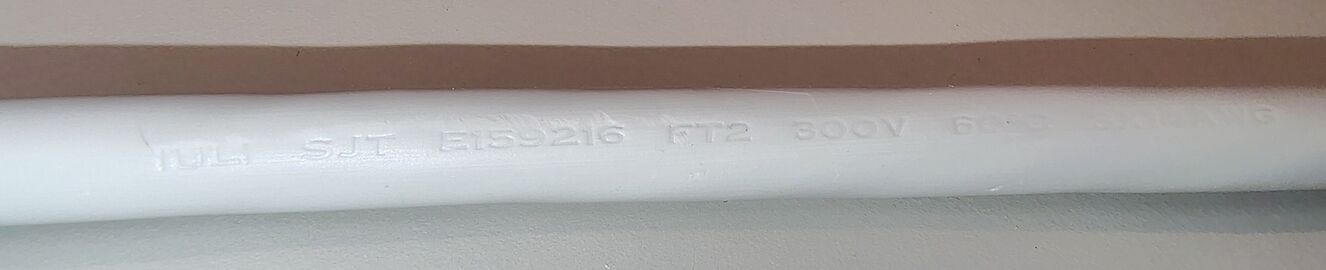 Baohing SJT 14/3 cord marking from APC PRO7 (2008).
-
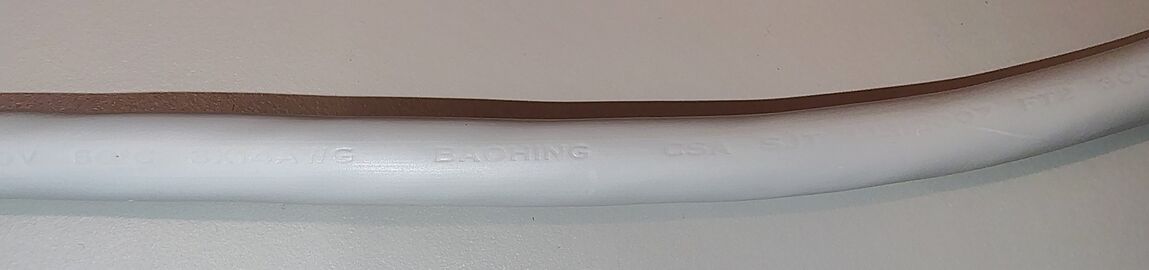 Baohing manufacturer marking from APC PRO7 (2008).
-
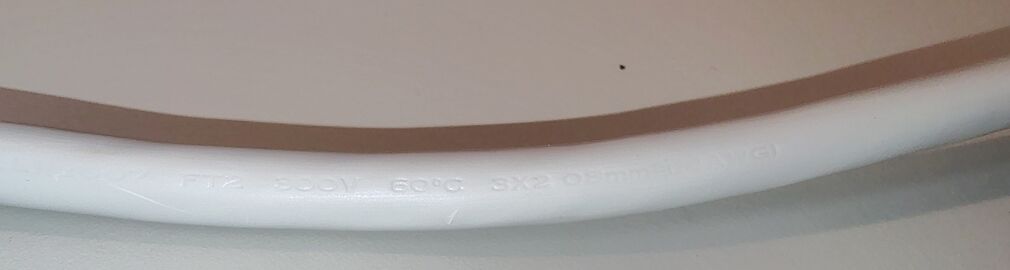 Additional cord specifications from APC PRO7 (2008).


CWCO
-
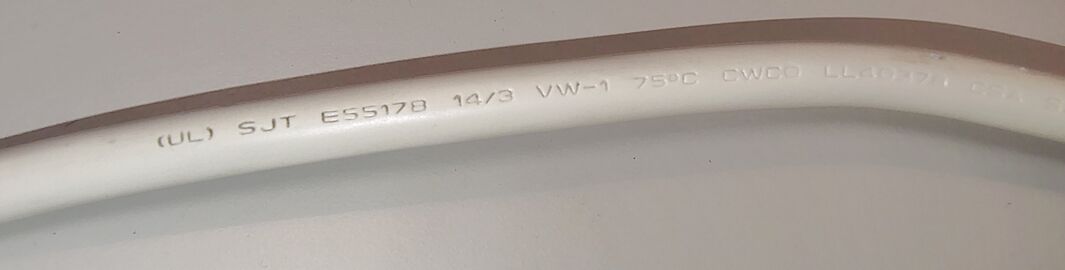 CWCO SJT 14/3 cord marking with UL file E55178 and VW-1 rating.
-
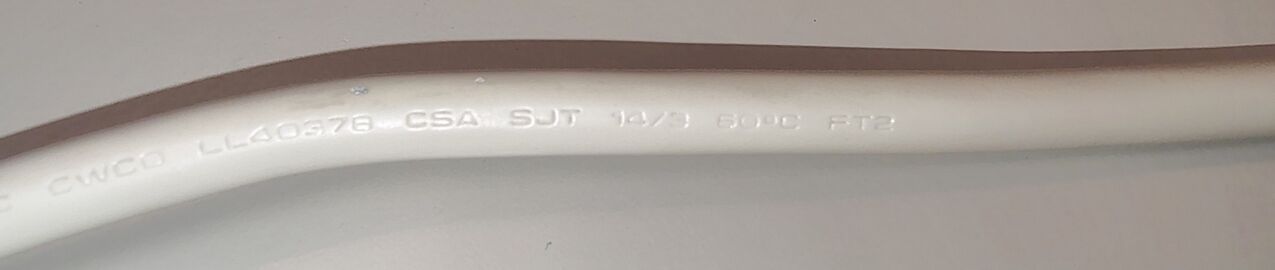 CSA LL40876 certification marking and FT2 rating.


Hi-Pro
-
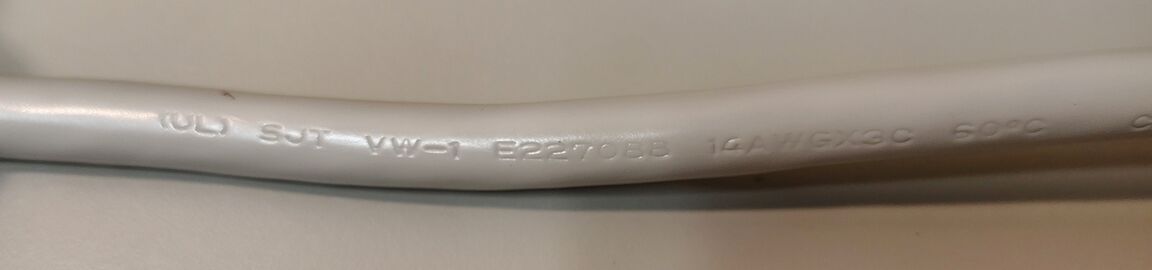 Hi-Pro manufacturer marking and FT2 rating from APC PRO7 (2002).
-
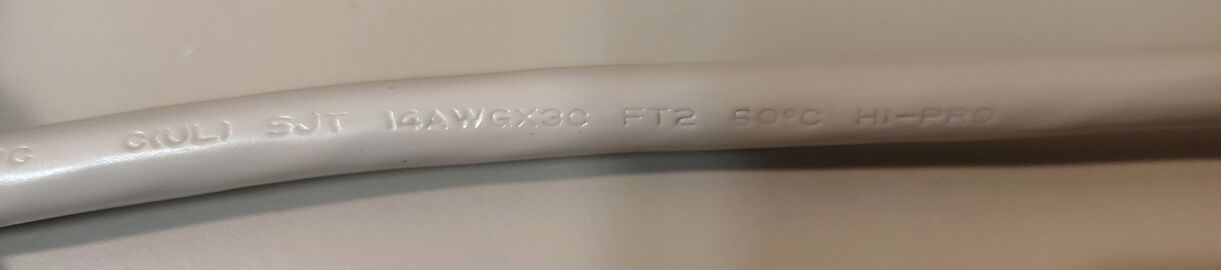 UL file number E227088, VW-1 rating, and 14/3 specifications.


Chung Kwang
-
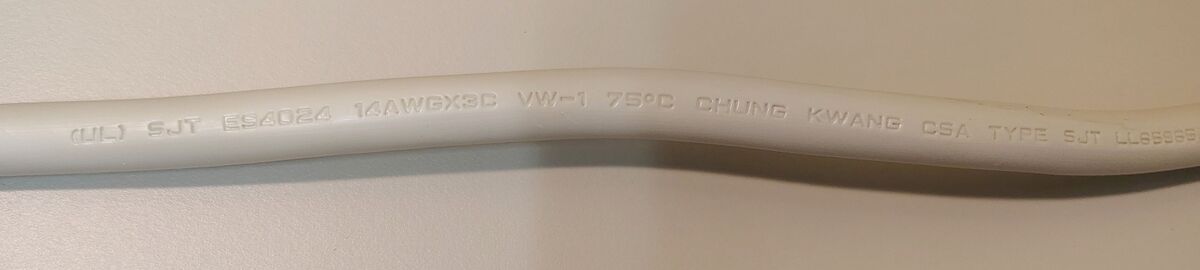 Chung Kwang SJT 14/3 cord marking from APC PRO7 (2006).
-
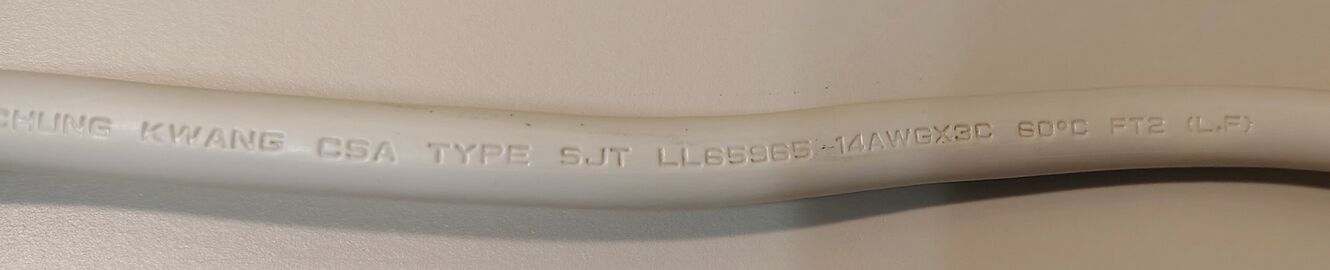 CSA file number LL65965, FT2 flame rating, and conductor specifications from APC PRO7 (2006).


I-SHENG
-
 I-SHENG SJT 14/3 cord assembly from APC PRO7 (2017).
-
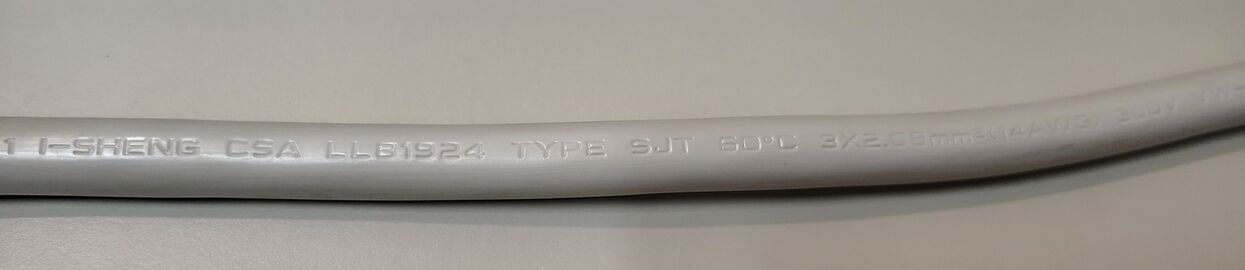 CSA file number LL81924 and I-SHENG manufacturer markings.
-
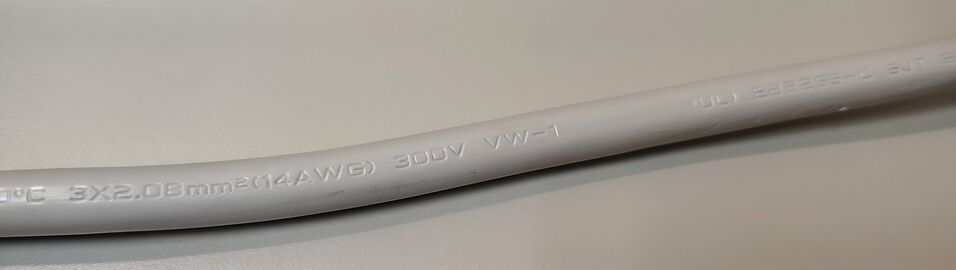 UL file number E88265-C, VW-1 flame rating, and conductor specifications.
-
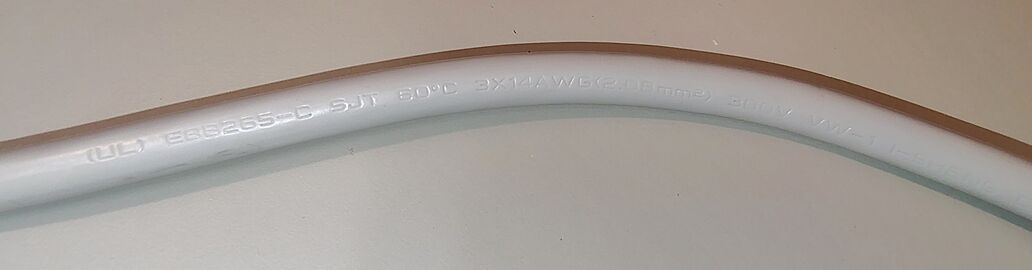 I-SHENG SJT 14/3 cord assembly from APC PRO7 (2015).
-
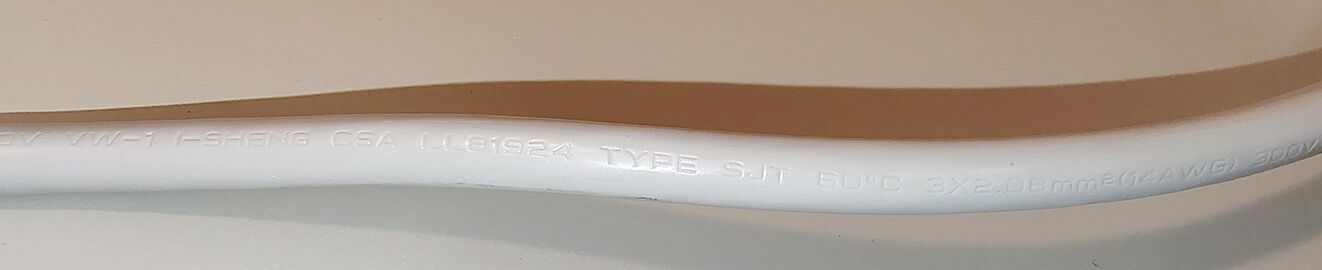 CSA file number LL81924 and I-SHENG manufacturer markings.
-
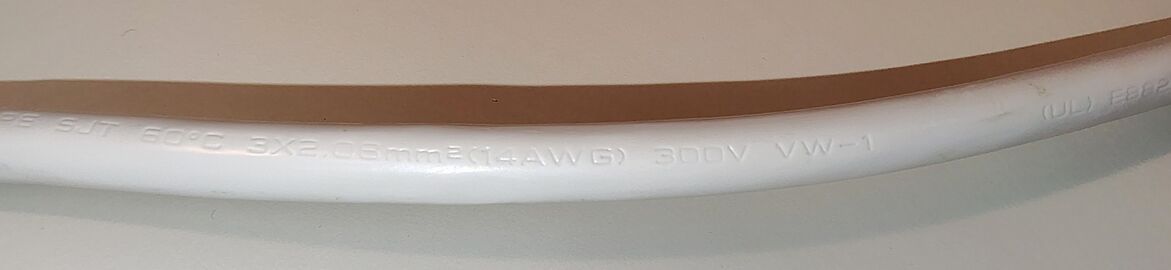 UL file number E88265-C, VW-1 flame rating, and conductor specifications.


Kingtec
-
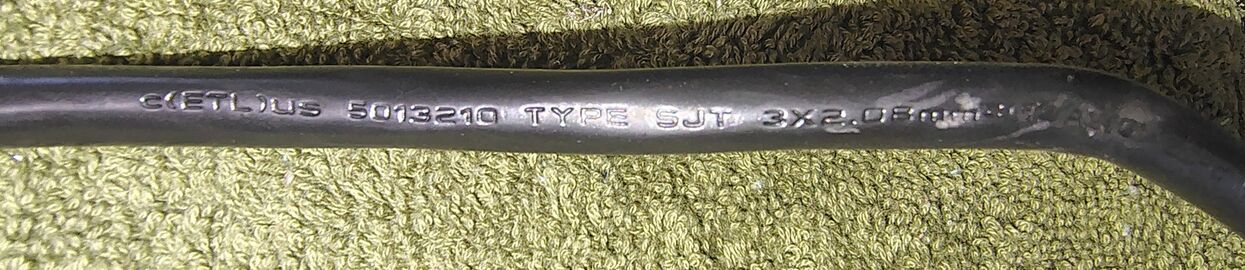 Kingtec SJT 14/3 cord marking from Amazon Basics 270103-B.
-
 Kingtec (Vietnam) Technologies Co., Ltd. manufacturer marking.
-
 ETLus certification marking and conductor specifications.
-
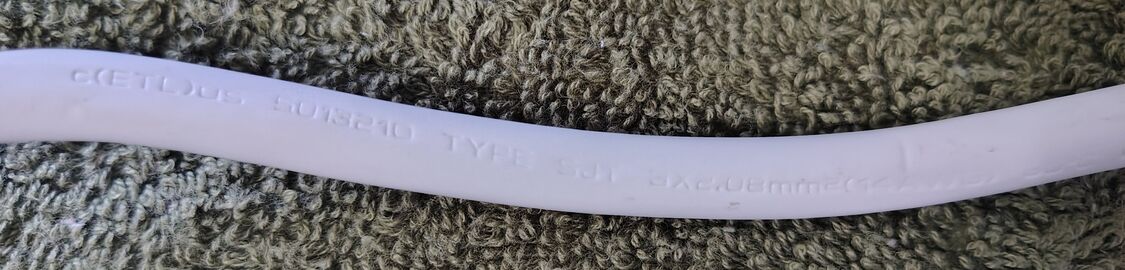 Kingtec SJT 14/3 cord marking from CyberPower P704URC1.
-
 Kingtec (Vietnam) Technologies Co., Ltd. manufacturer marking.
-
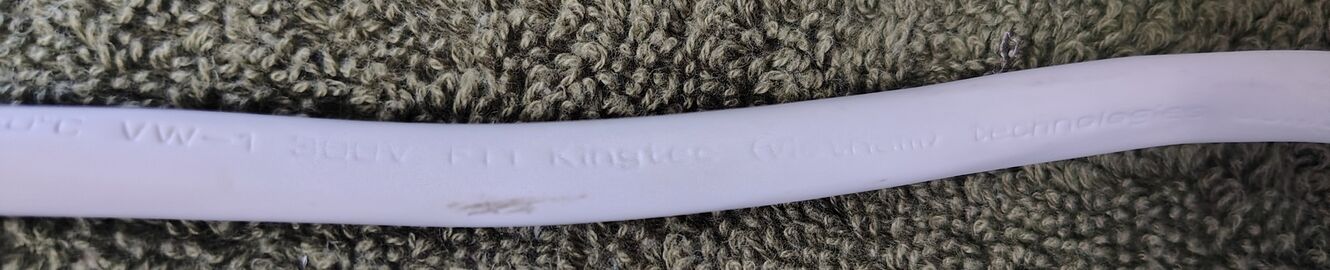 ETL certification number HU18210 and conductor specifications.


QIAOPU
-
 QIAOPU SJT 14/3 cord marking from Yun YY-6CS.
-
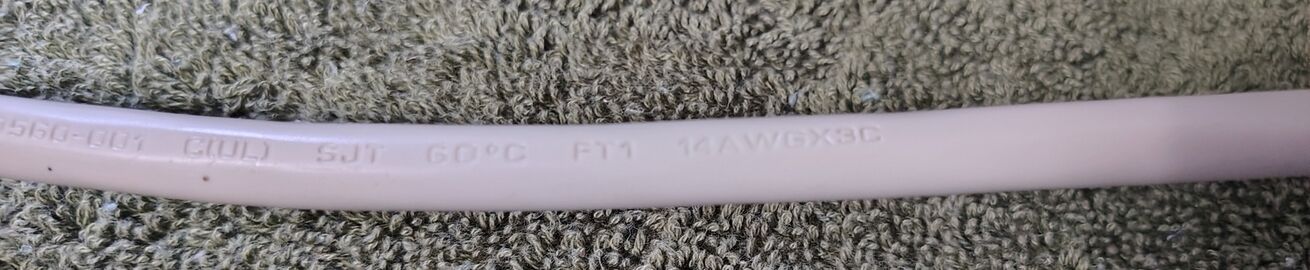 UL file number E247978, VW-1 rating, and conductor specifications.


Rhythm
-
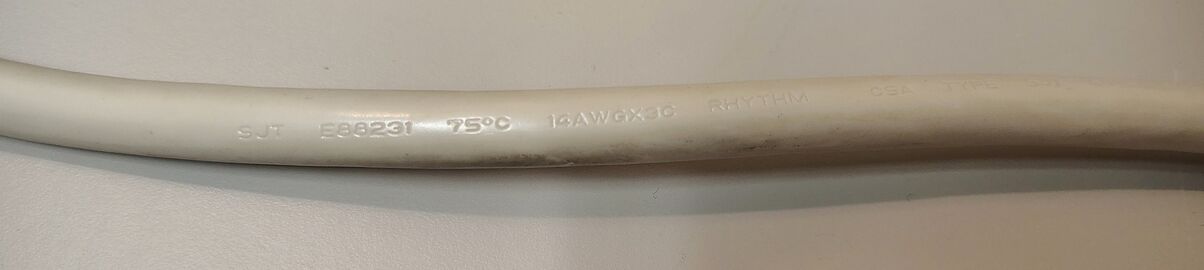 Rhythm SJT 14/3 cord marking from Gemini Surge Model VG307.
-
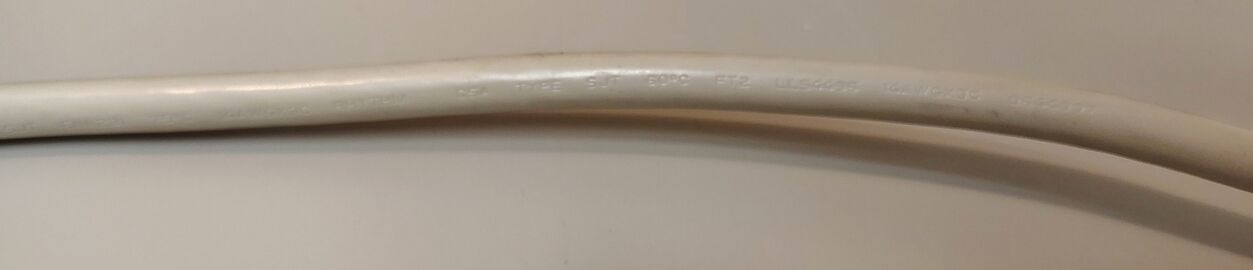 UL E88231 and CSA LL54008 certification markings.


Unidentified or Unconfirmed
-
 Belkin SurgeMaster branded SJT 14/3 cord with no visible OEM manufacturer marking.
-
 UL E177638, SJT, VW-1, FT2, and 14 AWG markings.
-
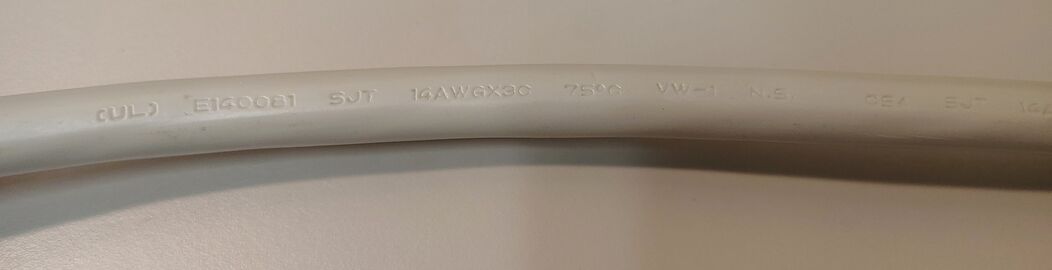 UL file number E160081, VW-1 rating, and "N.S." marking from APC PRO7 (1999).
-
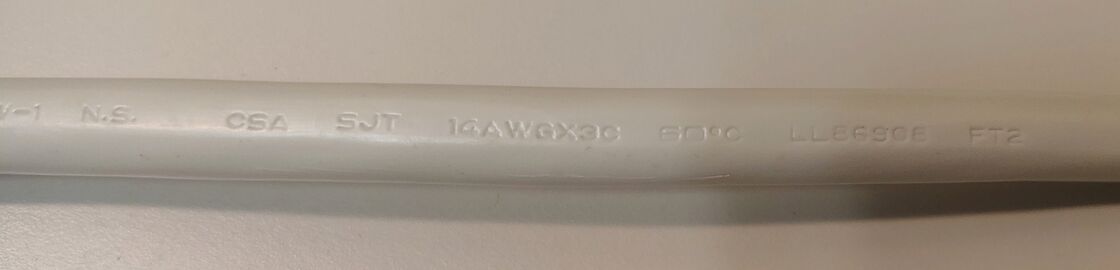 CSA file number LL86908, FT2 rating, and conductor specifications from APC PRO7 (1999).
-
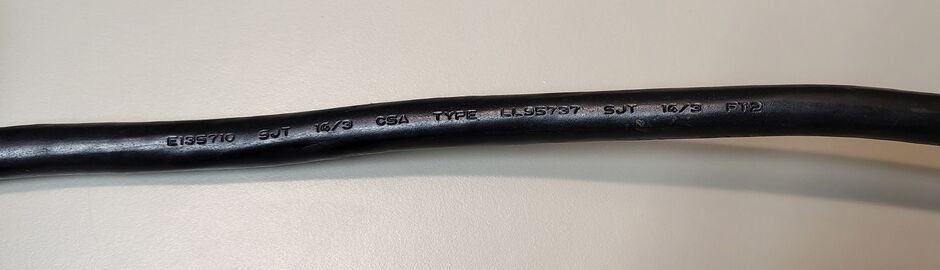 SJT 14/3 cord marking from S.L. Waber 952M relocatable power tap. Certification identifiers correspond to examples marked Bon-Eagle elsewhere in the archive, but no manufacturer marking is present.


Historical Notes
Power cords are often among the most durable and standardized components incorporated into power-protection products. Because cord markings frequently survive long after packaging and documentation have been discarded, they can provide important clues regarding manufacturing date, supplier relationships, certification history, and product lineage.
Cord manufacturers rarely receive attention in contemporary marketing materials, making surviving markings a useful source of information for reconstructing historical supply chains.