APC SurgeArrest Professional PRO7 (2Z0250P17876)
APC SurgeArrest Professional PRO7 (2Z0250P17876)

Overview
The APC SurgeArrest Professional PRO7 is a seven-outlet surge protector manufactured by APC.
The documented example bears serial number 2Z0250P17876 and was manufactured during December 2002.
This specimen falls within the production period covered by the 2013 APC SurgeArrest recall and represents one of the latest examples documented within the covered 1993-2002 production range.
The documented example provides an informative comparison with the archive's 1998, 2008, and 2017 APC PRO7 specimens, illustrating the evolution of the product line over nearly two decades.
Inspection identified a surge-suppression circuit board bearing a ©2002 American Power Conversion copyright marking, while internal date-code wheels independently confirm December 2002 manufacture.
Documented Example
- OldSurge ID: OS-0017
- Model: PRO7
- Serial Number: 2Z0250P17876
- Manufacturing Date: December 2002
Specifications
- Manufacturer: APC
- Product Family: SurgeArrest Professional
- Model: PRO7
- Country of Origin: China
- Device Type: Surge Protector
- Outlets: 7 grounded outlets
- Serial Number: 2Z0250P17876
- Length:
- Approximately 10.25 in (26.0 cm) along the long edge
- Approximately 9.0 in (22.9 cm) along the curved edge
- Width:
- Approximately 4.25 in (10.8 cm)
- Height:
- Approximately 1.75 in (4.4 cm)
- Electrical Rating: 120 VAC, 15 A, 60 Hz
- UL File Number: E157293
- UL 1363 Power Tap
- UL 1449 TVSS
- TVSS Ratings:
- Line-to-Neutral (L-N): 330 V
- Line-to-Ground (L-G): 330 V
- Neutral-to-Ground (N-G): 330 V
- Power Cord Type: SJT
- Conductors: 3 × 14 AWG
- Flame Rating: VW-1 / FT2
- Temperature Rating: 60°C
- Cord UL File Number: E227088
- Plug UL File Number: E227089
- Cord Manufacturer: Hi-Pro
- Power Cord Length: Approximately 6 ft (1.8 m)
Weight
The documented example weighs approximately 1 lb 11.3 oz (774 g).
The specimen is lighter than the archive's 1998 APC PRO7 example but heavier than the documented 2008 and 2017 examples.
The observed weight progression between documented PRO7 specimens suggests that APC gradually revised portions of the design over time while retaining a largely unchanged external appearance.

Physical Description
The APC SurgeArrest Professional PRO7 utilizes a rounded upper housing and a flat outlet section containing seven grounded outlets.
The control section incorporates a green Protection Working indicator, red Site Wiring Fault indicator, and a combined rocker-switch and circuit-breaker assembly.
The documented example exhibits moderate enclosure yellowing consistent with age and long-term service. A lighter rectangular area on the upper housing indicates the previous presence of an adhesive label or sticker. The protected area retained noticeably more of its original color than the surrounding enclosure surfaces.
Subtle discoloration patterns suggest that a grounded device may have remained connected to the outlet nearest the end opposite the power-cord entry for an extended period. The pattern is considerably less pronounced than that observed on the heavily yellowed 2008 specimen documented elsewhere in the archive.
The overall enclosure architecture closely matches the 1998, 2002, 2008, and 2017 PRO7 examples documented by the archive, demonstrating APC's long-term use of a consistent mechanical design.
The underside incorporates two keyhole-style mounting slots supporting either horizontal or vertical mounting orientations.
The documented example utilizes a six-foot SJT-rated power cord with 14 AWG conductors manufactured by Hi-Pro and terminated with a right-angle grounded attachment plug.
Unlike the other APC PRO7 examples currently documented by the OldSurge Archive, the attachment plug incorporates molded APC branding on the rear surface of the plug body. The significance of this variation is presently unknown but may reflect a supplier, manufacturing, or production-generation change within the PRO7 product line.
When installed in receptacles configured with the grounding contact in the upward position, the right-angle plug causes the cord to exit upward before bending downward, making the arrangement somewhat less compact than many modern low-profile plug designs.
Product Gallery
-
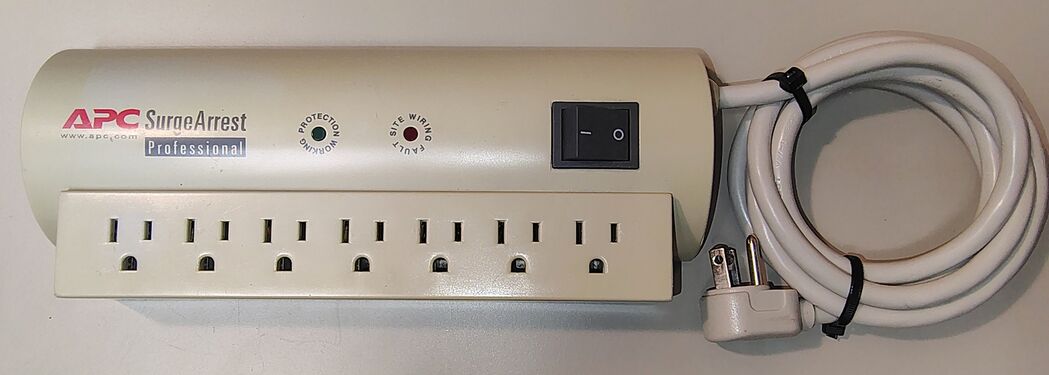 Overall view of the documented PRO7 example.
 -
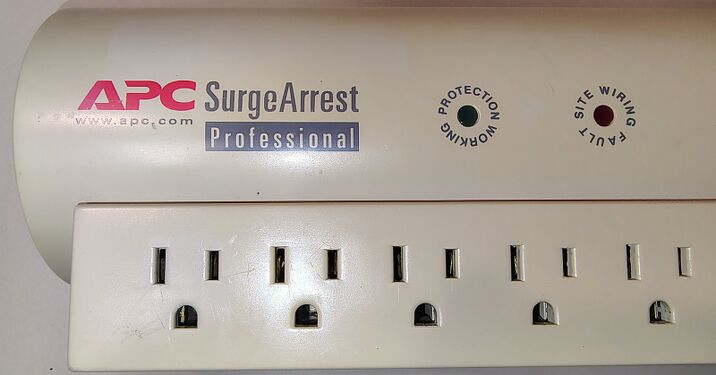 APC branding and status indicators.
 -
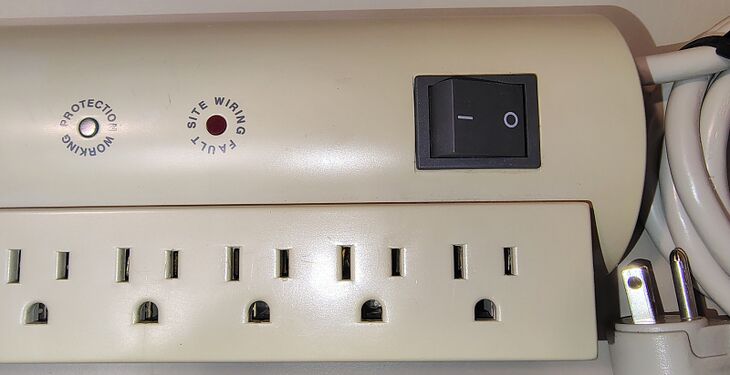 Power switch, status indicators, and cord-entry section.
 -
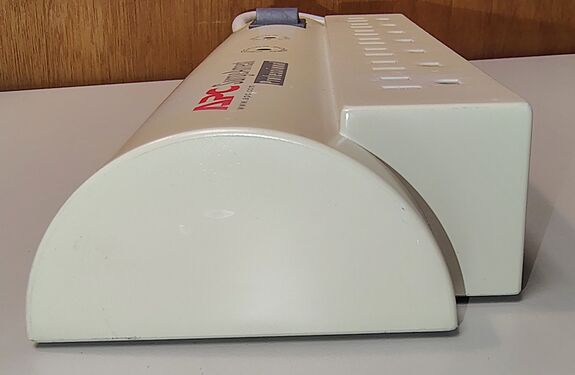 Rounded outlet-end profile of the APC SurgeArrest Professional PRO7.
 -
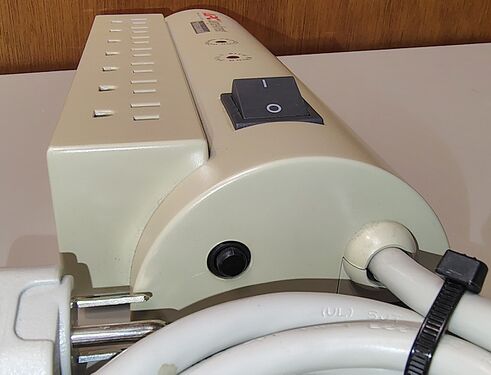 Cord-entry end showing the rocker switch, resettable circuit breaker, and attached power cord.
 -
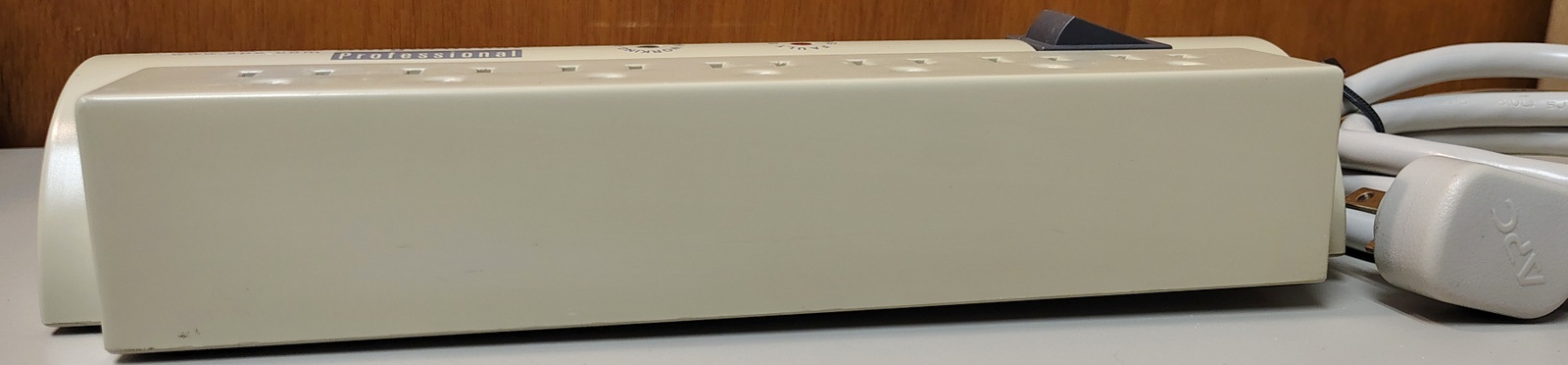 Flat-side profile view of the APC SurgeArrest Professional PRO7.
 -
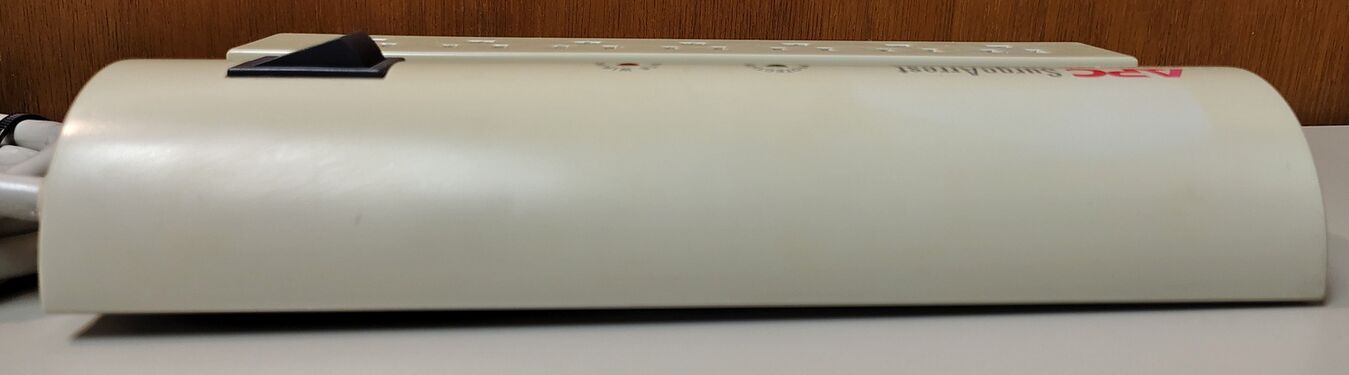 Rounded-side profile view of the APC SurgeArrest Professional PRO7.
 -
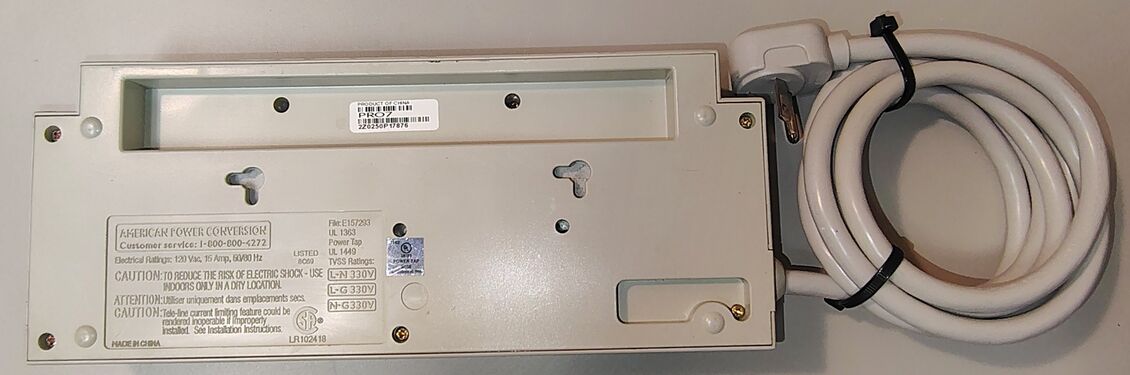 Underside view showing labels, mounting slots, serial-number label, and attached power cord.
 -
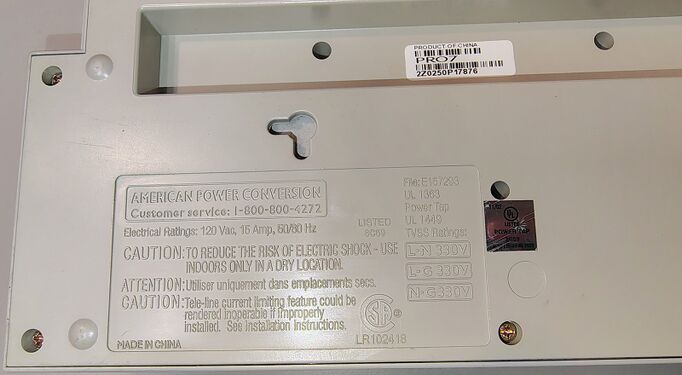 Product information label showing electrical ratings, TVSS ratings, and certification markings.
 -
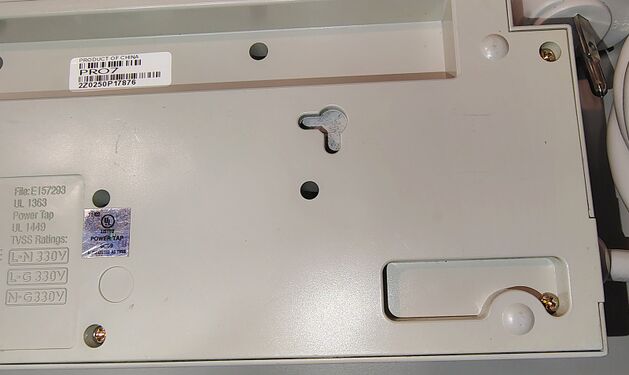 Cord-entry end underside detail showing mounting provisions and attached power cord.
 -
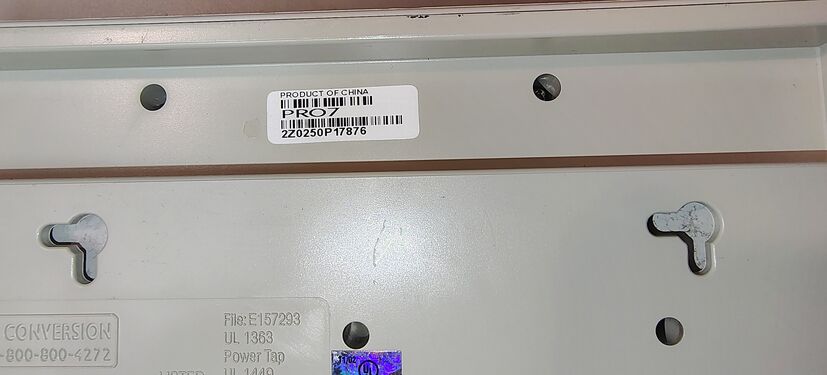 Serial-number label identifying the documented PRO7 specimen.
 -
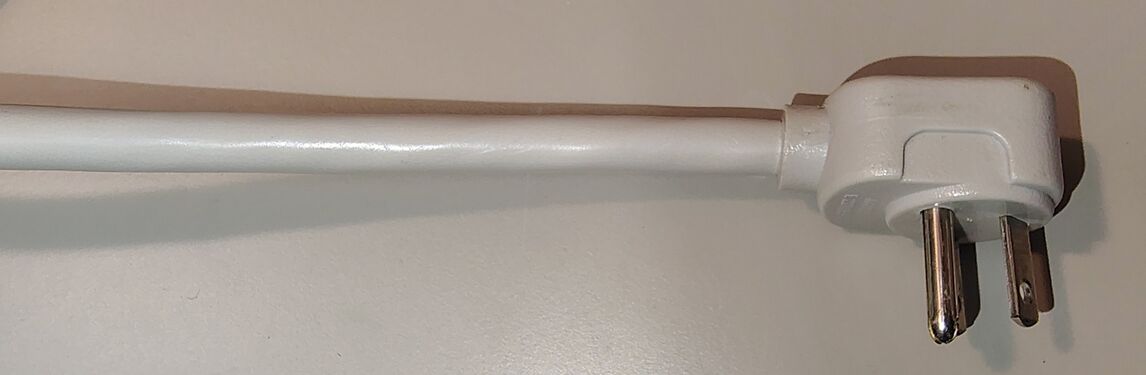 APC-branded right-angle attachment plug and attached power cord.
 -
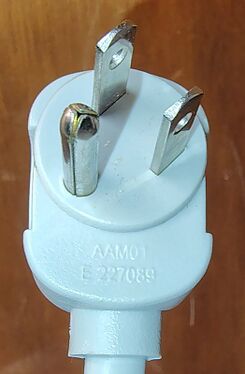 Right-angle attachment plug showing molded approval markings and certification information.
 -
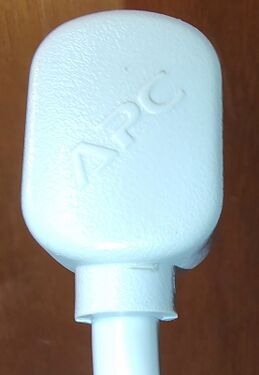 Rear of the attachment plug showing molded APC branding.
 -
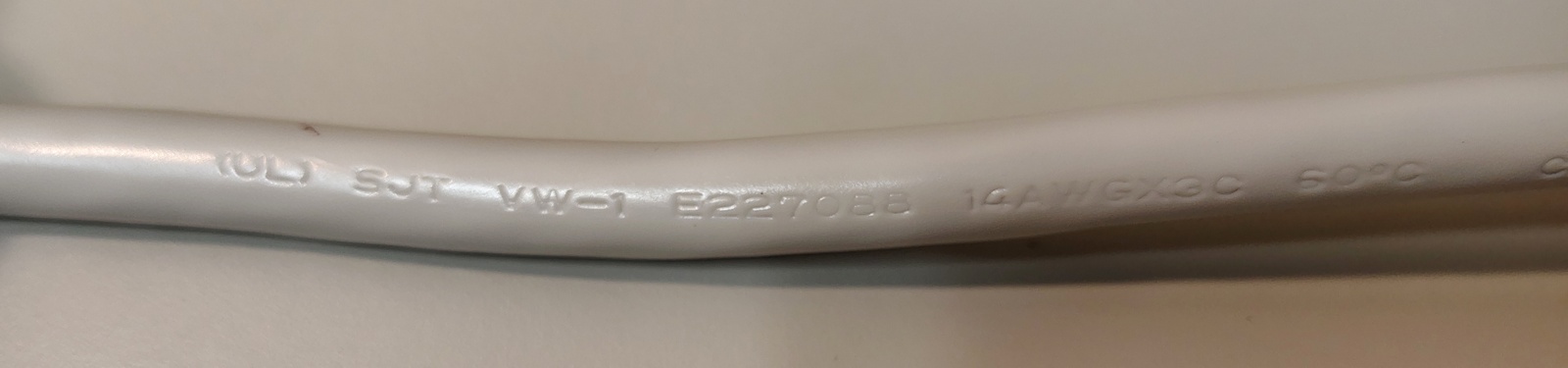 Power-cord markings showing SJT construction, conductor size, and approval information.
 -
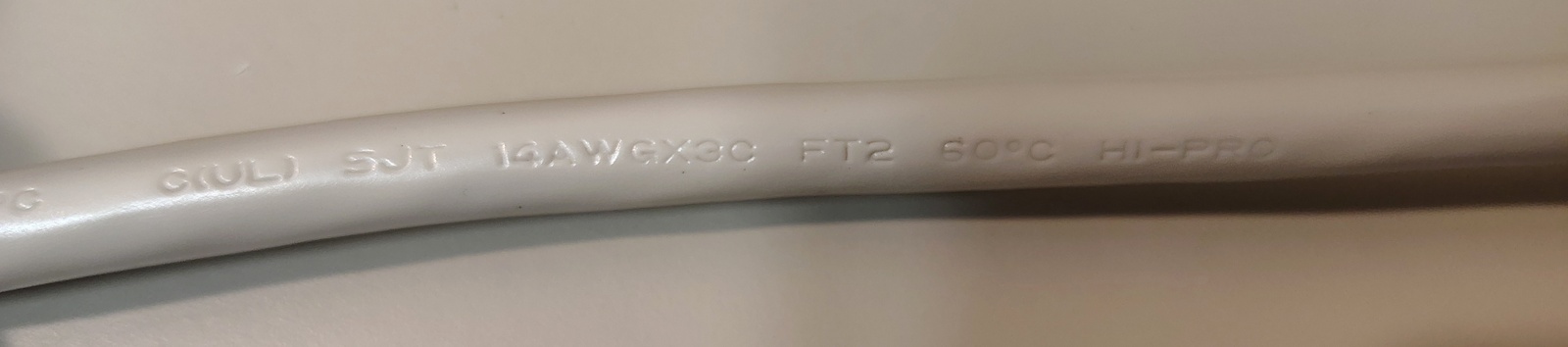 Additional power-cord markings showing conductor size, flame rating, temperature rating, and manufacturer identification.
 -
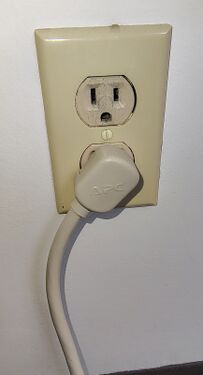 APC-branded right-angle attachment plug installed in a wall receptacle.


Testing
The documented example was tested for basic electrical operation and wiring integrity.
The rocker switch successfully controlled power to all outlets.
When connected to a properly wired receptacle and switched ON, the green Protection Working indicator illuminated normally, indicating the continued presence of functional surge-protection circuitry.
The red Site Wiring Fault indicator remained unlit during testing.
When switched OFF, both indicators extinguished and power was removed from the outlet bank.
Testing with a receptacle tester confirmed correct hot, neutral, and ground wiring. No open ground, open neutral, reversed polarity, or other wiring faults were detected.
The documented example passed basic outlet-wiring verification and appears fully operational following functional testing.
-
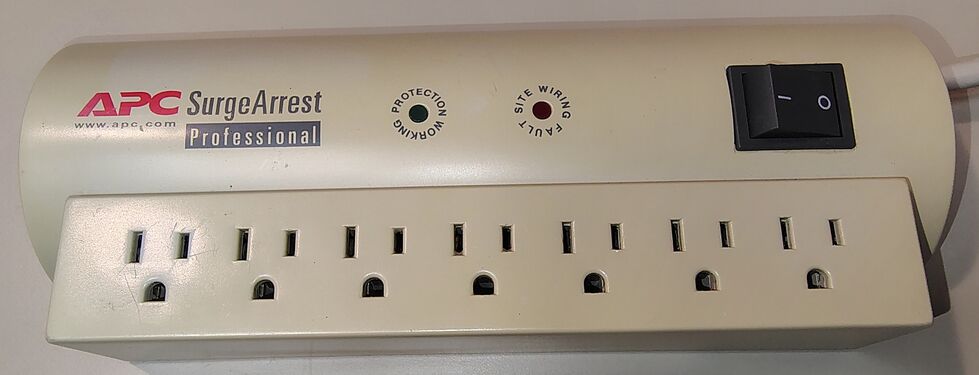 PRO7 connected to power with the rocker switch in the OFF position and indicator lights extinguished.
 -
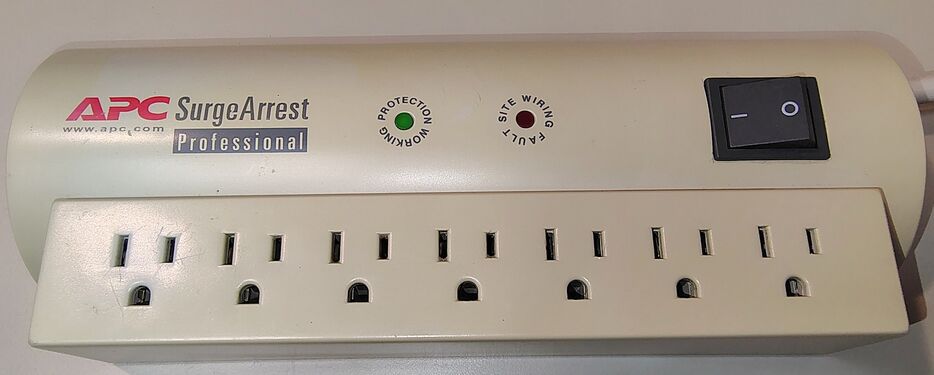 Protection Working indicator illuminated with the PRO7 connected to power and switched ON.
 -
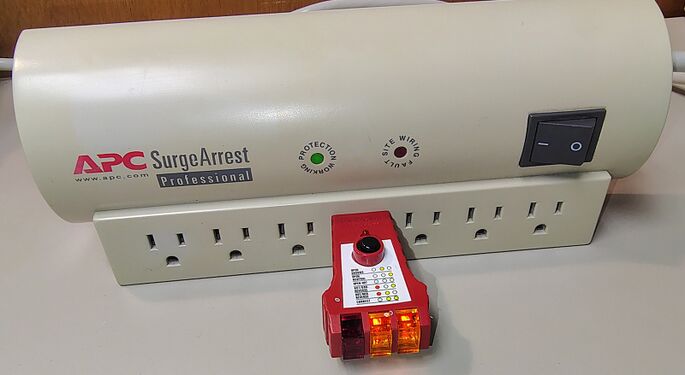 Outlet tester indicating correct wiring and grounding.


Condition Upon Acquisition
The documented example was acquired as part of a lot containing APC SurgeArrest Professional surge protectors obtained by the OldSurge Archive.
The enclosure exhibited moderate yellowing, accumulated dirt, adhesive residue, and cosmetic wear consistent with long-term use and storage.
A partially removed adhesive label remained attached to the upper housing at the time of acquisition. The area protected by the label retained noticeably less discoloration than the surrounding enclosure surfaces.
Subtle outlet discoloration patterns suggest extended use of the outlet nearest the end opposite the power-cord entry.
The unit was cleaned prior to detailed documentation and photography.

Recall Information
Based upon its serial number and date of manufacture, this specimen falls within the production period covered by the 2013 APC SurgeArrest recall.
For additional information, see:
Teardown
The APC SurgeArrest Professional PRO7 is assembled using multiple screws and can normally be opened non-destructively.
Following removal of the enclosure screws, the housing separated into upper and lower sections containing the outlet-contact assemblies, bus bars, power-cord wiring, switch assembly, and surge-suppression circuit board.
The upper housing contains molded outlet barriers, mounting-slot structures, reinforcing ribs, and dedicated supports for the outlet-contact assemblies and control-section components.
The lower housing contains the outlet-contact assemblies, brass bus bars, rocker switch, power-cord wiring, circuit-breaker assembly, and surge-suppression circuit board.
The overall internal architecture closely resembles the APC PRO7 specimen manufactured in September 2008 and differs noticeably from the earlier 1998 example documented by the archive.
Internal date-code wheels visible within the enclosure indicate manufacture during December 2002, consistent with the serial-number-derived manufacturing date. The date-code wheels provide independent confirmation that this specimen was manufactured near the end of the production period covered by the APC SurgeArrest recall.
Inspection identified a surge-suppression circuit board bearing the marking:
AMERICAN POWER CONVERSION
© 2002
The suppression assembly incorporates multiple metal-oxide varistors (MOVs), EMI/RFI filtering components, Protection Working indicator circuitry, Site Wiring Fault monitoring circuitry, and APC's surge-suppression architecture used throughout the documented ©2002 generation.
The overall circuit-board layout closely resembles the APC PRO7 specimen manufactured in September 2008, providing evidence that APC retained this board generation for at least several years of production.
The circuit board is connected to the outlet-contact assemblies through substantial soldered connections and copper traces. The switch and circuit-breaker assembly utilizes crimped wiring terminations and a dedicated mechanical overload-protection mechanism located at the cord-entry end of the enclosure.
Inspection revealed no signs of overheating, arcing, melted insulation, damaged components, repair activity, or catastrophic electrical failure. The interior of the documented example remained notably clean and exhibited only minor dust accumulation consistent with normal age and use.
-
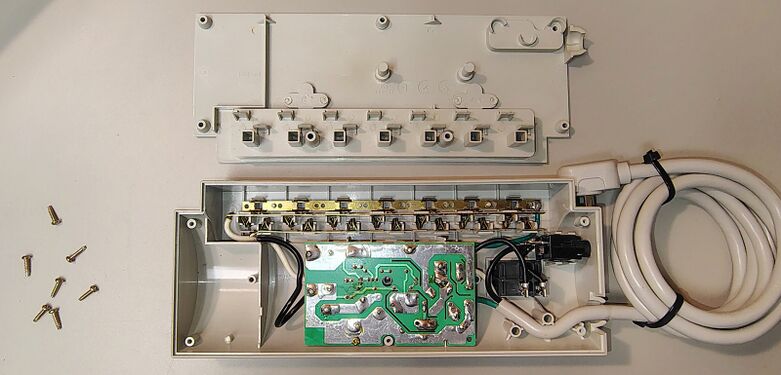 PRO7 opened following removal of the enclosure screws.
 -
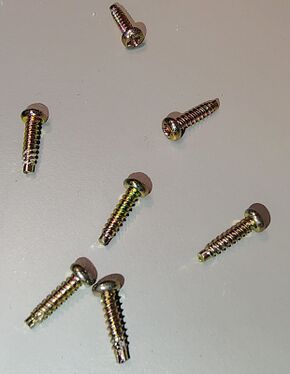 Enclosure screws removed during disassembly.
 -
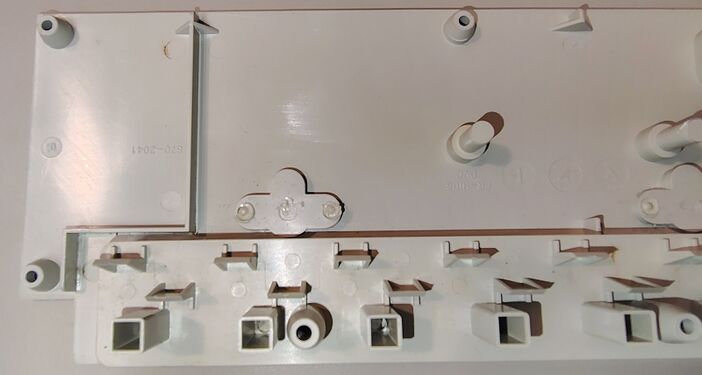 Upper housing interior showing outlet supports, barriers, and structural details.
 -
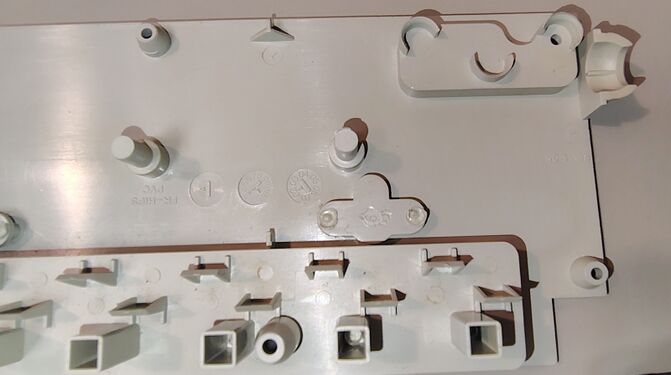 Upper housing interior showing cord-retention features, mounting structures, and outlet barriers.
 -
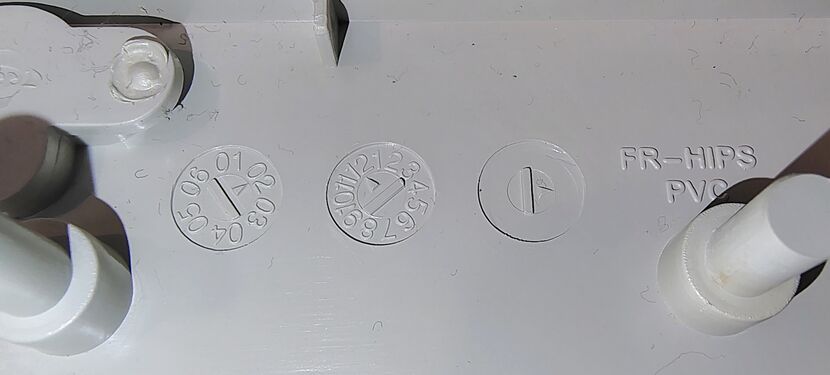 Internal date-code wheels indicating December 2002 manufacture.
 -
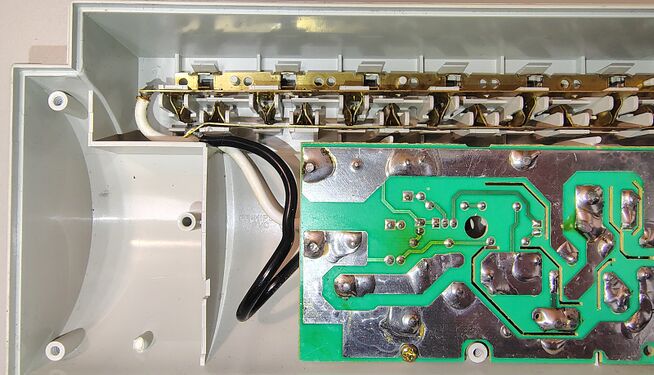 Outlet-contact assemblies, bus bars, and underside of the suppression circuit board.
 -
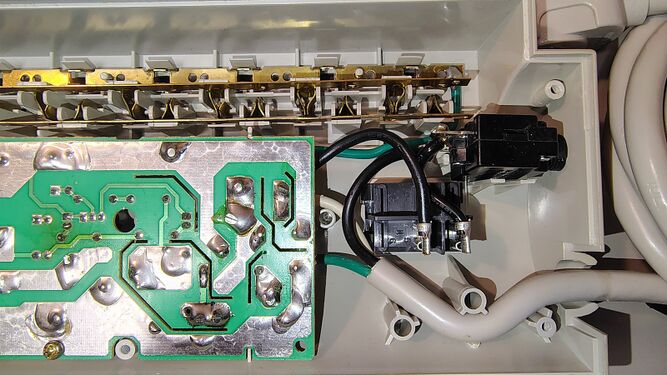 Switch-end wiring, circuit-breaker assembly, and underside of the suppression circuit board.
 -
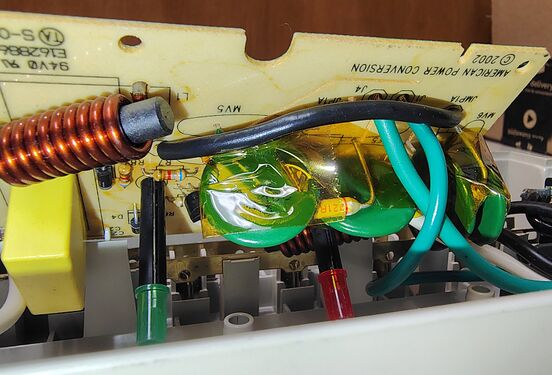 Suppression circuitry showing the ©2002 APC board revision, MOVs, filtering components, and wiring connections.
 -
Switch and circuit-breaker assembly showing wiring terminations and internal power-distribution connections.
-
Underside view of the suppression circuit board showing solder joints, choke assembly, and filtering components.


The documented example occupies an important transition point within the archive's APC PRO7 timeline, representing the earliest documented specimen utilizing APC's ©2002 suppression-board design.
Comparison Notes
The documented example occupies an important position within the APC PRO7 timeline currently documented by the OldSurge Archive:
- Z98010201706 (1998, ©1996 PCB)
- 2Z0250P17876 (December 2002, ©2002 PCB)
- 4Z0842P07546 (September 2008, ©2002 PCB)
- 7Z1714L05335 (January 2017, ©2009 PCB)
The specimen demonstrates APC's transition from the earlier ©1996 suppression-board design to the ©2002 revision while preserving the characteristic external appearance of the PRO7 product family.
Among the documented examples, only the December 2002 specimen incorporates molded APC branding on the rear of the right-angle attachment plug. None of the currently documented 1998, 2008, or 2017 PRO7 specimens exhibit this feature.
The significance of the APC-branded plug is presently unknown but may reflect a supplier change, manufacturing variation, or production-generation distinction within the PRO7 product family.