APC SurgeArrest Professional PRO7 (Z98010201706): Difference between revisions
No edit summary |
No edit summary |
||
| (9 intermediate revisions by the same user not shown) | |||
| Line 1: | Line 1: | ||
= APC SurgeArrest Professional PRO7 (Z98010201706) = | = APC SurgeArrest Professional PRO7 (Z98010201706) = | ||
[[File:surge_APC_Pro7_1998_Z98010201706_main_01.jpg|thumb|center|400px|APC SurgeArrest Professional PRO7 (Z98010201706).]] | [[File:surge_APC_Pro7_1998_Z98010201706_main_01.jpg|thumb|center|400px|APC SurgeArrest Professional PRO7 (Z98010201706).]] | ||
== Overview == | == Overview == | ||
The '''APC SurgeArrest Professional PRO7''' is a seven-outlet surge protector manufactured by APC. | The '''APC SurgeArrest Professional PRO7''' is a seven-outlet surge protector manufactured by APC. | ||
The documented example bears serial number '''Z98010201706''' | The documented example bears serial number '''Z98010201706'''. According to APC recall documentation, the third and fourth characters of the serial number indicate the year of manufacture, identifying this specimen as a 1998 production example. | ||
This specimen represents the earliest APC PRO7 currently documented by the OldSurge Archive and predates the archive's other documented PRO7 examples by approximately a decade. | This specimen represents the earliest APC PRO7 currently documented by the OldSurge Archive and predates the archive's other documented PRO7 examples by approximately a decade. | ||
| Line 18: | Line 15: | ||
This specimen falls within the production period associated with the 2013 APC SurgeArrest recall. | This specimen falls within the production period associated with the 2013 APC SurgeArrest recall. | ||
== Documented Example == | == Documented Example == | ||
* OldSurge ID: OS-0015 | * OldSurge ID: OS-0015 | ||
* Model: PRO7 | * Model: PRO7 | ||
* Serial Number: Z98010201706 | * Serial Number: Z98010201706 | ||
* Manufacturing Date: | * Manufacturing Date: 1998 | ||
== Specifications == | == Specifications == | ||
| Line 38: | Line 31: | ||
* Outlets: 7 grounded outlets | * Outlets: 7 grounded outlets | ||
* Country of Origin: China | * Country of Origin: China | ||
* Weight: 1 lb 15.9 oz (903 g) | |||
* Length: | * Length: | ||
** Approximately 10.25 in (26.0 cm) along the long edge | ** Approximately 10.25 in (26.0 cm) along the long edge | ||
| Line 65: | Line 58: | ||
== Weight == | |||
The documented example weighs approximately 1 lb 15.9 oz (903 g). | |||
This is substantially heavier than the 2008 APC PRO7 specimen documented elsewhere in the archive, which weighed approximately 1 lb 9.9 oz (734 g). | |||
The difference suggests that APC revised the internal construction of the PRO7 product line over time, potentially reducing the size of the suppression assembly, filtering components, bus bars, or other internal structures. | |||
The increased weight is consistent with teardown observations showing a comparatively large suppression circuit board, substantial stamped-brass bus bars, and dual toroidal filtering inductors. | |||
[[File:surge_APC_Pro7_1998_Z98010201706_weight_01.jpg|center|600px|APC SurgeArrest Professional PRO7 on a digital scale.]] | |||
== Physical Description == | == Physical Description == | ||
The APC SurgeArrest Professional PRO7 utilizes a rounded upper housing and a flat outlet section containing seven grounded outlets. | The APC SurgeArrest Professional PRO7 utilizes a rounded upper housing and a flat outlet section containing seven grounded outlets. | ||
| Line 81: | Line 83: | ||
The underside incorporates two keyhole-style mounting slots for wall or surface mounting. | The underside incorporates two keyhole-style mounting slots for wall or surface mounting. | ||
The PRO7 utilizes a right-angle grounded plug intended to reduce the | The PRO7 utilizes a right-angle grounded attachment plug intended to reduce the distance between the connected device and the wall. | ||
When | When installed in modern receptacles configured with the grounding contact in the upward position, however, the design causes the power cord to exit upward before bending downward. As a result, the plug does not sit as close to the wall as many modern low-profile right-angle plug designs. | ||
== Product Gallery == | == Product Gallery == | ||
<gallery mode="packed" heights="250"> | <gallery mode="packed" heights="250"> | ||
| Line 105: | Line 104: | ||
File:surge_APC_Pro7_1998_Z98010201706_plug_detail_01.jpg | Close-up of the right-angle grounded attachment plug. | File:surge_APC_Pro7_1998_Z98010201706_plug_detail_01.jpg | Close-up of the right-angle grounded attachment plug. | ||
File:surge_APC_Pro7_1998_Z98010201706_cord_detail_01.jpg | Power-cord markings showing SJT construction, UL and CSA approvals, and manufacturer information. | File:surge_APC_Pro7_1998_Z98010201706_cord_detail_01.jpg | Power-cord markings showing SJT construction, UL and CSA approvals, and manufacturer information. | ||
File:surge_APC_Pro7_1998_Z98010201706_cord_detail_02.jpg | Additional power-cord markings showing conductor size, certification markings, and manufacturer information. | |||
</gallery> | </gallery> | ||
== Testing == | == Testing == | ||
Testing in | The documented example was tested for basic electrical operation. | ||
The rocker switch successfully controlled power to all outlets. | |||
When connected to a properly wired receptacle and switched ON, the green Protection Working indicator illuminated normally, indicating the continued presence of functional surge-protection circuitry. | |||
The red Site Wiring Fault indicator remained unlit during testing. | |||
When switched OFF, both indicators extinguished and power was removed from the outlet bank. | |||
Testing with a receptacle tester confirmed correct hot, neutral, and ground wiring. | |||
No open ground, open neutral, reversed polarity, or other wiring faults were detected. | |||
The documented example passed basic outlet-wiring verification and appears fully operational following basic functional testing. | |||
<gallery mode="packed" heights="250"> | |||
File:surge_APC_Pro7_1998_Z98010201706_testing_pluggedinturnedon_01.jpg|Protection Working indicator illuminated with the PRO7 connected to power and switched ON. | |||
File:surge_APC_Pro7_1998_Z98010201706_testing_pluggedinturnedoff_LEDs_off_01.jpg|PRO7 connected to power with the rocker switch in the OFF position and indicator lights extinguished. | |||
File:surge_APC_Pro7_1998_Z98010201706_testing_polaritygrounding_01.jpg | Outlet tester indicating correct wiring and grounding. | |||
File:surge_APC_Pro7_1998_Z98010201706_testing_pluggedin_corddown_01.jpg|Right-angle plug installed in a wall receptacle illustrating cord routing. | |||
</gallery> | |||
== Condition Upon Acquisition == | == Condition Upon Acquisition == | ||
The documented example was acquired as part of a lot containing twelve APC SurgeArrest Professional surge protectors. | The documented example was acquired as part of a lot containing twelve APC SurgeArrest Professional surge protectors. | ||
The enclosure | The enclosure exhibited light dust accumulation, cosmetic wear, and moderate cord discoloration consistent with long-term use and storage. | ||
Unlike some later PRO7 examples documented by the archive, the enclosure exhibited relatively little yellowing despite its apparent age. | |||
The unit was cleaned prior to detailed documentation and photography. | The unit was cleaned prior to detailed documentation and photography. | ||
[[File:surge_APC_Pro7_1998_Z98010201706_beforecleaning_01.jpg|center|600px|PRO7 as acquired prior to cleaning and detailed documentation.]] | |||
== Recall Information == | == Recall Information == | ||
Based upon its serial number, this specimen falls within the production period covered by the 2013 APC SurgeArrest recall. | Based upon its serial number, this specimen falls within the production period covered by the 2013 APC SurgeArrest recall. | ||
As of September 2026, the documented example remains in the possession of the OldSurge Archive pending additional research regarding recall eligibility and available | As of September 2026, the documented example remains in the possession of the OldSurge Archive pending additional research regarding recall eligibility and whether any recall remedy remains available. | ||
For additional information, see: | For additional information, see: | ||
| Line 140: | Line 165: | ||
* [[APC SurgeArrest Recall (2013)]] | * [[APC SurgeArrest Recall (2013)]] | ||
== Teardown == | == Teardown == | ||
The APC SurgeArrest Professional PRO7 is assembled using seven screws and can normally be opened non-destructively. | |||
During disassembly, six of the seven enclosure screws were successfully removed. The remaining screw was found attached to a fractured internal mounting boss that remained secured to the grounding bus bar. | |||
< | The damage was not externally visible prior to opening the enclosure. The cause could not be determined and may have resulted from shipping damage, previous disassembly, long-term mechanical stress, or age-related plastic embrittlement. | ||
Because the fractured boss remained attached to the grounding bus bar, the grounding assembly remained partially secured to the upper housing when the enclosure halves were separated. | |||
The upper housing incorporates molded outlet barriers, structural reinforcing ribs, grounding-bus-bar supports, and provisions for mounting the outlet-contact assemblies. | |||
Inspection revealed a suppression circuit board marked: | |||
<pre> | |||
AMERICAN POWER CONVERSION | |||
640-0321C | |||
REV 7 | |||
© 1996 | |||
</pre> | |||
The board revision predates the documented example and represents the earliest APC PRO7 suppression-board design currently documented by the OldSurge Archive. | |||
Visible components include: | |||
* Multiple metal-oxide varistors (MOVs) | |||
* Dual toroidal filtering inductors | |||
* Fuse protection | |||
* Indicator circuitry for the Protection Working and Site Wiring Fault indicators | |||
* Integrated circuit-breaker and rocker-switch assembly | |||
The suppression board occupies a substantial portion of the enclosure interior and appears physically larger than the board utilized in later PRO7 examples documented by the archive. | |||
Inspection revealed a light white residue on portions of the circuit board. The source of the residue could not be determined. Possible explanations include manufacturing residue, environmental contamination, or a previous liquid-exposure event. | |||
No evidence of overheating, charring, burned traces, catastrophic electrical failure, carbon tracking, or significant corrosion was observed, and the unit remained operational during testing. | |||
The internal architecture utilizes stamped brass bus bars, dedicated grounding conductors, and individual outlet-contact assemblies retained within molded supports. | |||
<gallery mode="packed" heights="250"> | |||
File:surge_APC_Pro7_1998_Z98010201706_teardown_open_01.jpg|PRO7 opened following removal of the enclosure screws. | |||
File:surge_APC_Pro7_1998_Z98010201706_teardown_screws_01.jpg|Six of the seven enclosure screws removed during disassembly. | |||
File:surge_APC_Pro7_1998_Z98010201706_teardown_toppanel_left_01.jpg|Interior details of the upper housing showing outlet barriers and grounding-bus-bar supports. | |||
File:surge_APC_Pro7_1998_Z98010201706_teardown_brokenplastic_detail_01.jpg|Fractured mounting boss and grounding-bus-bar attachment point. | |||
File:surge_APC_Pro7_1998_Z98010201706_teardown_toppanel_right_01.jpg|Upper housing interior showing outlet supports, grounding bus bar, and structural details. | |||
File:surge_APC_Pro7_1998_Z98010201706_teardown_switch_end_01.jpg|Cord-entry section showing the switch assembly, power-cord wiring, and suppression-board connections. | |||
File:surge_APC_Pro7_1998_Z98010201706_teardown_logo_end_01.jpg|Outlet-end section showing outlet contacts, bus bars, and suppression-board mounting arrangement. | |||
File:surge_APC_Pro7_1998_Z98010201706_teardown_board_bottomdetail_01.jpg|Underside of the suppression circuit board showing APC copyright markings and electrical traces. | |||
File:surge_APC_Pro7_1998_Z98010201706_teardown_board_underdetail_01.jpg|Suppression circuitry showing MOVs, filtering components, status-indicator circuitry, and ©1996 APC circuit-board markings. | |||
File:surge_APC_Pro7_1998_Z98010201706_teardown_board_switchdetail_01.jpg|Power-cord termination, rocker-switch assembly, and resettable circuit-breaker wiring. | |||
</gallery> | |||
== Comparison Notes == | == Comparison Notes == | ||
The APC PRO7 examples currently documented by the OldSurge Archive span approximately two decades of production. | The APC PRO7 examples currently documented by the OldSurge Archive span approximately two decades of production. | ||
| Line 161: | Line 227: | ||
* 4Z0842P07546 (2008, ©2002 PCB) | * 4Z0842P07546 (2008, ©2002 PCB) | ||
* 7Z1714L05335 (2017, ©2009 PCB) | * 7Z1714L05335 (2017, ©2009 PCB) | ||
Among the three documented examples, the 1998 specimen is both the oldest and the heaviest, despite exhibiting less enclosure yellowing than the 2008 example. | |||
Together these examples illustrate the long production life of the APC SurgeArrest Professional PRO7 and provide evidence of multiple suppression-board revisions while retaining substantially similar external appearance and mechanical architecture. | Together these examples illustrate the long production life of the APC SurgeArrest Professional PRO7 and provide evidence of multiple suppression-board revisions while retaining substantially similar external appearance and mechanical architecture. | ||
[[Category:Surge Protectors]] | [[Category:Surge Protectors]] | ||
Latest revision as of 16:44, 27 September 2026
APC SurgeArrest Professional PRO7 (Z98010201706)

Overview
The APC SurgeArrest Professional PRO7 is a seven-outlet surge protector manufactured by APC.
The documented example bears serial number Z98010201706. According to APC recall documentation, the third and fourth characters of the serial number indicate the year of manufacture, identifying this specimen as a 1998 production example.
This specimen represents the earliest APC PRO7 currently documented by the OldSurge Archive and predates the archive's other documented PRO7 examples by approximately a decade.
Inspection identified a surge-suppression circuit board marked ©1996, providing evidence that the underlying design predates manufacture of the documented example.
This specimen falls within the production period associated with the 2013 APC SurgeArrest recall.
Documented Example
- OldSurge ID: OS-0015
- Model: PRO7
- Serial Number: Z98010201706
- Manufacturing Date: 1998
Specifications
- Manufacturer: APC
- Product Family: SurgeArrest Professional
- Model: PRO7
- Device Type: Surge Protector
- Outlets: 7 grounded outlets
- Country of Origin: China
- Weight: 1 lb 15.9 oz (903 g)
- Length:
- Approximately 10.25 in (26.0 cm) along the long edge
- Approximately 9.0 in (22.9 cm) along the curved edge
- Width:
- Approximately 4.19 in (10.6 cm) at the base
- Height:
- Approximately 1.25 in (3.2 cm) at the outlet section
- Approximately 1.75 in (4.4 cm) at the control section
- Power Cord Length: Approximately 6 ft (1.8 m)
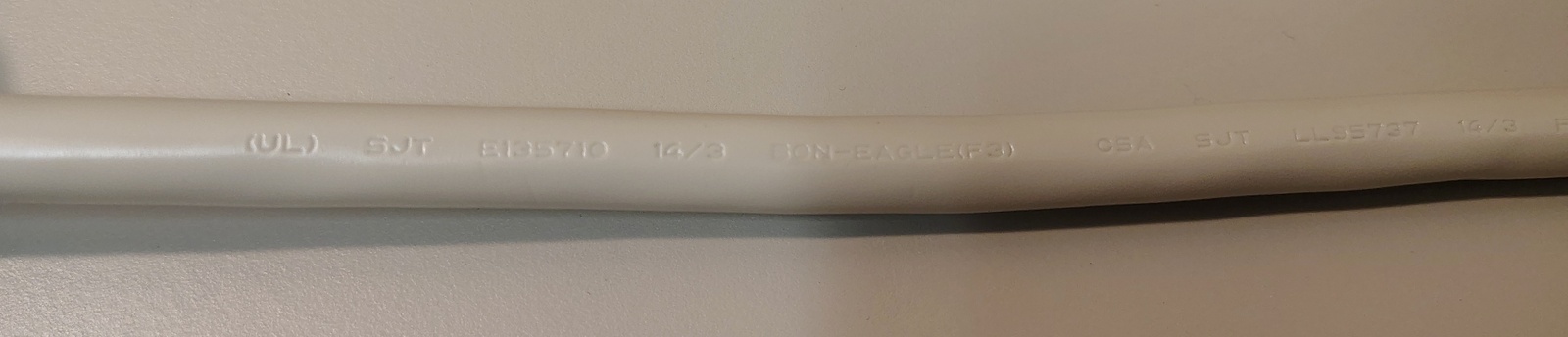
- Power Cord Type: SJT
- Conductors: 16/3
- Cord Manufacturer: Hon-Eagle
- UL File Number (Cord): E133710
- CSA File Number: LL55737
- UL File Number: E111219
- UL 1363 Power Tap
- UL 1449 TVSS
- TVSS Ratings:
- Line-to-Neutral (L-N): 330 V
- Line-to-Ground (L-G): 330 V
- Neutral-to-Ground (N-G): 330 V
Weight
The documented example weighs approximately 1 lb 15.9 oz (903 g).
This is substantially heavier than the 2008 APC PRO7 specimen documented elsewhere in the archive, which weighed approximately 1 lb 9.9 oz (734 g).
The difference suggests that APC revised the internal construction of the PRO7 product line over time, potentially reducing the size of the suppression assembly, filtering components, bus bars, or other internal structures.
The increased weight is consistent with teardown observations showing a comparatively large suppression circuit board, substantial stamped-brass bus bars, and dual toroidal filtering inductors.

Physical Description
The APC SurgeArrest Professional PRO7 utilizes a rounded upper housing and a flat outlet section containing seven grounded outlets.
The control section incorporates a green Protection Working indicator, red Site Wiring Fault indicator, and a combined rocker-switch and circuit-breaker assembly.
Compared with later documented PRO7 examples, the overall enclosure architecture appears unchanged, demonstrating APC's long-term use of a successful mechanical design.
Unlike the 2008 PRO7 example documented by the archive, this earlier specimen exhibits comparatively little enclosure yellowing despite being substantially older. The difference suggests that environmental exposure and storage conditions may play a greater role in enclosure discoloration than chronological age alone.
The underside incorporates two keyhole-style mounting slots for wall or surface mounting.
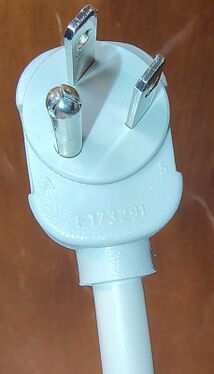
The PRO7 utilizes a right-angle grounded attachment plug intended to reduce the distance between the connected device and the wall.
When installed in modern receptacles configured with the grounding contact in the upward position, however, the design causes the power cord to exit upward before bending downward. As a result, the plug does not sit as close to the wall as many modern low-profile right-angle plug designs.
Product Gallery
-
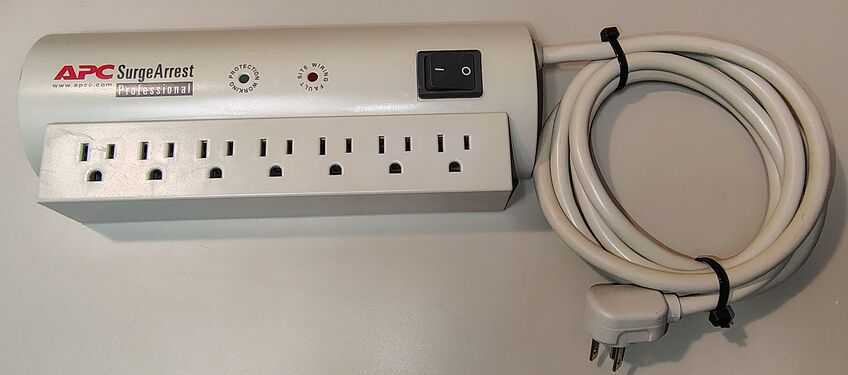 Overall view of the documented APC PRO7 example.
 -
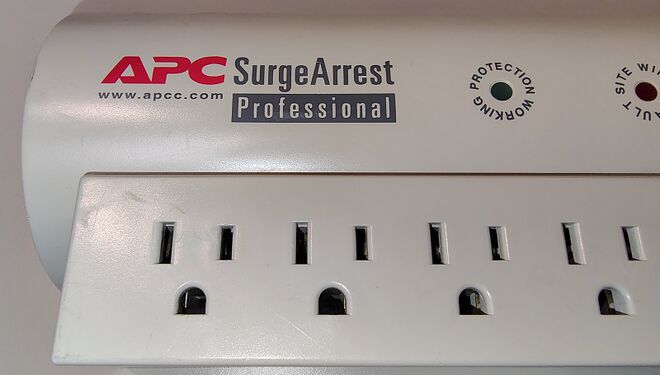 APC branding and Protection Working indicator.
 -
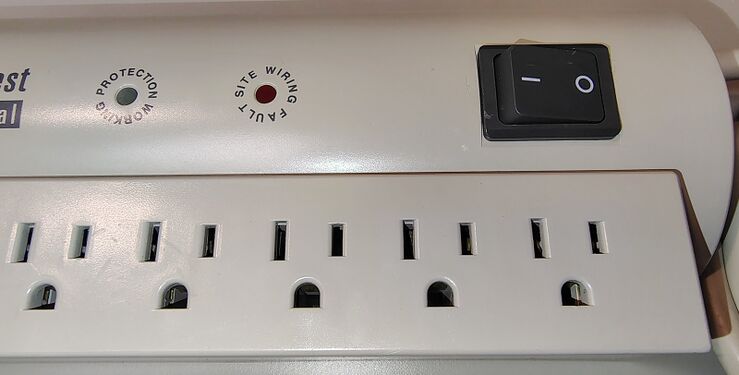 Protection Working indicator, Site Wiring Fault indicator, and rocker-switch assembly.
 -
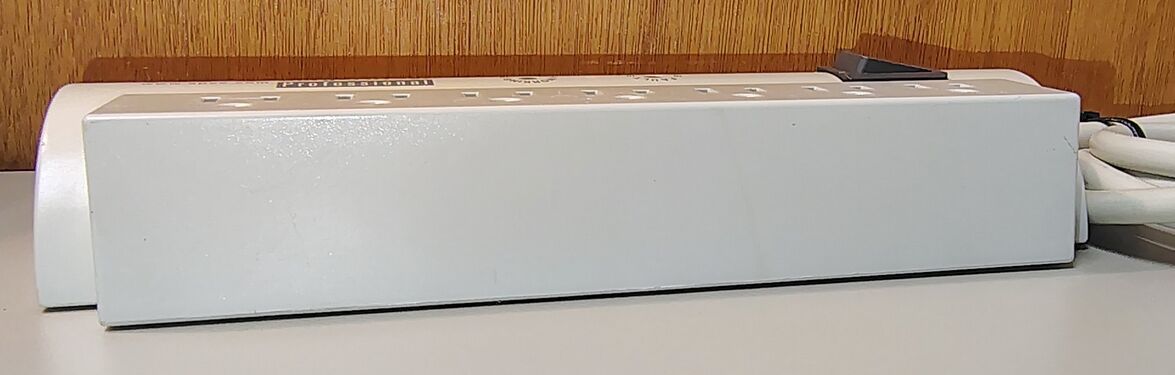 Flat-side profile view of the APC SurgeArrest Professional PRO7.
 -
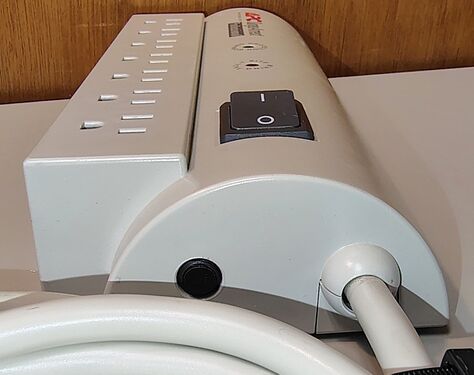 Cord-entry end showing the rocker switch, resettable circuit breaker, and power-cord strain relief.
 -
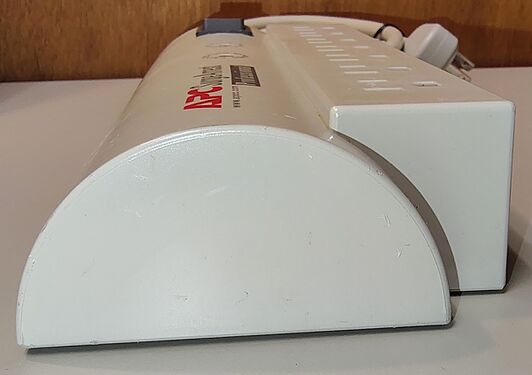 Rounded outlet-end profile of the APC SurgeArrest Professional PRO7.
 -
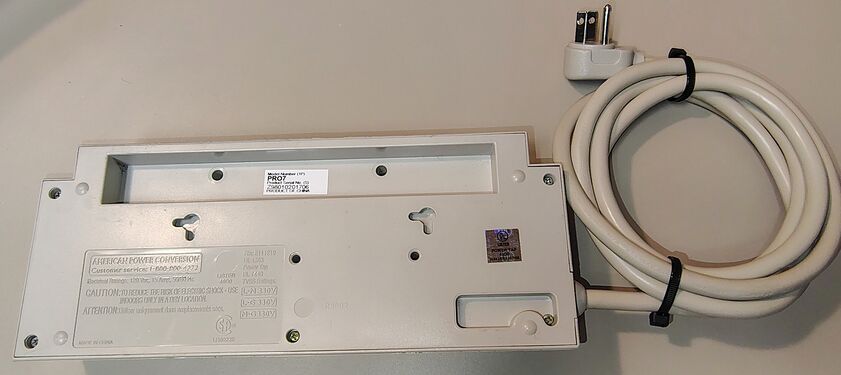 Underside view showing labels, mounting slots, cord routing, and attached power cord.
 -
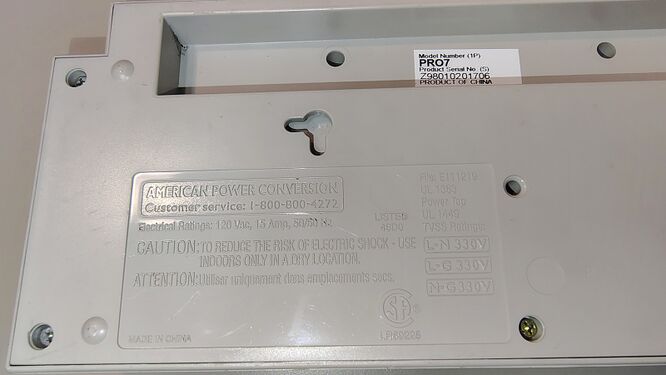 Product information label, serial-number label, and mounting provisions on the underside of the PRO7.
 -
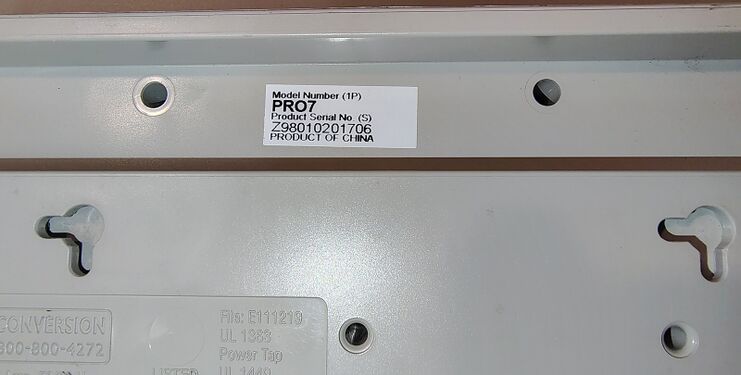 Model and serial-number label identifying the documented PRO7 specimen.
 -
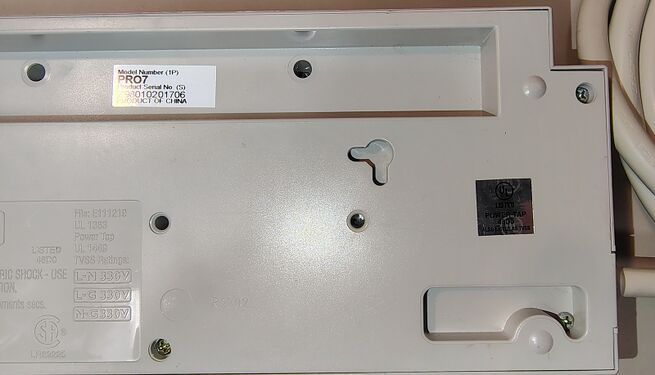 Right-side underside detail showing mounting provisions, serial-number label, and UL listing label.
 -
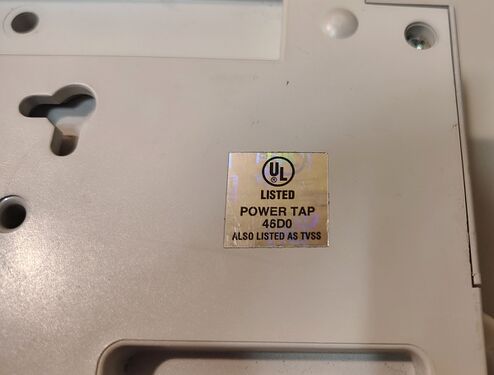 UL listing label identifying the device as a listed Power Tap and TVSS.
 -
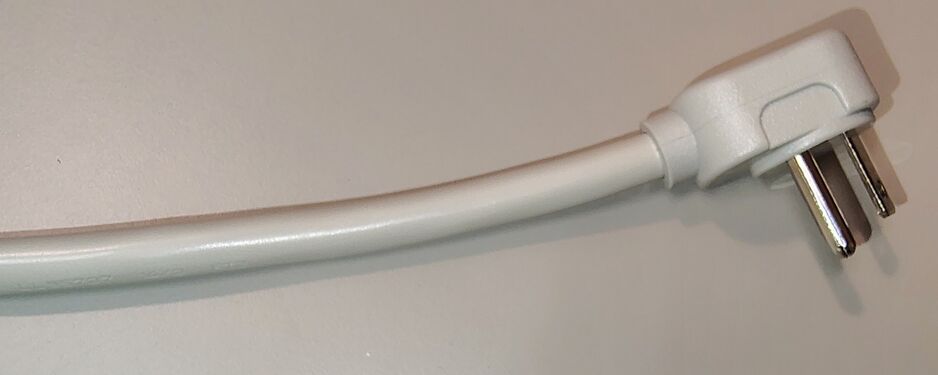 Right-angle attachment plug and attached six-foot power cord.
 -
 Close-up of the right-angle grounded attachment plug.
 -
 Power-cord markings showing SJT construction, UL and CSA approvals, and manufacturer information.
 -
 Additional power-cord markings showing conductor size, certification markings, and manufacturer information.


Testing
The documented example was tested for basic electrical operation.
The rocker switch successfully controlled power to all outlets.
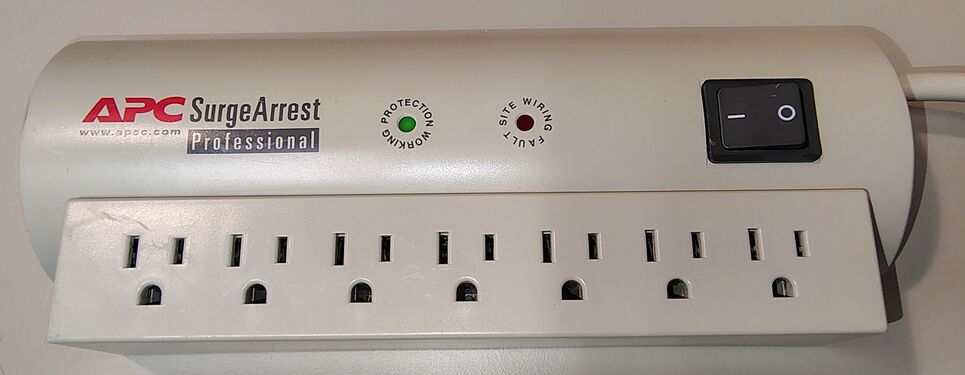
When connected to a properly wired receptacle and switched ON, the green Protection Working indicator illuminated normally, indicating the continued presence of functional surge-protection circuitry.
The red Site Wiring Fault indicator remained unlit during testing.
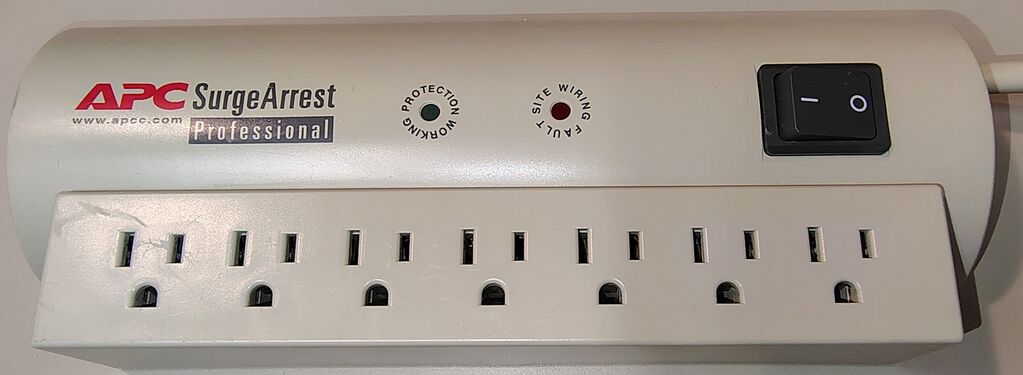
When switched OFF, both indicators extinguished and power was removed from the outlet bank.
Testing with a receptacle tester confirmed correct hot, neutral, and ground wiring.
No open ground, open neutral, reversed polarity, or other wiring faults were detected.
The documented example passed basic outlet-wiring verification and appears fully operational following basic functional testing.
-
 Protection Working indicator illuminated with the PRO7 connected to power and switched ON.
 -
 PRO7 connected to power with the rocker switch in the OFF position and indicator lights extinguished.
 -
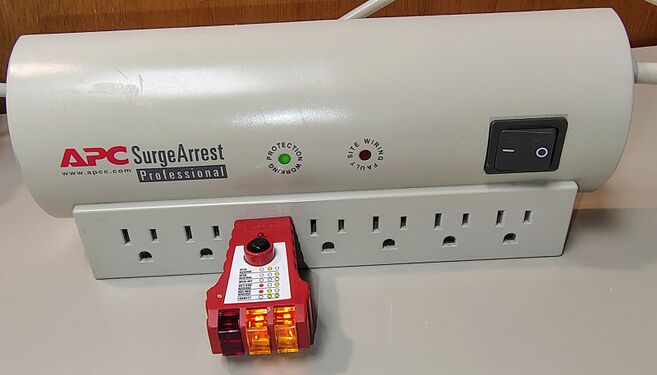 Outlet tester indicating correct wiring and grounding.
 -
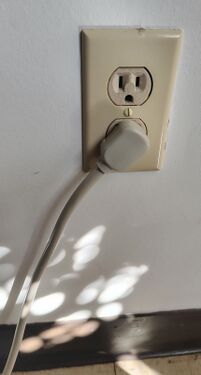 Right-angle plug installed in a wall receptacle illustrating cord routing.


Condition Upon Acquisition
The documented example was acquired as part of a lot containing twelve APC SurgeArrest Professional surge protectors.
The enclosure exhibited light dust accumulation, cosmetic wear, and moderate cord discoloration consistent with long-term use and storage.
Unlike some later PRO7 examples documented by the archive, the enclosure exhibited relatively little yellowing despite its apparent age.
The unit was cleaned prior to detailed documentation and photography.

Recall Information
Based upon its serial number, this specimen falls within the production period covered by the 2013 APC SurgeArrest recall.
As of September 2026, the documented example remains in the possession of the OldSurge Archive pending additional research regarding recall eligibility and whether any recall remedy remains available.
For additional information, see:
Teardown
The APC SurgeArrest Professional PRO7 is assembled using seven screws and can normally be opened non-destructively.
During disassembly, six of the seven enclosure screws were successfully removed. The remaining screw was found attached to a fractured internal mounting boss that remained secured to the grounding bus bar.
The damage was not externally visible prior to opening the enclosure. The cause could not be determined and may have resulted from shipping damage, previous disassembly, long-term mechanical stress, or age-related plastic embrittlement.
Because the fractured boss remained attached to the grounding bus bar, the grounding assembly remained partially secured to the upper housing when the enclosure halves were separated.
The upper housing incorporates molded outlet barriers, structural reinforcing ribs, grounding-bus-bar supports, and provisions for mounting the outlet-contact assemblies.
Inspection revealed a suppression circuit board marked:
AMERICAN POWER CONVERSION
640-0321C
REV 7
© 1996
The board revision predates the documented example and represents the earliest APC PRO7 suppression-board design currently documented by the OldSurge Archive.
Visible components include:
- Multiple metal-oxide varistors (MOVs)
- Dual toroidal filtering inductors
- Fuse protection
- Indicator circuitry for the Protection Working and Site Wiring Fault indicators
- Integrated circuit-breaker and rocker-switch assembly
The suppression board occupies a substantial portion of the enclosure interior and appears physically larger than the board utilized in later PRO7 examples documented by the archive.
Inspection revealed a light white residue on portions of the circuit board. The source of the residue could not be determined. Possible explanations include manufacturing residue, environmental contamination, or a previous liquid-exposure event.
No evidence of overheating, charring, burned traces, catastrophic electrical failure, carbon tracking, or significant corrosion was observed, and the unit remained operational during testing.
The internal architecture utilizes stamped brass bus bars, dedicated grounding conductors, and individual outlet-contact assemblies retained within molded supports.
-
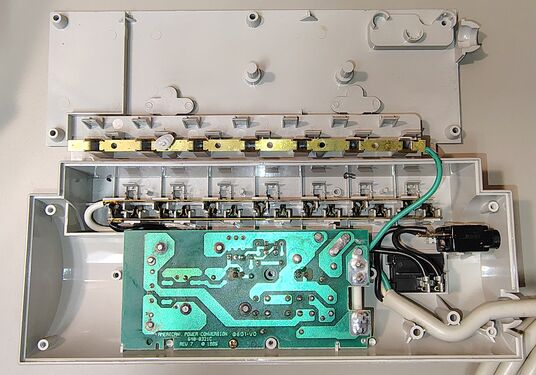 PRO7 opened following removal of the enclosure screws.
 -
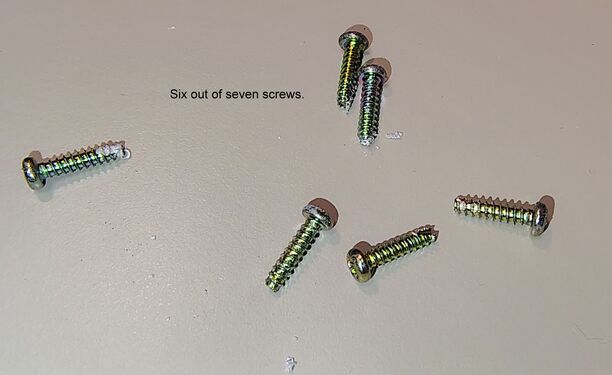 Six of the seven enclosure screws removed during disassembly.
 -
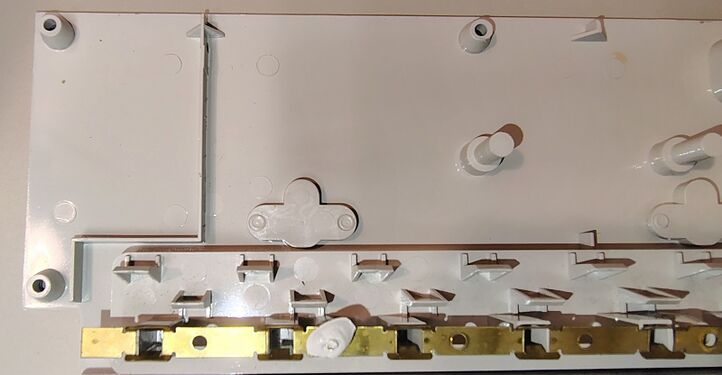 Interior details of the upper housing showing outlet barriers and grounding-bus-bar supports.
 -
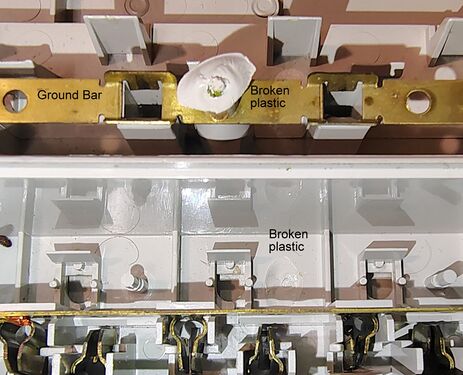 Fractured mounting boss and grounding-bus-bar attachment point.
 -
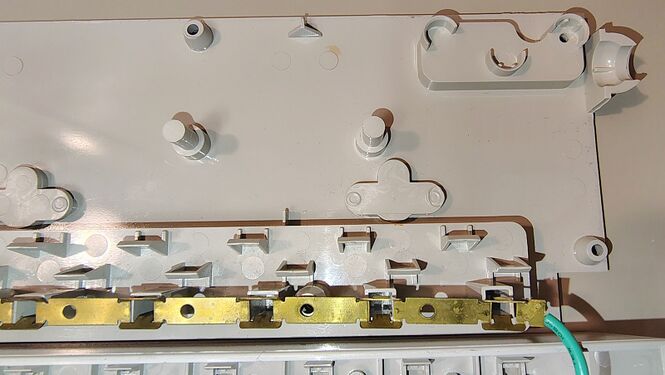 Upper housing interior showing outlet supports, grounding bus bar, and structural details.
 -
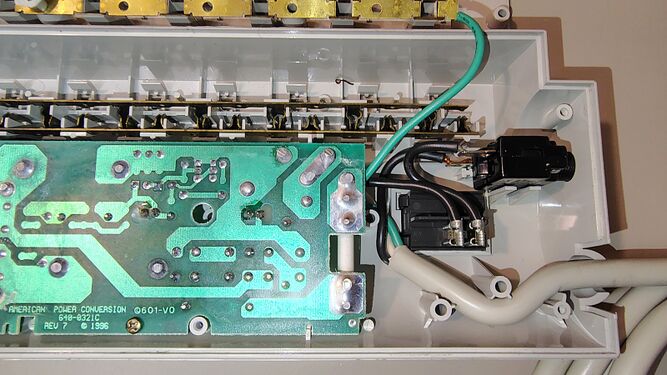 Cord-entry section showing the switch assembly, power-cord wiring, and suppression-board connections.
 -
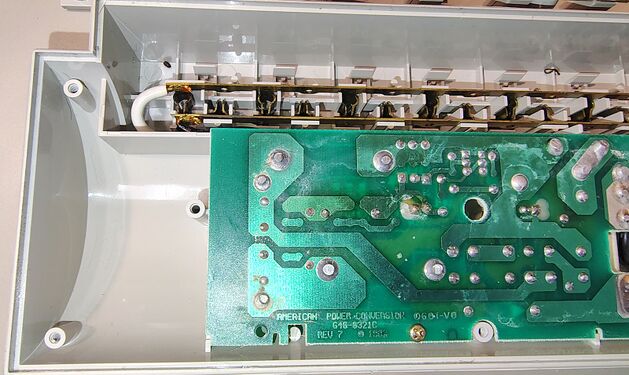 Outlet-end section showing outlet contacts, bus bars, and suppression-board mounting arrangement.
 -
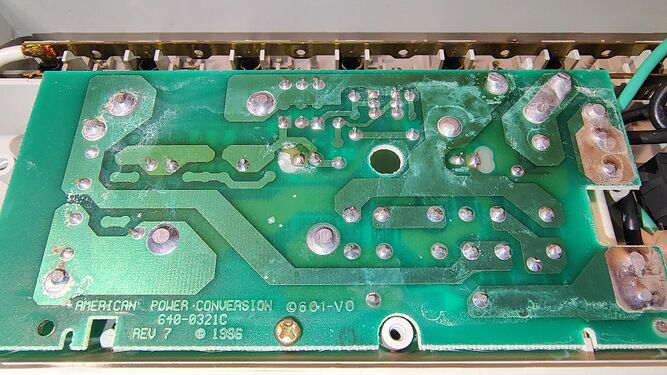 Underside of the suppression circuit board showing APC copyright markings and electrical traces.
 -
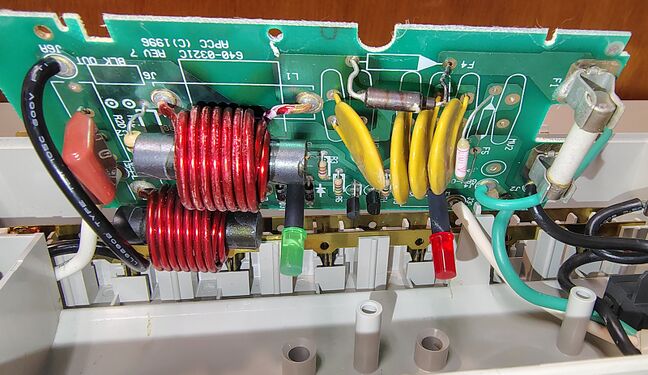 Suppression circuitry showing MOVs, filtering components, status-indicator circuitry, and ©1996 APC circuit-board markings.
 -
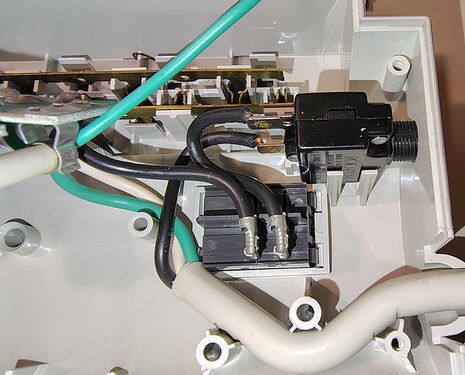 Power-cord termination, rocker-switch assembly, and resettable circuit-breaker wiring.


Comparison Notes
The APC PRO7 examples currently documented by the OldSurge Archive span approximately two decades of production.
The documented examples presently include:
- Z98010201706 (1998, ©1996 PCB)
- 4Z0842P07546 (2008, ©2002 PCB)
- 7Z1714L05335 (2017, ©2009 PCB)
Among the three documented examples, the 1998 specimen is both the oldest and the heaviest, despite exhibiting less enclosure yellowing than the 2008 example.
Together these examples illustrate the long production life of the APC SurgeArrest Professional PRO7 and provide evidence of multiple suppression-board revisions while retaining substantially similar external appearance and mechanical architecture.