APC SurgeArrest Professional PRO7 (4Z0638P12907)
The APC SurgeArrest Professional PRO7 documented here bears serial number 4Z0638P12907 and was manufactured during June 2006.
The documented example represents a mid-production APC PRO7 manufactured after the conclusion of the production period associated with the APC SurgeArrest Recall (2013) and before the archive's documented September 2008 and January 2017 examples.
The enclosure exhibits substantial yellowing consistent with long-term environmental exposure. A distinct lighter region on the upper housing marks the former location of an adhesive label, providing a visual illustration of differential plastic aging within the same enclosure.
Functional testing confirmed continued operation of the surge protector, although the green Protection Working indicator appeared noticeably dim when illuminated.

Overview
General description of the product, manufacturer, purpose, historical significance, and why this example is noteworthy.
Historical Context
The APC SurgeArrest Professional PRO7 remained in production for more than two decades and underwent multiple internal design revisions while retaining a largely unchanged external appearance.
The documented June 2006 example falls between the archive's documented December 2002 and September 2008 specimens and provides an additional reference point for evaluating design continuity, enclosure aging, component sourcing, and manufacturing changes within the PRO7 product family.
Unlike APC PRO7 examples manufactured prior to 2003, this specimen falls outside the production period covered by the APC SurgeArrest Recall (2013). Despite its later production date, the external enclosure remains visually similar to earlier recalled examples.
The documented example also exhibits substantial enclosure yellowing and a clearly preserved "shadow" where an adhesive label previously protected a portion of the plastic from environmental exposure. This condition provides useful evidence regarding the mechanisms responsible for long-term discoloration of consumer electronic enclosures.
Documented Example
- OldSurge ID: OS-XX25
- Manufacturer: APC
- Model: SurgeArrest Professional PRO7
- Serial Number: 4Z0638P12907
- Manufacturing Date: June 2006
Specifications
The APC SurgeArrest Professional PRO7 remained one of APC's longest-running surge-protection products, retaining a largely unchanged external appearance while undergoing multiple internal revisions throughout its production life. The documented June 2006 example represents a mid-production specimen manufactured after the APC SurgeArrest recall period and during the transition to Philippine production documented elsewhere within the PRO7 product family.
- Manufacturer: APC (American Power Conversion)
- Product Family: SurgeArrest Professional
- Model: PRO7
- Device Type: Surge Protector
- Country of Origin: Philippines
- Outlets: 7 grounded outlets
- Protection: Surge suppression and overload protection
- Length:
- Approximately 10.25 in (26.0 cm)
- Width:
- Approximately 4.25 in (10.8 cm)
- Height:
- Approximately 1.75 in (4.4 cm)
- Weight: TBD
- Power Cord Length:
- Approximately 6 ft (1.8 m)
- Cord Type: SJT
- Conductors: 3
- Wire Size: 14 AWG
- Cord Manufacturer: Chung Kwang
- UL File Number (Cord): E54024
- CSA File Number (Cord): LL65965
- Plug Type: Grounded NEMA 5-15P
- Plug Style: Right-angle
- Temperature Rating:
- 75°C (UL)
- 60°C (CSA)
- Flame Rating:
- VW-1 (UL)
- FT2 (CSA)
- Electrical Rating: 120 VAC, 15 A, 50/60 Hz
- UL File Number: E111219
- UL 1363 Temporary Power Tap
- UL 1449 TVSS
- TVSS Ratings:
- Line-to-Neutral (L-N): 330 V
- Line-to-Ground (L-G): 330 V
- Neutral-to-Ground (N-G): 330 V
Notable Characteristics
- Manufactured during June 2006.
- Falls outside the APC SurgeArrest Recall (2013) production period.
- Heavy enclosure yellowing with a clearly preserved label shadow.
- Date-code wheels confirm June 2006 manufacture.
- Dim Protection Working indicator observed during testing.
- Right-angle grounding attachment plug without APC branding.
- Intermediate production example between the archive's 2002 and 2008 PRO7 specimens.
Weight
The documented example weighs approximately 1 lb 9.6 oz (726 g).
Among APC PRO7 specimens documented by the OldSurge Archive, the June 2006 example is noticeably lighter than the archive's 1998, 1999, and 2002 examples. The reduction in weight suggests that APC implemented incremental design changes during production while retaining the familiar external appearance of the PRO7 product family.
The measured weight closely resembles that of the archive's documented September 2008 specimen, supporting the observation that APC's mid-2000s PRO7 revisions shared a common internal architecture and construction approach.
Although lighter than earlier documented examples, the unit retains a substantial enclosure, seven-outlet configuration, integrated circuit breaker, surge-suppression circuitry, and a six-foot 14 AWG power cord.

Physical Characteristics
The APC SurgeArrest Professional PRO7 utilizes the familiar enclosure design employed throughout much of the documented production life of the PRO7 product family. The unit consists of a rounded upper housing incorporating status indicators and a combined rocker-switch and circuit-breaker assembly, together with a flat outlet section containing seven grounded receptacles.
The documented example exhibits substantial enclosure yellowing consistent with long-term environmental exposure. A sharply defined lighter region on the upper housing indicates the former presence of an adhesive label or sticker. The protected area retained significantly more of its original color than the surrounding exposed surfaces, providing a clear example of differential enclosure discoloration within the same molded housing.
The control section incorporates a green Protection Working indicator, a red Site Wiring Fault indicator, and a combined rocker-switch and resettable circuit-breaker assembly. During testing, the Protection Working indicator remained operational but appeared noticeably dimmer than those observed on other APC PRO7 examples documented by the archive.
The overall enclosure architecture closely resembles the archive's documented 1998, 1999, 2002, 2008, and 2017 APC PRO7 examples, demonstrating APC's continued use of a successful mechanical design despite multiple internal revisions over the product family's lifespan.
The underside incorporates molded mounting provisions intended to support wall or surface installation.
The documented example utilizes an approximately six-foot power cord terminated with a right-angle grounded attachment plug. Unlike the archive's documented December 2002 specimen, the attachment plug does not incorporate molded APC branding.
When connected to receptacles installed with the grounding contact upward, the right-angle plug causes the power cord to exit upward before bending downward. As a result, the design provides less wall-clearance reduction than many modern low-profile plug designs.
Photographs
-
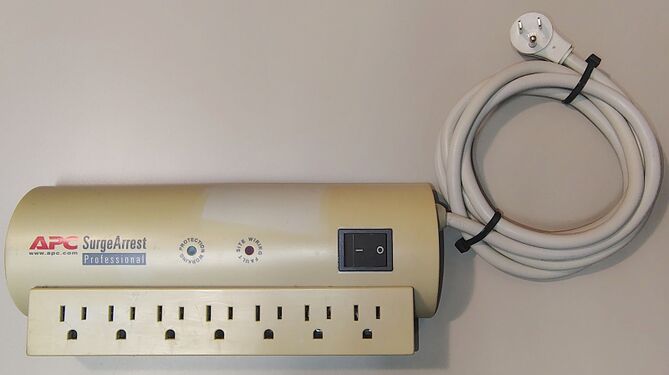 Overall view of the documented APC SurgeArrest Professional PRO7 showing substantial enclosure yellowing, attached six-foot power cord, and right-angle grounding attachment plug.
 -
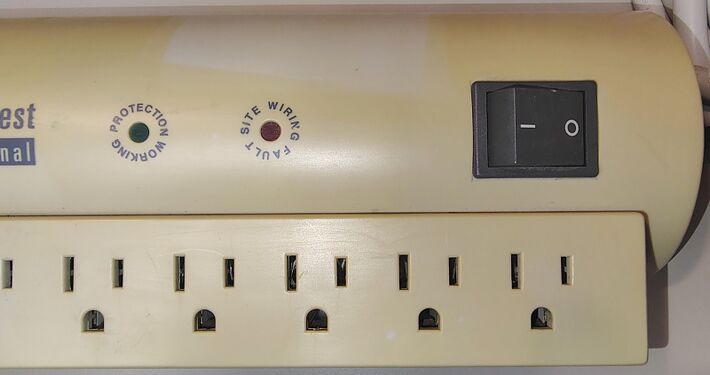 Protection Working indicator, Site Wiring Fault indicator, rocker switch, and preserved outline of a previously attached label demonstrating differential enclosure discoloration.
 -
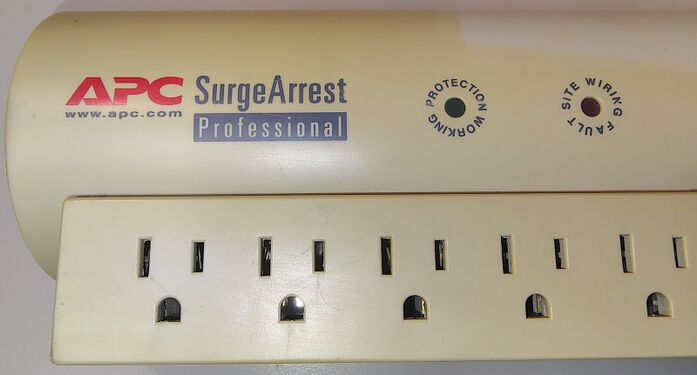 APC branding, status indicators, outlet section, and pronounced color difference between the exposed enclosure surface and the area previously covered by a label.
 -
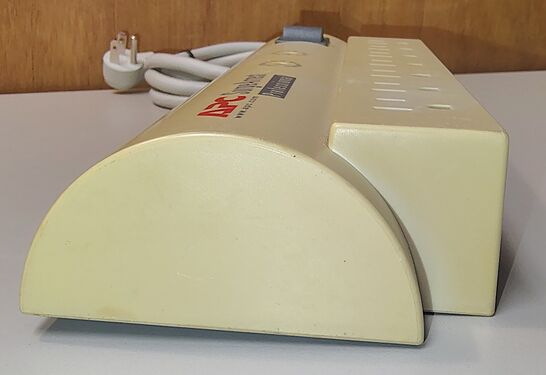 Rounded outlet-end profile showing the characteristic APC SurgeArrest Professional enclosure design and substantial enclosure yellowing.
 -
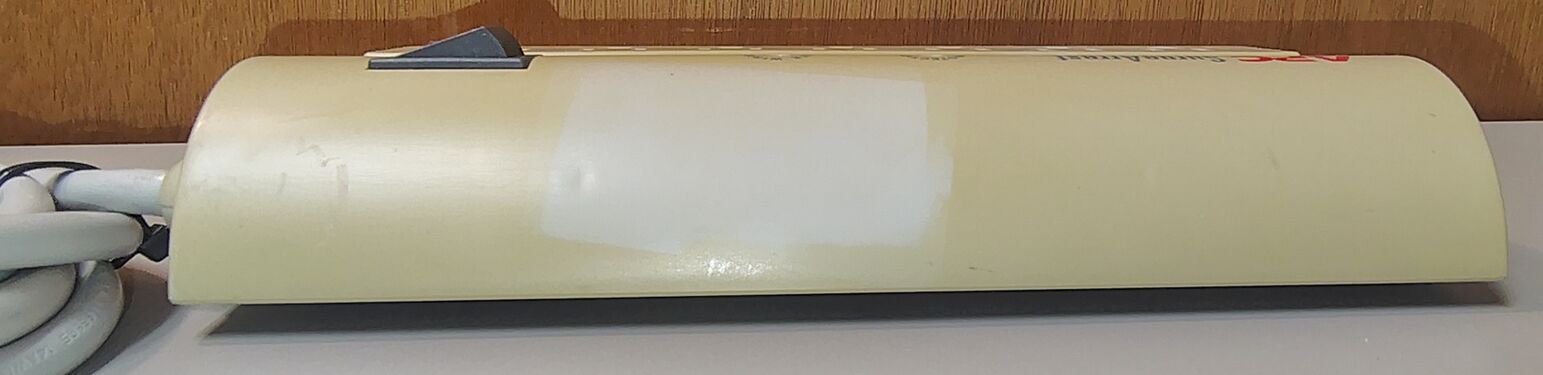 Curved-side profile showing differential enclosure discoloration, including the preserved outline of a previously attached label on the upper housing.
 -
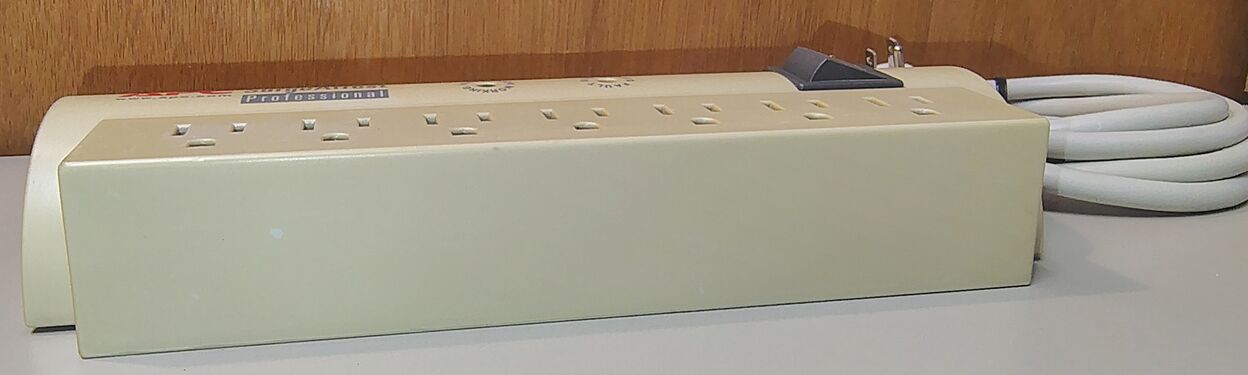 Flat-side profile showing the seven-outlet receptacle section, enclosure condition, and overall mechanical design of the documented APC PRO7 specimen.
 -
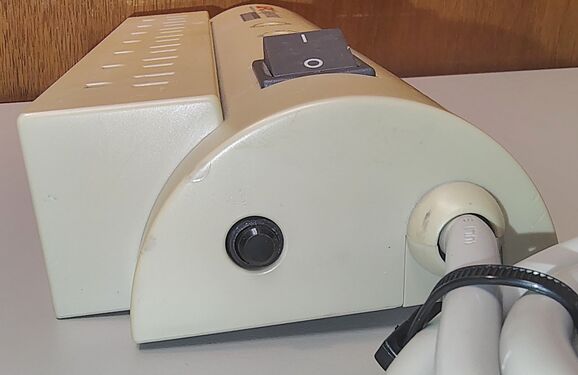 Cord-entry end showing the rocker switch, attached power cord, and overall enclosure design.
 -
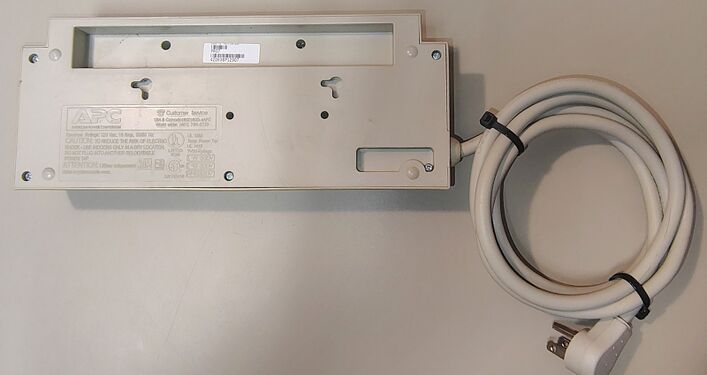 Underside view showing labels, mounting slots, power-cord entry, and attached power cord.
 -
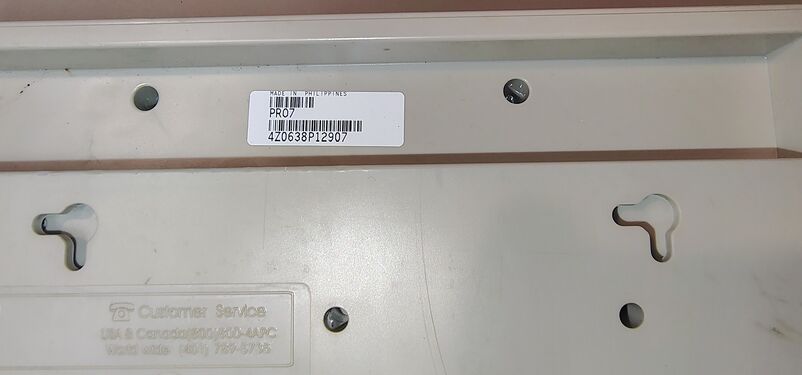 Serial-number label identifying the documented PRO7 specimen and indicating manufacture in the Philippines.
 -
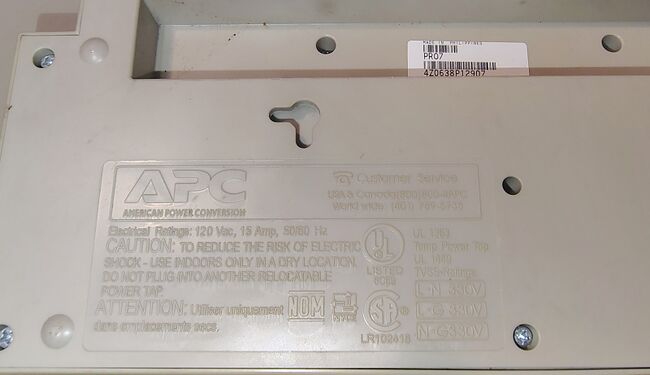 Molded electrical ratings, certification markings, and TVSS suppression ratings.
 -
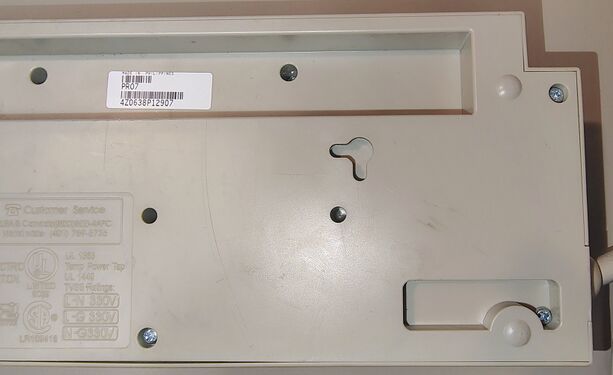 Cord-entry end underside detail showing mounting provisions, enclosure markings, and serial-number recess.
 -
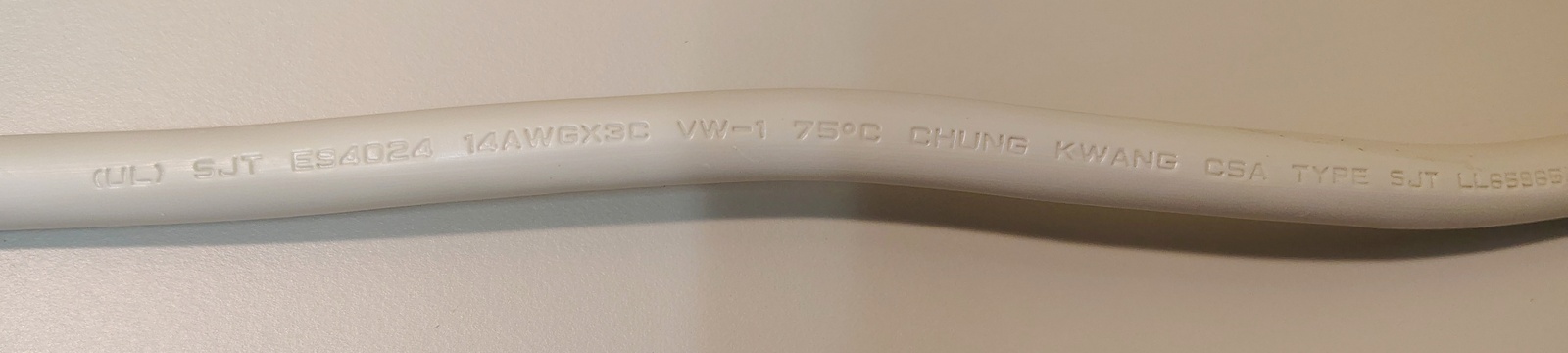 Power-cord markings showing SJT construction, 14 AWG conductors, UL file number E54024, and Chung Kwang manufacturer identification.
 -
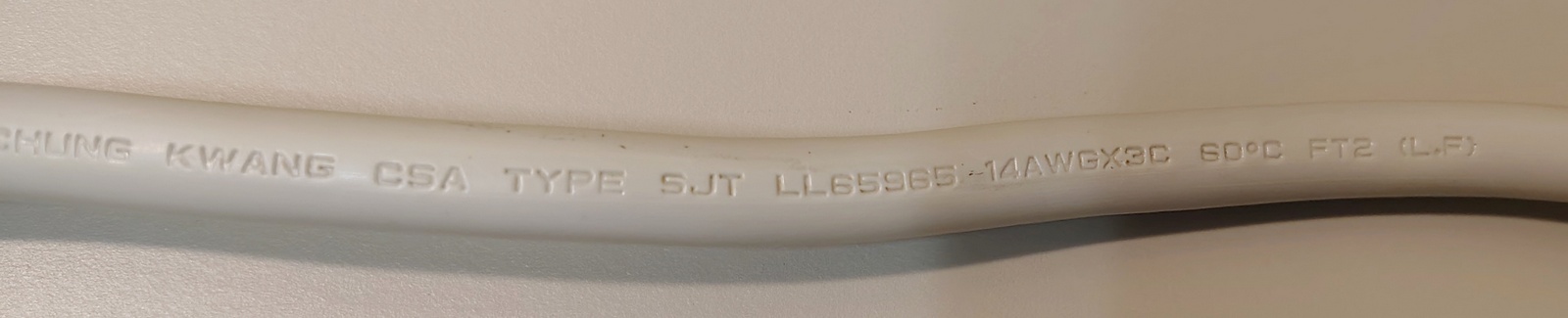 Additional power-cord markings showing CSA file number LL65965, FT2 flame rating, and conductor specifications.
 -
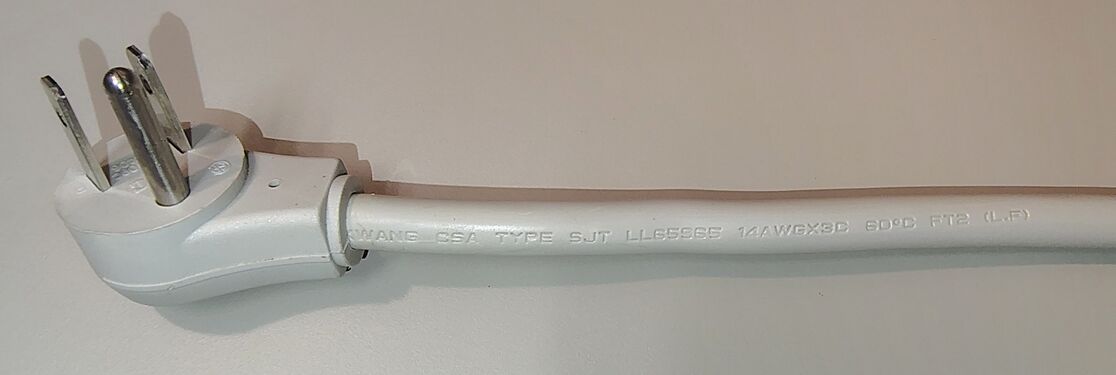 Right-angle attachment plug and adjacent cord markings showing Chung Kwang manufacturer identification.
 -
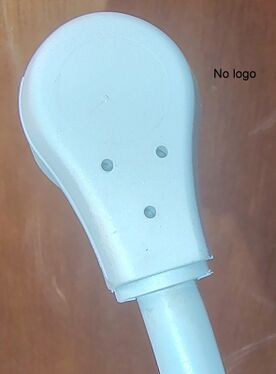 Rear of the right-angle attachment plug showing the absence of APC branding.
 -
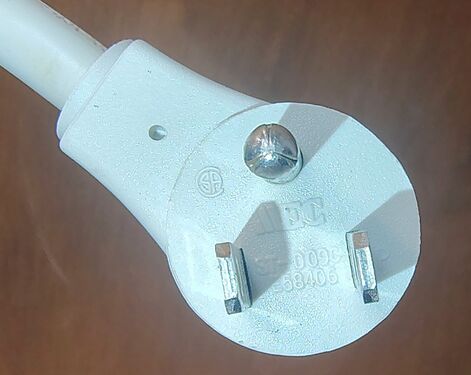 Close-up of the right-angle grounding attachment plug showing molded certification markings and construction details.


Date Codes
Multiple independent indicators support a June 2006 manufacturing date for the documented APC PRO7 specimen.
The serial number, 4Z0638P12907, identifies the unit as a 2006 production example. Independent confirmation is provided by molded date-code wheels located within the upper enclosure.
The year wheel indicates 2006 while the adjacent month wheel indicates June, corresponding exactly with the manufacturing date derived from the serial number.
The documented example was manufactured in the Philippines, as indicated by the serial-number label located on the underside of the enclosure.
The agreement between the serial number and the internal date-code wheels provides strong evidence supporting June 2006 manufacture.
-
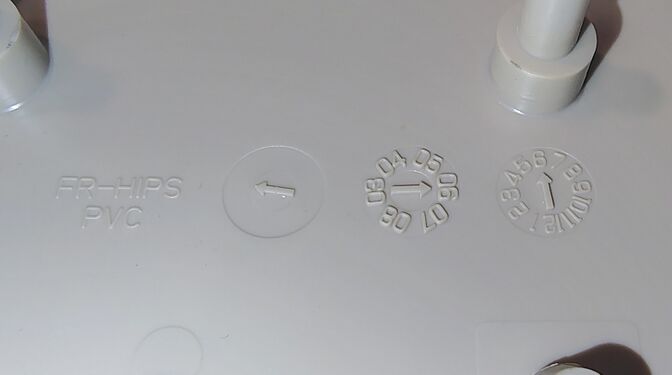 Internal date-code wheels indicating June 2006 manufacture.

Condition Upon Acquisition
The documented example was acquired in complete condition with its attached power cord intact.
The enclosure exhibited substantial yellowing, accumulated dust, adhesive residue, and cosmetic wear consistent with long-term use and storage. Remnants of a partially removed adhesive label remained attached to the upper housing at the time of acquisition.
Remnants of a partially removed paper label remained attached to the upper housing at the time of acquisition. Portions of the remaining print appear to include the word "ROOM," suggesting that the label may have been applied for inventory-control, asset-tracking, office-relocation, or room-identification purposes during the unit's service life.
The former label location corresponds to a noticeably lighter area of plastic beneath the adhesive residue. The contrast between the protected and exposed portions of the enclosure provides clear evidence of differential discoloration resulting from long-term environmental exposure.
Minor scratches, scuffs, and general wear were present throughout the enclosure. Moderate discoloration and soiling were also observed on the attached power cord and attachment plug.
No evidence of melting, cracking, overheating, or major physical damage was observed during external examination.
The unit was cleaned prior to detailed photography, testing, and documentation.
-
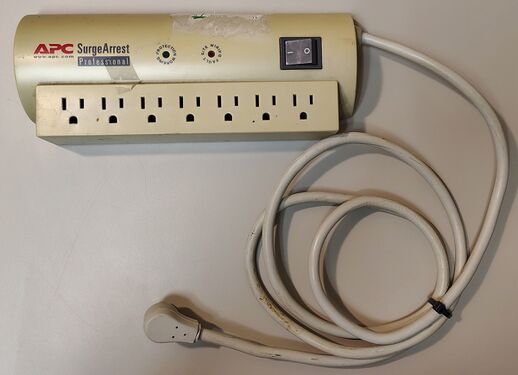 PRO7 as acquired prior to cleaning and documentation.
 -
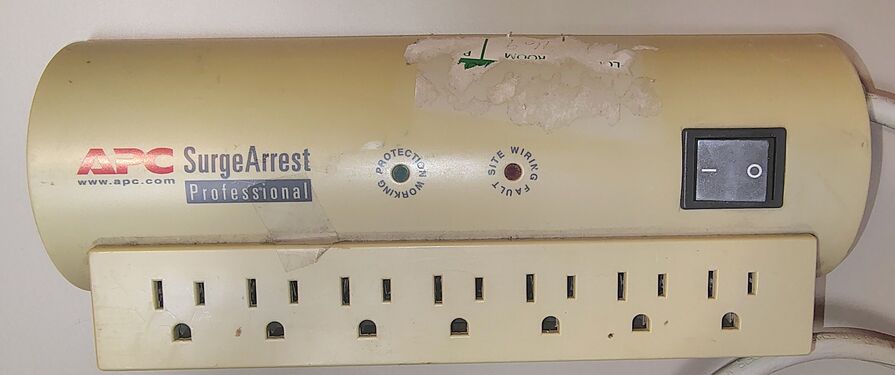 Close-up of the documented example showing adhesive residue, discoloration, and accumulated dirt prior to cleaning.


Functional Testing
The documented example was tested for basic electrical operation and outlet-wiring integrity.
The rocker switch successfully controlled power to all seven outlets. When connected to a properly wired receptacle and switched ON, the green Protection Working indicator illuminated, indicating the continued presence of functional surge-protection circuitry. The red Site Wiring Fault indicator remained unlit during testing.
The green Protection Working indicator appeared noticeably dimmer than those observed on other APC PRO7 examples documented by the OldSurge Archive. Despite the reduced brightness, the indicator remained visible and functional during testing.
When switched OFF, both indicators extinguished and power was removed from the outlet bank.
Testing with a receptacle tester confirmed correct hot, neutral, and ground wiring. No open ground, open neutral, reversed polarity, or other wiring faults were detected.
The documented example passed basic functional and outlet-wiring verification and appeared fully operational at the time of testing.
-
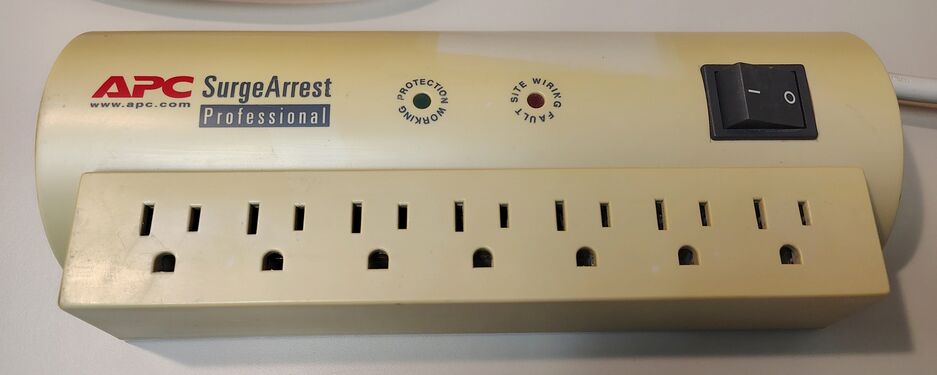 PRO7 connected to power with the rocker switch in the OFF position and indicator lights extinguished.
 -
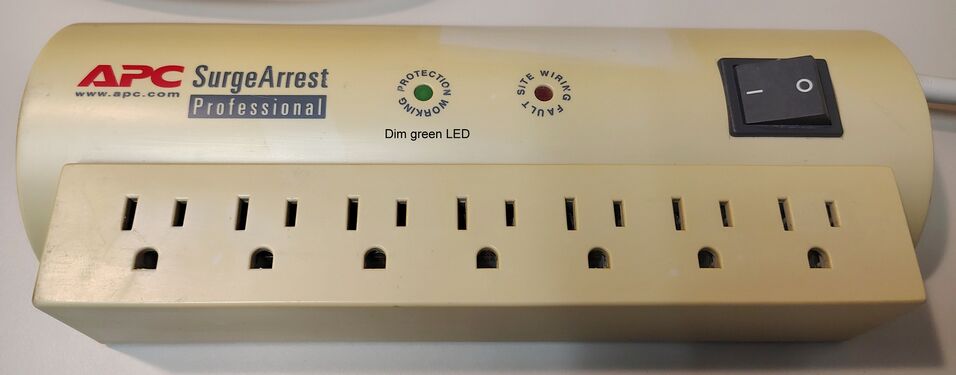 Protection Working indicator illuminated with the PRO7 connected to power and switched ON. The indicator appeared noticeably dim compared with other documented APC PRO7 examples.
 -
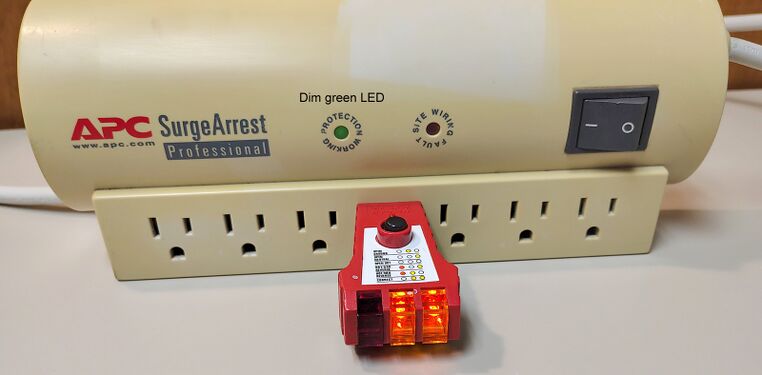 Outlet tester indicating correct wiring and grounding.


Teardown
The APC SurgeArrest Professional PRO7 is assembled using multiple Phillips-head screws and can be opened non-destructively.
Following removal of the enclosure screws, the housing separated into upper and lower sections containing the outlet-contact assemblies, brass power-distribution bus bars, switch and circuit-breaker assembly, surge-suppression circuitry, and attached power cord.
The upper housing incorporates molded outlet barriers, structural reinforcing ribs, mounting features, and supports intended to retain the outlet-contact assemblies and internal components. Inspection of the upper housing identified molded date-code wheels indicating manufacture during June 2006. The molded date code corresponds exactly with the manufacturing date derived from the serial number and provides independent physical confirmation of the specimen's production period.
The lower housing contains the outlet-contact assemblies, brass bus bars, power-cord termination, rocker-switch assembly, resettable circuit breaker, and surge-suppression circuit board.
The overall internal architecture closely resembles the archive's documented September 2008 APC PRO7 specimen and differs substantially from the earlier 1998 and 1999 examples. This similarity suggests that APC retained the same general design approach throughout much of the mid-2000s production period.
Inspection identified a surge-suppression circuit board carrying a ©2002 copyright marking, demonstrating continued use of APC's ©2002 board generation at least four years after its introduction. The finding further supports the conclusion that APC retained this suppression-board design through multiple years of production.
The documented example utilizes a Chung Kwang-manufactured SJT 14/3 power cord carrying UL file number E54024 and CSA file number LL65965. The cord represents a previously undocumented cord supplier within the APC PRO7 family currently preserved by the archive.
Initial inspection revealed no evidence of catastrophic component failure, overheating, melted insulation, burned conductors, or repair activity. Internal dust accumulation was minimal and construction quality remained consistent with other APC PRO7 examples documented by the archive.
Inspection of the suppression circuit board identified the marking:
AMERICAN POWER CONVERSION
© 2002
The documented example therefore utilizes APC's ©2002 suppression-board generation, the same board family documented in the archive's December 2002 and September 2008 APC PRO7 specimens.
The suppression circuitry incorporates multiple metal-oxide varistors (MOVs), EMI/RFI filtering components, status-indicator circuitry, and APC's established surge-protection architecture used throughout the documented ©2002 generation.
The component-side layout and overall board architecture closely resemble the documented September 2008 PRO7 specimen, providing additional evidence that APC retained the ©2002 board design through multiple years of production.
The circuit board is connected to the outlet-contact assemblies through heavy soldered conductors and copper traces. Power delivery is distributed through substantial brass bus bars and outlet-contact assemblies extending the length of the enclosure.
Inspection revealed no evidence of overheating, burned conductors, melted insulation, damaged components, carbon tracking, or repair activity. Internal dust accumulation was minimal and overall construction quality remained consistent with other APC PRO7 examples documented by the OldSurge Archive.
The suppression circuitry incorporates multiple metal-oxide varistors (MOVs), dual toroidal EMI/RFI filtering inductors, an X2-rated interference-suppression capacitor, indicator circuitry, and APC's surge-suppression architecture used throughout the documented ©2002 board generation.
The component-side layout closely resembles the archive's documented September 2008 APC PRO7 specimen. Both examples utilize the same general PCB architecture, filtering arrangement, outlet-distribution scheme, and suppression-board generation, providing additional evidence that APC retained this design for several years of production.
Heavy copper traces and substantial soldered interconnections are used throughout the suppression board. Power distribution to the outlet-contact assemblies is accomplished through a combination of brass bus bars, heavy copper conductors, and direct soldered connections.
The switch and circuit-breaker assembly utilizes dedicated insulated conductors and a mechanical overload-protection mechanism located at the cord-entry end of the enclosure.
-
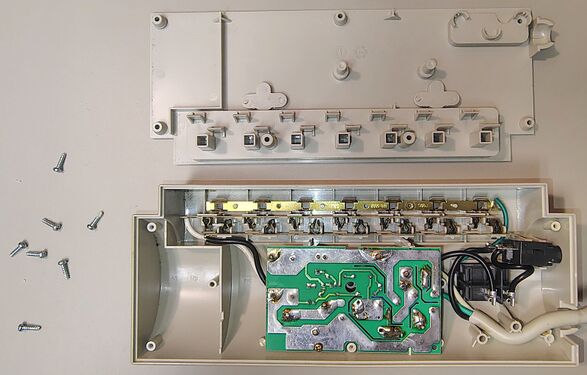 PRO7 opened following removal of the enclosure screws.
 -
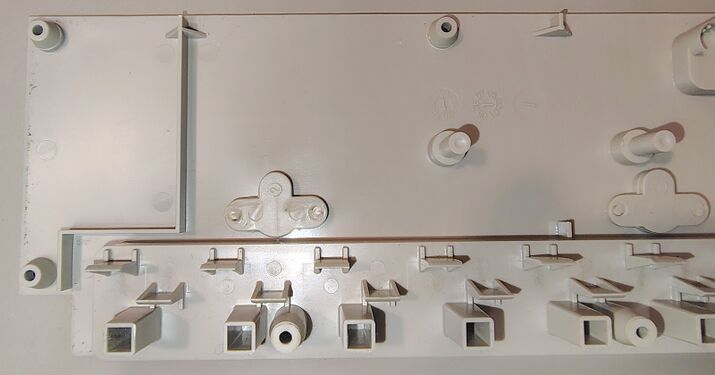 Upper housing interior showing outlet barriers, reinforcing ribs, and component-retention features.
 -
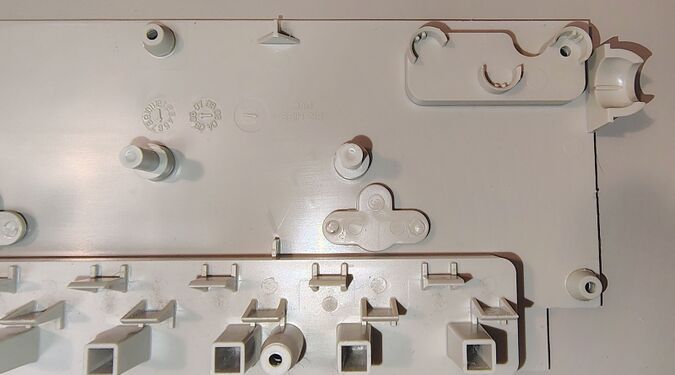 Upper-housing cord-entry area showing molded support structures, cord-retention features, and internal date-code wheels.
 -
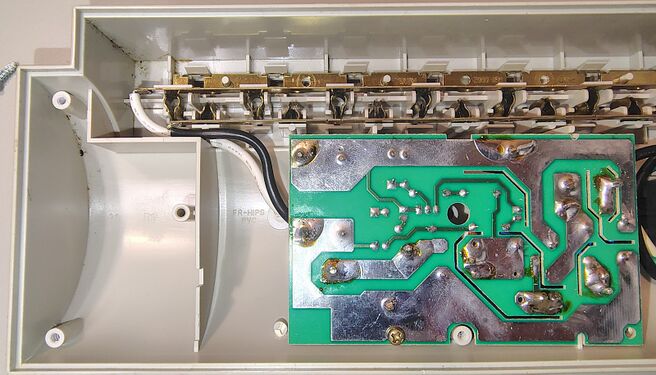 Outlet-contact assemblies, brass bus bars, and underside of the suppression circuit board.
 -
Internal date-code wheels indicating June 2006 manufacture.
-
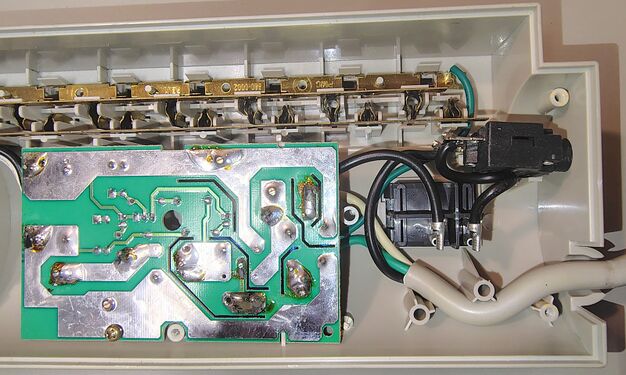 Switch-end wiring, circuit-breaker assembly, and underside of the suppression circuit board.
 -
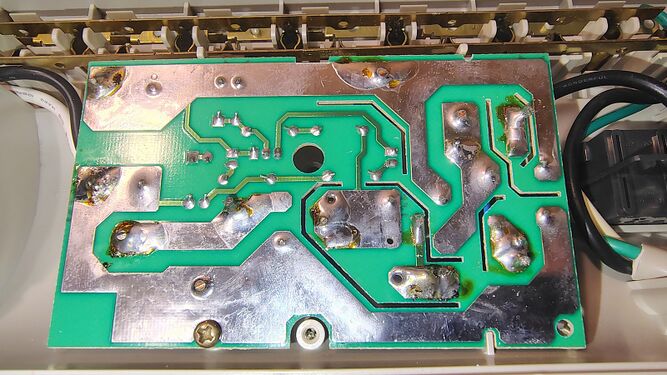 Suppression circuit board underside showing solder joints, heavy copper traces, and power-distribution circuitry.
 -
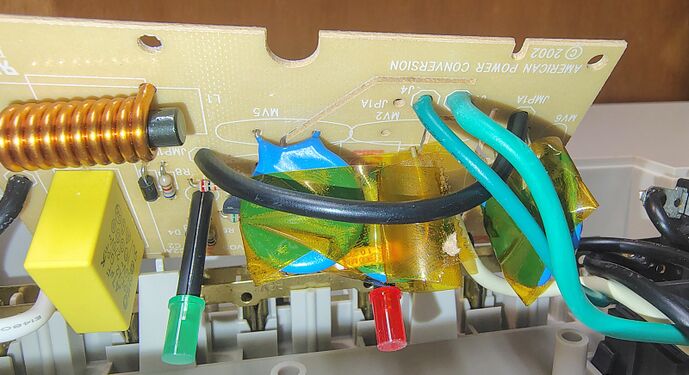 Suppression circuitry showing the ©2002 APC board revision, filtering components, wiring, and indicator assemblies.
 -
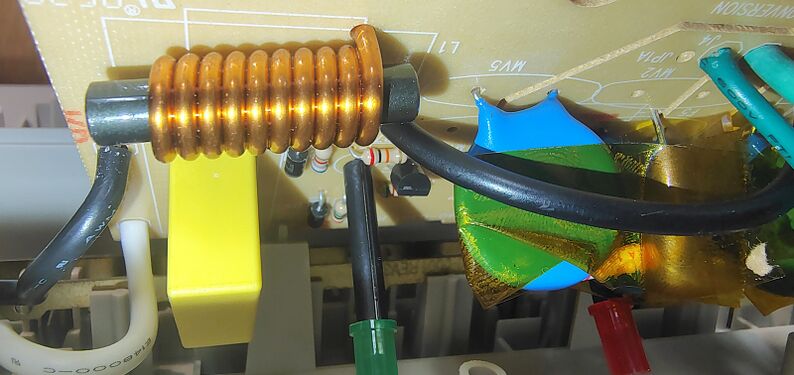 EMI/RFI filtering components, MOV surge-suppression circuitry, indicator assemblies, and associated wiring.
 -
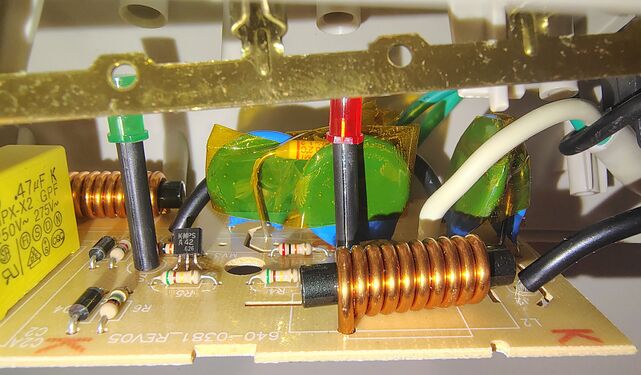 Dual filtering inductors, MOV surge suppressors, X2-rated capacitor, and associated suppression circuitry.


Comparison Notes
The documented example was manufactured in the Philippines, consistent with the archive's documented 2008 and 2017 APC PRO7 specimens. Earlier documented examples manufactured in 1998, 1999, and 2002 were produced in China, suggesting that APC relocated PRO7 production between 2002 and 2006 while retaining a largely unchanged external design.
The documented June 2006 specimen introduces a previously undocumented cord supplier within the APC PRO7 product family. Unlike the archive's documented 2002 specimen, which utilized a Hi-Pro cord assembly, and the 2008 specimen, which utilized a Baohing-manufactured cord, the 2006 example employs a Chung Kwang-manufactured 14 AWG SJT cord carrying UL file number E54024 and CSA file number LL65965.
The documented June 2006 specimen occupies an intermediate position within the APC PRO7 timeline currently documented by the OldSurge Archive:
- Z98010201706 (1998, ©1996 PCB)
- Z99080215662 (1999, ©1997 PCB)
- 2Z0250P17876 (December 2002, ©2002 PCB)
- 4Z0638P12907 (June 2006, ©2002 PCB)
- 4Z0842P07546 (September 2008, ©2002 PCB)
- 7Z1714L05335 (January 2017, ©2009 PCB)
The specimen demonstrates APC's continued use of the ©2002 suppression-board generation at least four years after its introduction and approximately three years before the adoption of the later ©2009 board revision documented in the 2017 example.
Recall Information
If applicable.
Historical References
Historical advertisements, archived manufacturer literature, patents, magazine references, archived web captures, and period specifications.

Notes
The suppression board utilizes discrete through-hole components throughout the design. No surface-mount components were observed, reflecting manufacturing practices common in surge-protection products of the early and mid-2000s.