APC SurgeArrest Professional PRO7 (4Z0842P07546): Difference between revisions
No edit summary |
|||
| Line 152: | Line 152: | ||
Comparison with the 2017 PRO7 specimen suggests that APC retained the same overall mechanical architecture while revising portions of the circuit-board design during the product's production life. | Comparison with the 2017 PRO7 specimen suggests that APC retained the same overall mechanical architecture while revising portions of the circuit-board design during the product's production life. | ||
Further inspection of the surge-suppression assembly revealed several differences from the 2017 PRO7 specimen documented elsewhere in the archive. | |||
The suppression circuit board bears a © 2002 American Power Conversion copyright marking, indicating that the underlying circuit design predates manufacture of the documented example by several years. | |||
A molded date-code wheel visible within the enclosure appears to indicate manufacture of the housing components in September 2008, consistent with the serial-number-derived manufacturing date. | |||
The suppression assembly incorporates: | |||
* Multiple metal-oxide varistors (MOVs) | |||
* Film capacitors | |||
* Line-noise filtering components | |||
* Surge-status monitoring circuitry | |||
* A combined switch and circuit-breaker assembly | |||
The overall architecture remains similar to later PRO7 examples but appears to utilize an earlier revision of APC's suppression circuitry. | |||
<gallery mode="packed" heights="250"> | <gallery mode="packed" heights="250"> | ||
| Line 160: | Line 176: | ||
File:surge_APC_Pro7_2008_4Z0842P07546_teardown_busbar_circuitboard_01.jpg|Outlet bus bars and suppression circuit board. | File:surge_APC_Pro7_2008_4Z0842P07546_teardown_busbar_circuitboard_01.jpg|Outlet bus bars and suppression circuit board. | ||
File:surge_APC_Pro7_2008_4Z0842P07546_teardown_switchandbreaker_01.jpg|Cord-entry wiring, switch, and breaker assembly. | File:surge_APC_Pro7_2008_4Z0842P07546_teardown_switchandbreaker_01.jpg|Cord-entry wiring, switch, and breaker assembly. | ||
File:surge_APC_Pro7_2008_4Z0842P07546_teardown_datewheels_01.jpg|Internal date-code wheels indicating September 2008 manufacture. | |||
File:surge_APC_Pro7_2008_4Z0842P07546_teardown_circuitboardunder_01.jpg|Suppression circuitry and 2002 APC board marking. | |||
File:surge_APC_Pro7_2008_4Z0842P07546_teardown_circuitboarddetail_01.jpg|Underside of the suppression circuit board. | |||
</gallery> | </gallery> | ||
== Documented Example == | == Documented Example == | ||
Revision as of 16:24, 22 September 2026
APC SurgeArrest Professional PRO7 (4Z0842P07546)

Overview
The APC SurgeArrest Professional PRO7 is a seven-outlet surge protector manufactured by APC.
The documented example bears serial number 4Z0842P07546 and was manufactured in September 2008.
Unlike the 2017 APC PRO7 specimen documented by the OldSurge Archive, this example exhibits substantial enclosure yellowing while remaining complete and operational.
Physical Description
The APC SurgeArrest Professional PRO7 utilizes a rounded upper housing and a flat outlet section containing seven grounded outlets.
The documented example exhibits significant yellowing of the enclosure. Areas surrounding several receptacles have retained noticeably lighter coloration where plugs appear to have remained installed for extended periods.
The pattern of discoloration suggests:
- One two-prong device occupied the outlet nearest the end opposite the power-cord entry.
- Multiple grounded three-prong devices occupied the adjacent outlets.
- The outlet closest to the power-cord entry appears to have remained unused, as its surrounding plastic exhibits discoloration similar to the rest of the enclosure.
The yellowing pattern provides a visual record of long-term usage and aging.
Unlike the underside of the enclosure, which has largely retained its original color, the upper housing exhibits significant yellowing. The difference may be attributable to environmental exposure, ultraviolet light, heat, or differences in the plastic formulations used between the upper and lower enclosure components.
The underside incorporates two keyhole-style mounting slots that support either horizontal or vertical mounting orientations.
Condition Upon Acquisition
The documented example was acquired as part of a lot containing twelve APC SurgeArrest Professional surge protectors.
The enclosure exhibits significant yellowing, accumulated dirt, and cosmetic wear consistent with long-term use and storage.
The yellowing is primarily concentrated on the upper housing. The underside of the enclosure has retained much more of its original color, suggesting that environmental exposure played a significant role in the discoloration.
The unit was cleaned prior to detailed documentation and photography.

Physical Description
The documented example exhibits substantial yellowing across most exposed enclosure surfaces.
Areas adjoining several outlet positions have retained noticeably lighter coloration. The pattern appears consistent with long-term occupancy by plugged-in devices. The outlet nearest the end opposite the power-cord entry appears consistent with prolonged use by a two-prong device, while several adjacent outlets appear to have been occupied by grounded three-prong plugs. The outlet nearest the power-cord entry appears relatively unused.
The resulting discoloration pattern provides a visual record of long-term usage and environmental aging.
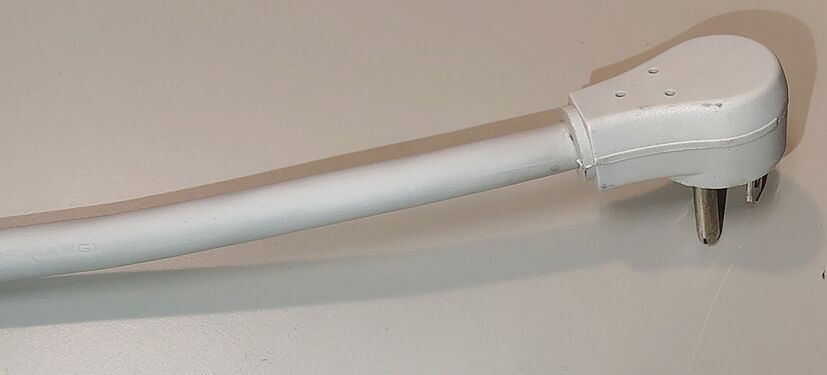
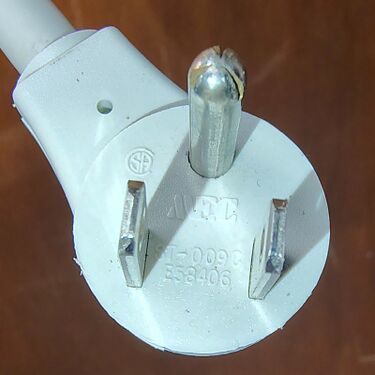
The PRO7 utilizes a right-angle grounded attachment plug intended to sit close to the wall surface.
When used with modern receptacles installed in the grounding-pin-up orientation, the plug directs the power cord upward before it bends downward. While the arrangement remains functional, it is somewhat less convenient than more modern low-profile plug designs that direct the cord downward immediately upon exiting the receptacle.
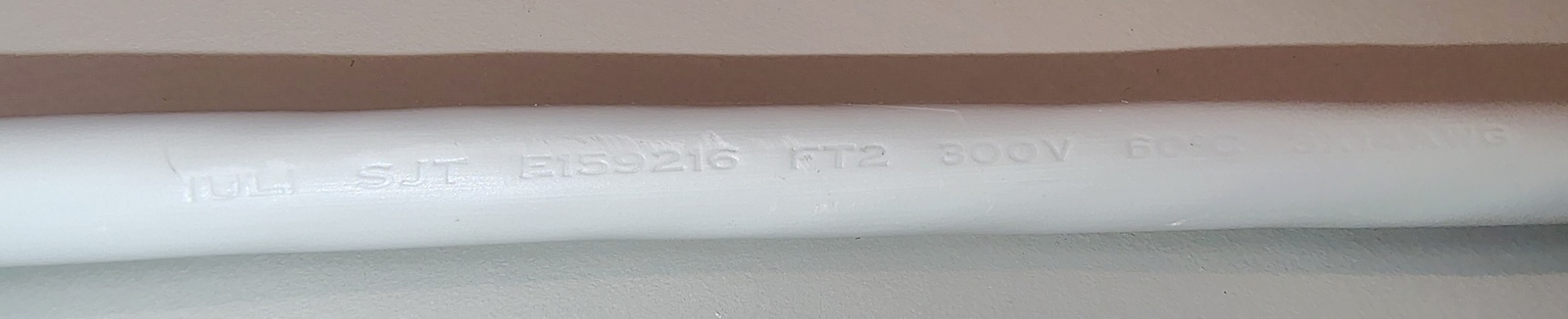
The PRO7 utilizes a six-foot SJT-rated power cord terminated with a right-angle grounded attachment plug.
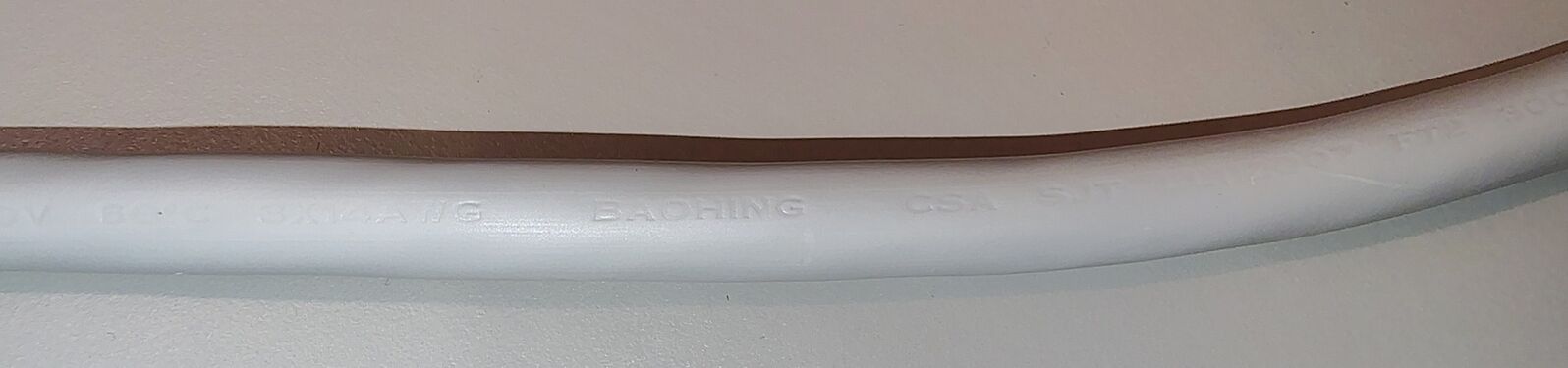
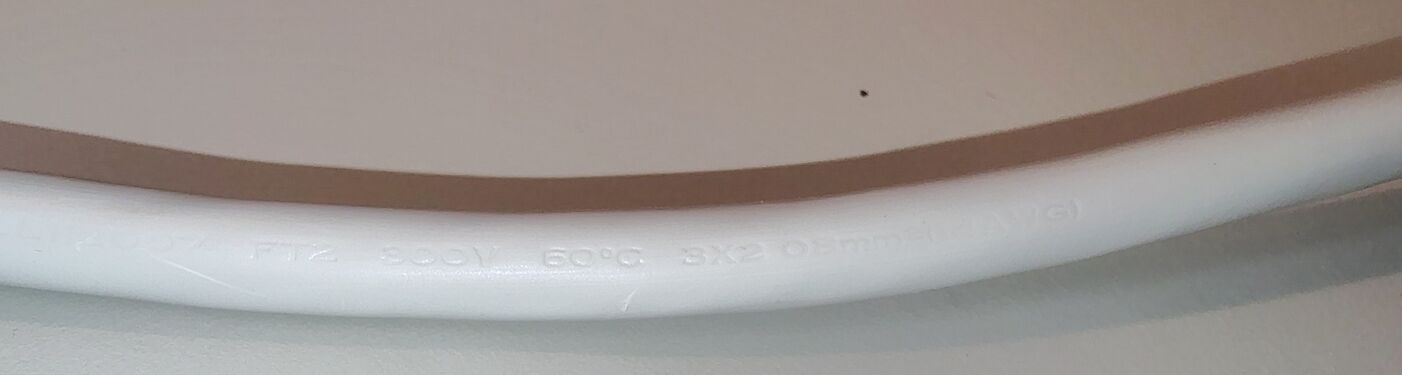
Cord markings identify the cable as a three-conductor 2.08 mm² (approximately 14 AWG) cord rated for 300 volts and 60°C operation.
The power cord appears to have been manufactured by Baohing and carries both UL and CSA approval markings.
Product Gallery
-
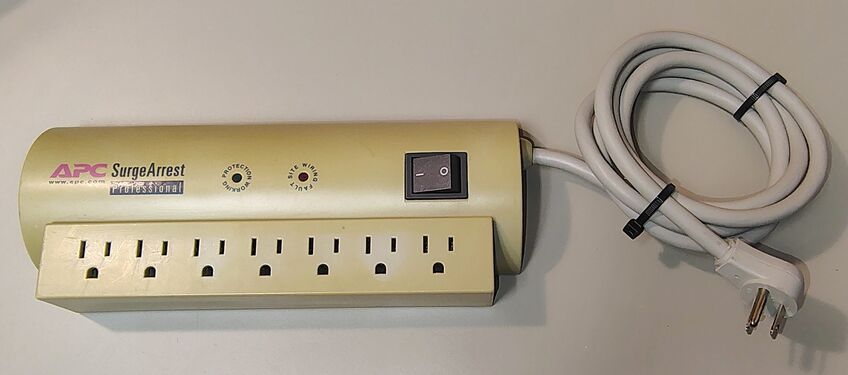 Overall view of the documented PRO7 example.
 -
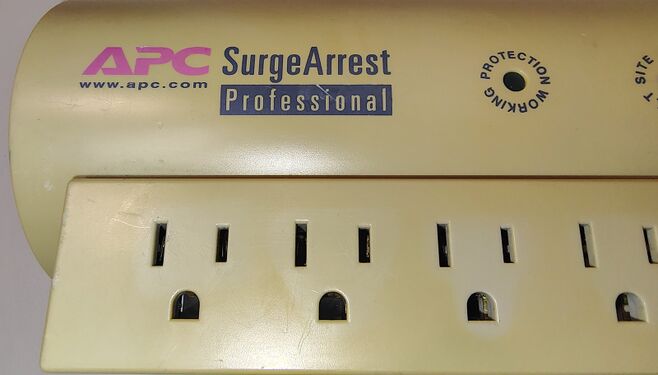 APC branding and Protection Working indicator.
 -
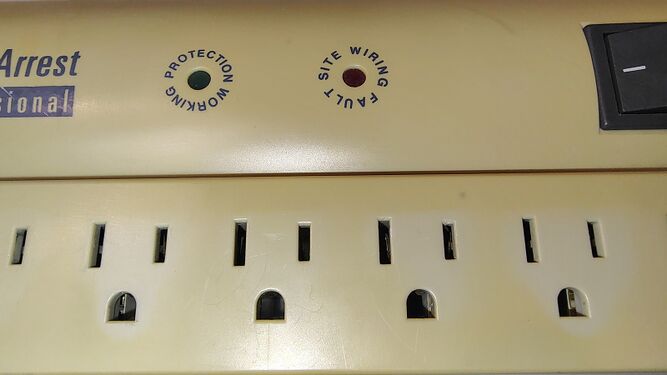 Outlet section showing differential yellowing.
 -
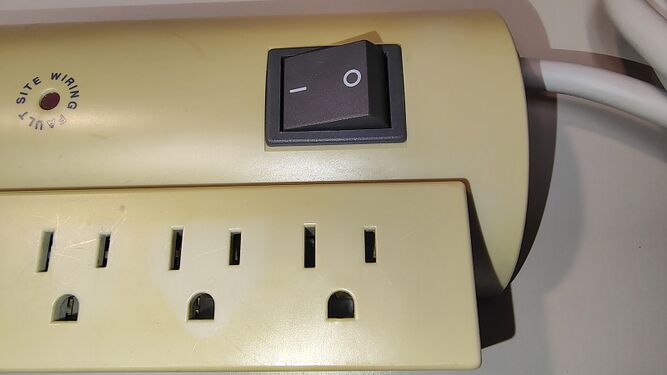 Power switch and status indicators.
 -
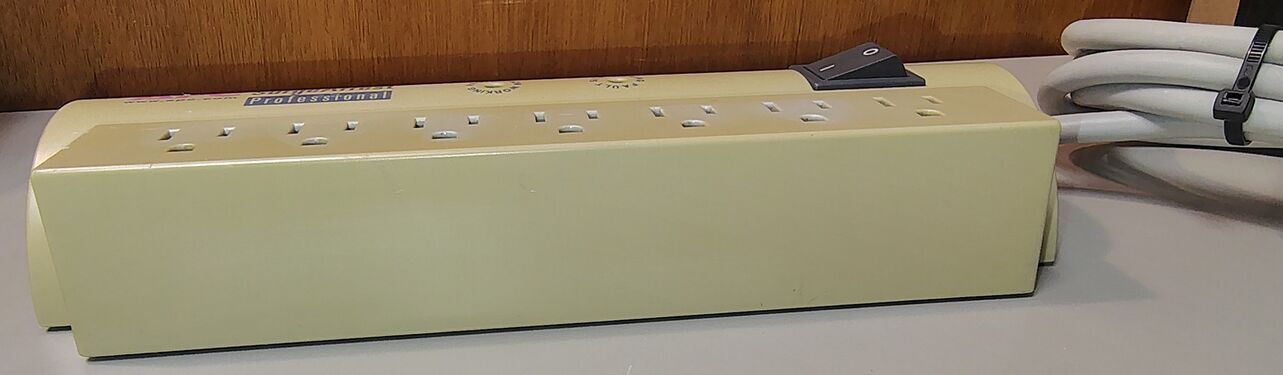 Left-side profile view.
 -
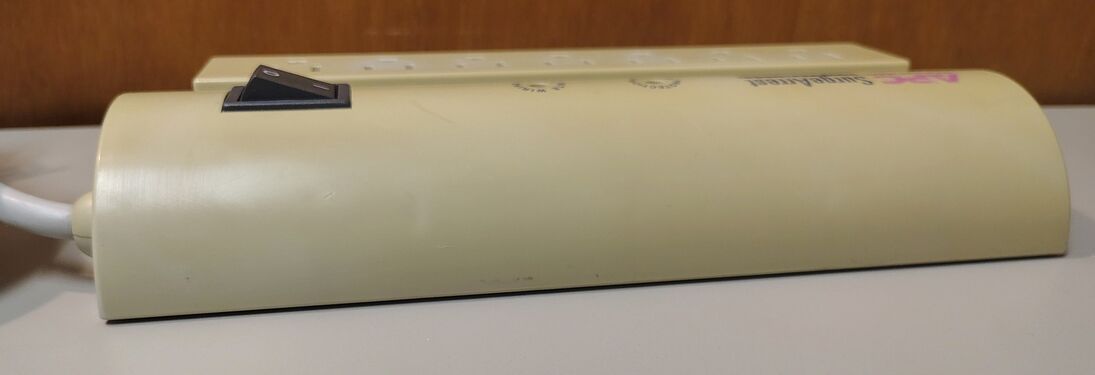 Right-side profile view.
 -
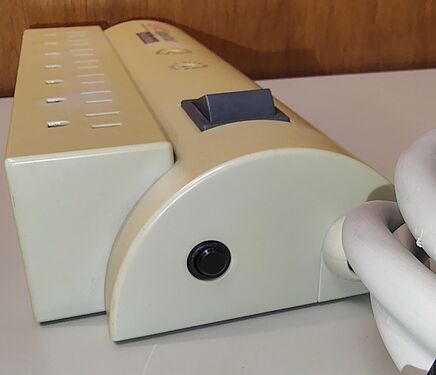 Cord-entry end showing the switch and status indicators.
 -
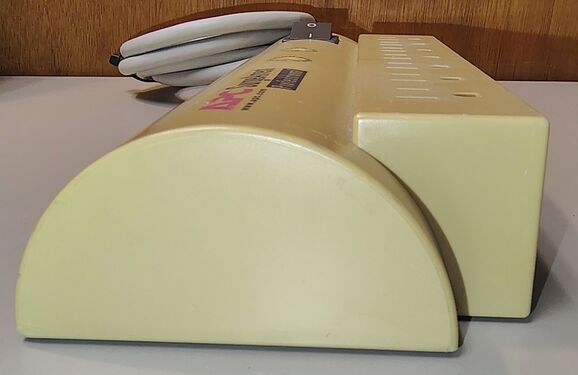 Rounded outlet-end profile.
 -
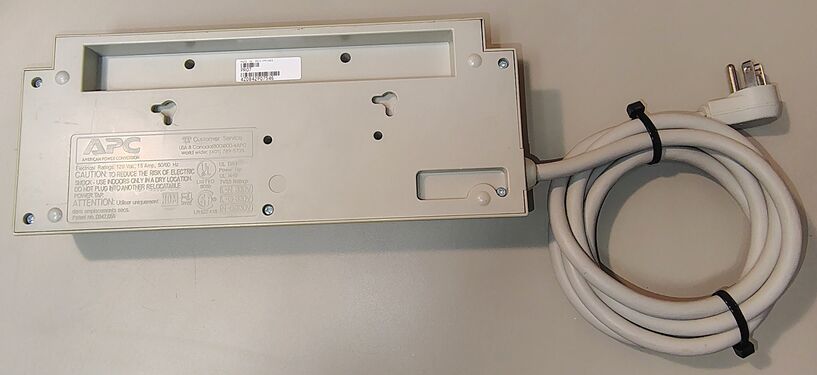 Underside view showing labels and mounting provisions.
 -
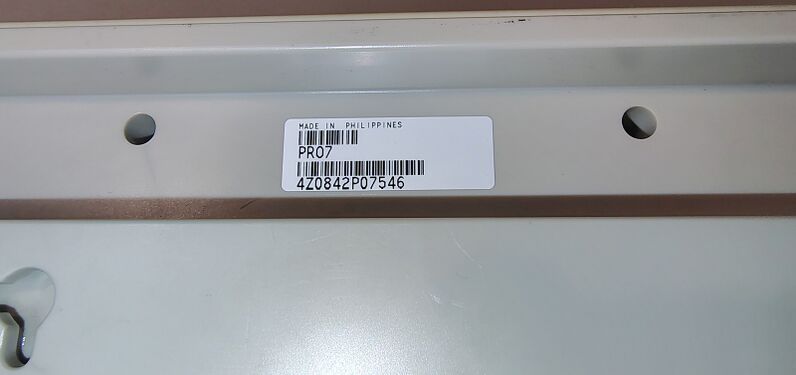 Model and serial-number label.
 -
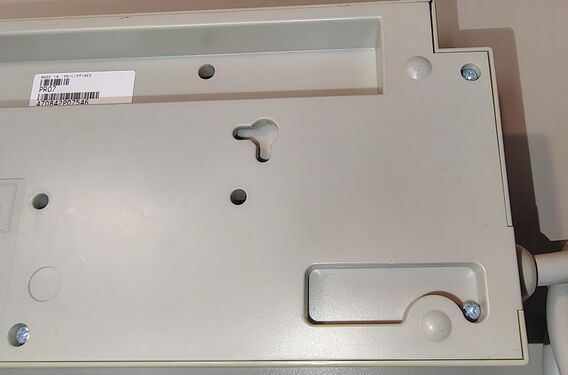 Cord-entry end and mounting provisions.
 -
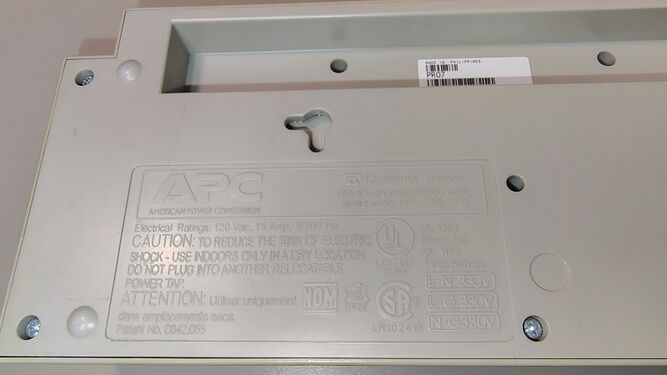 Product information label and protection ratings.
 -
 Right-angle plug and attached power cord.
 -
 Right-angle attachment plug with approval markings.
 -
 Power cord specifications and UL markings.
 -
 Additional power cord manufacturer markings.
 -
 Additional power cord specifications.


Specifications
- OldSurge ID: OS-0011
- Manufacturer: APC
- Product Family: SurgeArrest Professional
- Model: PRO7
- Serial Number: 4Z0842P07546
- Manufacturing Date: September 2008
- Country of Origin: Philippines
- Device Type: Surge Protector
- Outlets: 7 grounded outlets
- Length:
- Approximately 10.25 in (26.0 cm) along the long edge
- Approximately 9.0 in (22.9 cm) along the curved edge
- Width:
- Approximately 4.19 in (10.6 cm) at the base
- Height:
- Approximately 1.75 in (4.4 cm)
- Power Cord Length: Approximately 6 ft (1.8 m)
- Electrical Rating: 120 VAC, 15 A, 50/60 Hz
- UL 1363 Power Tap
- UL 1449 TVSS
- TVSS Ratings:
- Line-to-Neutral (L-N): 330 V
- Line-to-Ground (L-G): 330 V
- Neutral-to-Ground (N-G): 330 V
- Power Cord Length: Approximately 6 ft (1.8 m)
- Power Cord Type: SJT
- Conductors: 3 × 2.08 mm² (approximately 14 AWG)
- Cord Voltage Rating: 300 V
- Cord Temperature Rating: 60°C
- UL File Number (Cord): E159216
- Cord Manufacturer: Baohing
- Plug Certification File Number: E56406
Testing
The documented example was tested for basic electrical operation and wiring integrity.
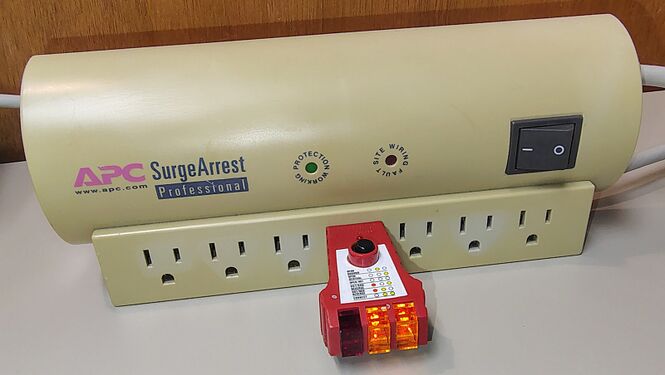
Testing with a receptacle tester confirmed correct hot, neutral, and ground wiring. No open ground, open neutral, reversed polarity, or other wiring faults were detected.
The rocker switch successfully controlled power to all outlets.
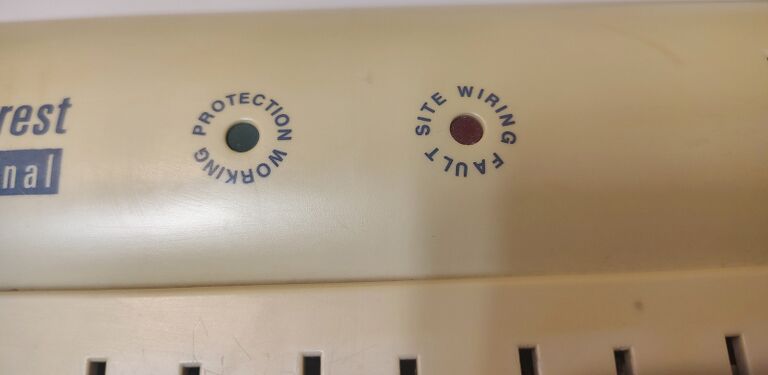
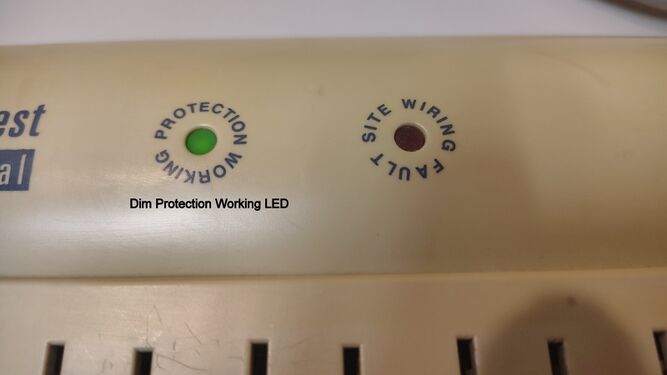
When energized, the green Protection Working indicator illuminated, indicating that surge-protection circuitry remained active.
Unlike the 2017 PRO7 documented by the archive, the Protection Working indicator on this specimen appears noticeably dimmer during operation. The Site Wiring Fault indicator remained unlit when connected to a properly wired receptacle.
-
 PRO7 connected to power with the rocker switch in the OFF position.
 -
 Dim Protection Working indicator illuminated during testing.
 -
 Outlet tester indicating correct wiring and grounding.


Teardown
The APC SurgeArrest Professional PRO7 is assembled using multiple screws and can be opened non-destructively.
During disassembly, the enclosure separates into upper and lower housing halves. The upper housing contains molded outlet barriers, mounting-slot structures, reinforcing ribs, and dedicated supports for the outlet-contact assemblies and control-section components.
The lower housing contains the outlet-contact assemblies, brass bus bars, rocker switch, power-cord wiring, and surge-suppression circuit board.
Inspection of the documented example revealed dust accumulation and cosmetic contamination consistent with long-term use, but no obvious signs of overheating, melted components, or catastrophic electrical failure.
The PRO7 utilizes a combined power-switch and circuit-breaker assembly located near the power-cord entry point.
As observed in the 2017 PRO7 specimen documented elsewhere in the archive, the outlet bus bars become partially displaced when the enclosure halves are separated. Reassembly requires proper seating of the bus bars within their molded supports before the housing can be closed correctly.
The stamped brass bus-bar system distributes power to all outlet-contact assemblies while the suppression circuitry and monitoring functions are concentrated on the printed circuit board.
Comparison with the 2017 PRO7 specimen suggests that APC retained the same overall mechanical architecture while revising portions of the circuit-board design during the product's production life.
Further inspection of the surge-suppression assembly revealed several differences from the 2017 PRO7 specimen documented elsewhere in the archive.
The suppression circuit board bears a © 2002 American Power Conversion copyright marking, indicating that the underlying circuit design predates manufacture of the documented example by several years.
A molded date-code wheel visible within the enclosure appears to indicate manufacture of the housing components in September 2008, consistent with the serial-number-derived manufacturing date.
The suppression assembly incorporates:
- Multiple metal-oxide varistors (MOVs)
- Film capacitors
- Line-noise filtering components
- Surge-status monitoring circuitry
- A combined switch and circuit-breaker assembly
The overall architecture remains similar to later PRO7 examples but appears to utilize an earlier revision of APC's suppression circuitry.
-
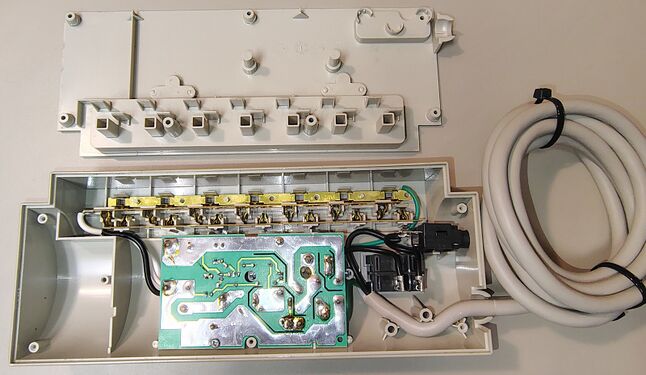 PRO7 opened following removal of the enclosure screws.
 -
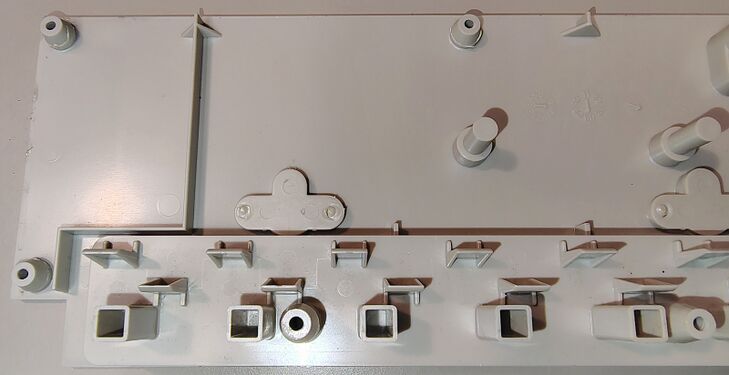 Upper housing outlet supports and structural details.
 -
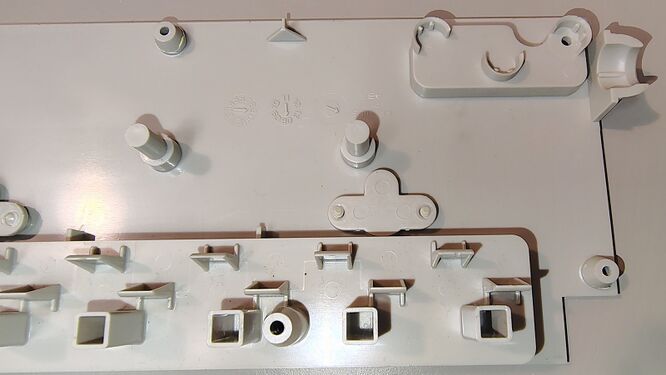 Control-section housing details.
 -
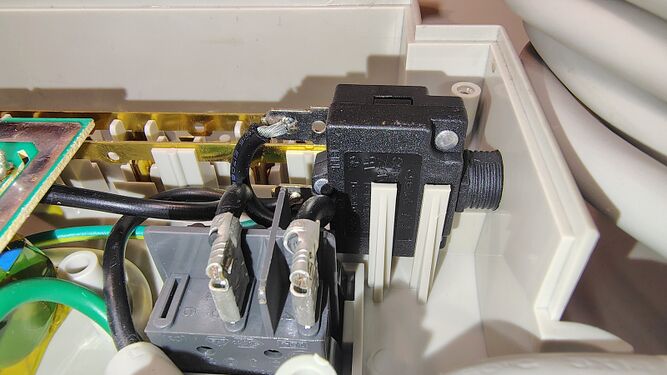 Circuit breaker and rocker-switch assembly.
 -
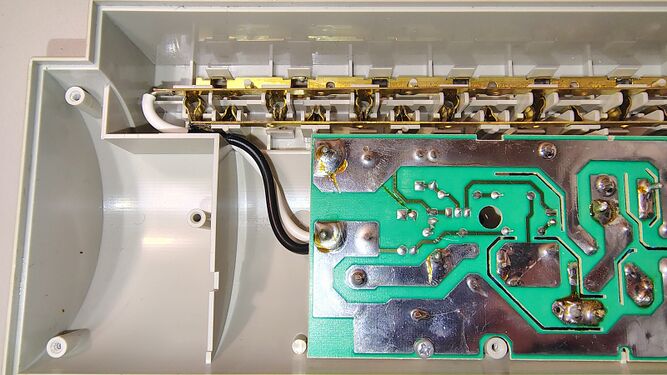 Outlet bus bars and suppression circuit board.
 -
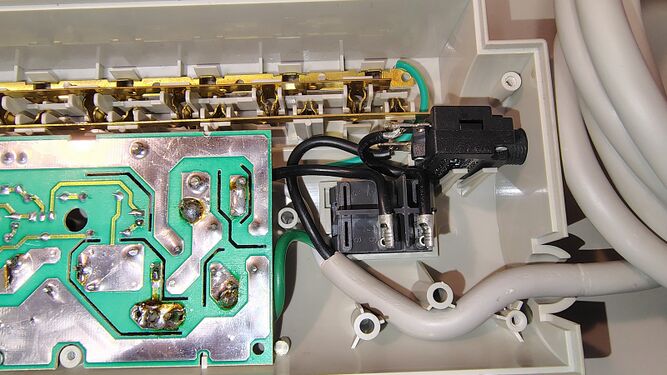 Cord-entry wiring, switch, and breaker assembly.
 -
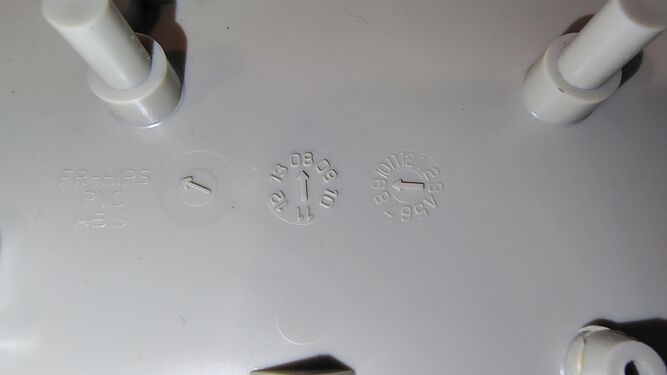 Internal date-code wheels indicating September 2008 manufacture.
 -
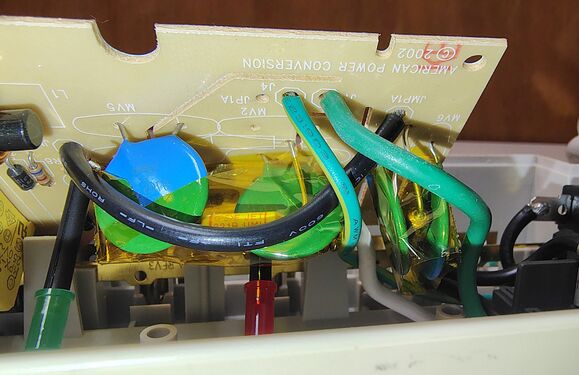 Suppression circuitry and 2002 APC board marking.
 -
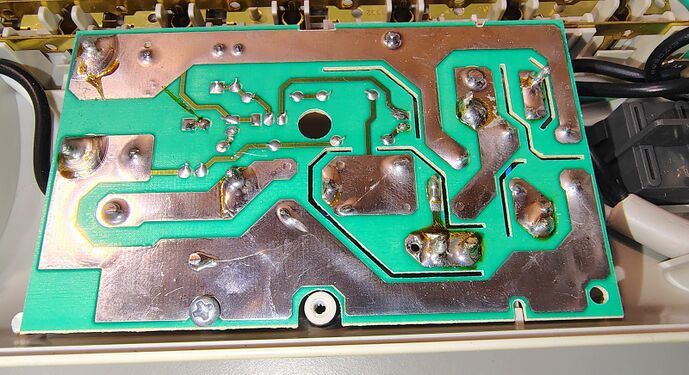 Underside of the suppression circuit board.


Documented Example
- OldSurge ID: OS-0011
- Model: PRO7
- Serial Number: 4Z0842P07546
- Manufacturing Date: September 2008