PowerSentry 626: Difference between revisions
| Line 235: | Line 235: | ||
The PowerSentry 626 is the first surge protector documented by the archive that utilizes a mechanically-latching push-button switch rather than a rocker switch. The design is functionally similar but operates using a push-on / push-off mechanism more commonly associated with certain lighting controls and power-distribution equipment. | The PowerSentry 626 is the first surge protector documented by the archive that utilizes a mechanically-latching push-button switch rather than a rocker switch. The design is functionally similar but operates using a push-on / push-off mechanism more commonly associated with certain lighting controls and power-distribution equipment. | ||
The PowerSentry 626 demonstrates a markedly different design philosophy from the contemporaneous APC SurgeArrest Professional PRO7 series. While both products provide seven grounded outlets and a 330-volt suppression rating, the PowerSentry achieves this using a significantly smaller suppression assembly and simpler internal construction. | |||
== Recall Information == | == Recall Information == | ||
Revision as of 00:44, 12 October 2026
The PowerSentry Model 626 is a seven-outlet surge protector manufactured by PowerSentry, a division of Fiskars Consumer Products, Inc.
The documented example was manufactured on 20 October 2002 and incorporates several design features not previously documented by the OldSurge Archive, including a push-button latching power switch, integrated cord-storage guides, and a plug-mounted cord-retention clip.
Despite extensive review of surviving 2003 and 2004 PowerSentry product catalogs preserved by Archive.org, the Model 626 has not yet been identified within available product literature, making its exact position within the PowerSentry product lineup uncertain.

Overview
General description of the product, manufacturer, purpose, historical significance, and why this example is noteworthy.
Historical Context
The documented example appears to have been manufactured shortly before the earliest surviving PowerSentry catalogs currently preserved by Archive.org. Although it shares several design characteristics with products documented in the company's 2003 and 2004 literature, the Model 626 has not yet been positively identified within surviving catalogs.
The absence of the model from documented product literature may indicate that the device belonged to an earlier product family, a retailer-specific product line, or a product category omitted from surviving catalogs.
Although the documented Model 626 shares certain cord-management concepts with products in PowerSentry's Contractor Series literature, its overall styling more closely resembles PowerSentry's consumer-oriented surge-protection products documented in the 2004 Surge Protectors catalog.
Despite being manufactured in October 2002, the Model 626 has not yet been identified within surviving 2003 and 2004 PowerSentry product literature. The absence of the model from multiple documented catalogs suggests that it may represent a discontinued product, a retailer-specific variant, an undocumented product family, or a category omitted from surviving marketing materials.
Documented Example
- OldSurge ID: OS-XXXX
- Manufacturer:
- Model:
- Part Number:
- Serial Number:
- Manufacturing Date:
Specifications
Short introductory paragraph explaining what makes the specifications noteworthy.
- Manufacturer: PowerSentry
- Model: 626
- Device Type: Surge Protector
- Country of Origin: China
- Electrical Rating: 15A, 125VAC, 60Hz
- Maximum Load: 1875W
- Outlets: 7
- Protection: AC Power Surge Protection
- Suppressed Voltage Rating: 330V
- Length: Approximately 14.88 in (37.8 cm)
- Width:
- Approximately 2.50 in (6.4 cm) at center
- Approximately 1.88 in (4.8 cm) at ends
- Height: Approximately 1.50 in (3.8 cm)
- Power Cord Length: Approximately 6 ft
- UL File Number: E128811
- Ground Indicator: Yes
- Surge Indicator: Yes
- Power Cord Length: Approximately 6 ft
- Plug Type: NEMA 5-15P
- Plug Style: Straight Blade
- Cord Type: SJT
- Conductors: 3
- Conductor Size: 14 AWG
- UL File Number (Cord): E135710
- CSA File Number (Cord): LL95737
- Cord Manufacturer: Bon-Eagle
- Ground Indicator: Yes
- Surge Indicator: Yes
Notable Characteristics
- Manufactured 20 October 2002 (date wheels).
- Earliest documented PowerSentry surge protector preserved by the OldSurge Archive.
- First documented mechanically-latching push-button power switch.
- First documented integrated cord-retention clip.
- First documented complete cord-management system consisting of cord-storage guides and plug-retention clip.
- Ground and Surge status indicators.
- Seven grounded NEMA 5-15R receptacles.
- Manufactured during the period represented by surviving 2003-2004 PowerSentry product literature.
- Side-mounted resettable circuit breaker.
- Transformer-spaced outlet layout.
Weight
The documented PowerSentry 626 weighs approximately 1 pound 5.4 ounces (607 grams).
Despite measuring nearly fifteen inches in length, the unit remains relatively light due to its molded-plastic construction. The weight is comparable to many consumer surge protectors from the early 2000s despite the inclusion of a seven-outlet layout, cord-management features, integrated indicators, a push-button latching switch, and a resettable circuit breaker.
The documented example is considerably lighter than many APC SurgeArrest Professional units documented by the archive while offering a comparable outlet count.

Physical Characteristics
The PowerSentry 626 utilizes an elongated tapered enclosure measuring approximately 14.88 inches long, 2.50 inches wide at the center, 1.88 inches wide at the ends, and approximately 1.50 inches tall.
Seven grounded receptacles are arranged in a single row along the front surface of the enclosure. Several receptacles are transformer-spaced, providing clearance for oversized AC adapters and wall-transformer power supplies. This feature became increasingly common on premium surge protectors during the early 2000s as external power adapters became more prevalent.
The control section incorporates a push-button latching power switch together with Ground and Surge status indicators. Unlike rocker switches documented on many other surge protectors in the archive, the switch remains mechanically latched in either the ON or OFF position. Pressing the button alternately latches the unit in the ON and OFF positions.
The enclosure incorporates molded cord-storage guides at both ends, allowing the attached six-foot power cord to be wrapped around the body of the surge protector for storage and transport. The attachment plug additionally incorporates an integrated cord-retention clip similar to those commonly found on vacuum-cleaner power cords.
A resettable circuit breaker is mounted on the side of the enclosure and is accessible through a molded opening. The breaker is independent of the main power switch and provides overload protection.
Although the integrated cord-management system is visually similar to products documented in the Contractor Series Catalog (February 2004), the overall styling, color scheme, indicator layout, and transformer-spaced outlet arrangement more closely resemble consumer-oriented PowerSentry surge protectors documented in surviving 2004 product literature.
The combination of a push-button switch, transformer-spaced outlets, cord-retention clip, and integrated cord-storage system distinguishes the PowerSentry 626 from all other surge protectors presently documented by the OldSurge Archive.
Two keyhole-style mounting slots are molded into the underside of the enclosure, permitting wall or under-desk installation.
A molded identification label specifies Model 626, a 15A 125VAC 60Hz rating, a maximum load of 1875 watts, and a suppressed voltage rating of 330 volts.
A UL hologram label identifies the unit as both a listed Power Tap and TVSS and carries an August 2002 date marking.
The Ground and Surge indicators are integrated into the control section and provide visual confirmation of proper grounding and surge-protection status.
The attached six-foot power cord terminates in a molded NEMA 5-15P grounding attachment plug. Unlike every other surge protector currently documented by the archive, the plug incorporates an integrated cord-retention clip that secures the power cord after it has been wrapped around the enclosure for storage.
Combined with the molded cord-storage guides at both ends of the enclosure, the retention clip forms a complete cord-management system not previously documented elsewhere in the OldSurge Archive.
The control section incorporates separate Ground and Surge indicators. The indicators provide visual confirmation of grounding integrity and surge-protection status.
The attached power cord utilizes heavy-duty SJT construction with three 14 AWG conductors. Cord markings identify the cord manufacturer as Bon-Eagle and indicate both UL and CSA approval.
The molded NEMA 5-15P attachment plug incorporates an integrated cord-retention clip that secures the cord after it has been wrapped around the enclosure for storage. Combined with the molded cord guides, this feature forms a complete cord-management system unique among surge protectors currently documented by the archive.
The enclosure incorporates molded PowerSentry branding above the Ground and Surge indicator lamps. Unlike many surge protectors that utilize printed logos, the branding is molded directly into the enclosure surface.
Photographs
-
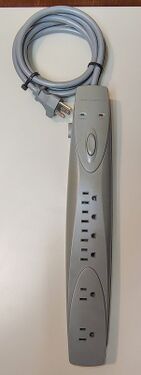 Overall view of the documented PowerSentry Model 626 showing the elongated enclosure, seven grounded outlets, and integrated cord-management features.
 -
 Outlet detail showing the seven grounded receptacles and tapered enclosure profile.
 -
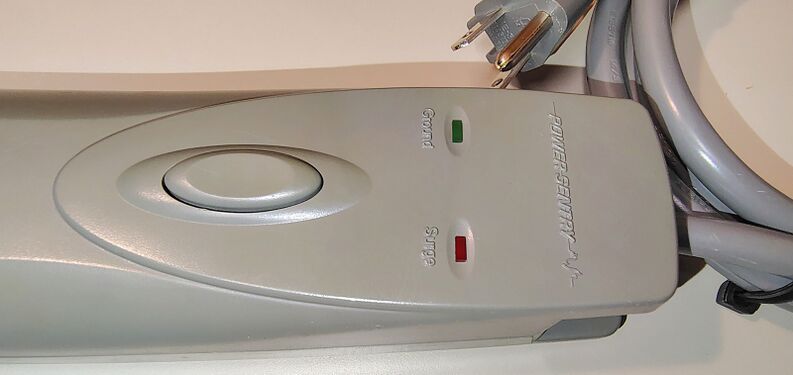 Control section showing the push-button power switch, Ground indicator, and Surge indicator.
 -
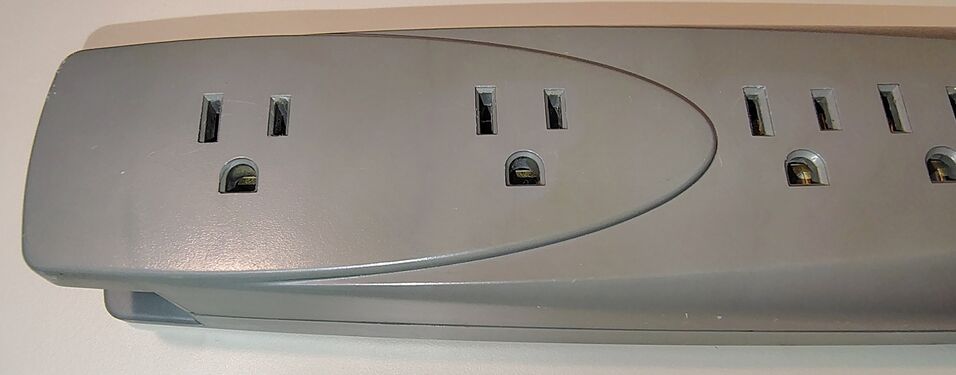 Transformer-spaced outlet section showing the widened outlet geometry intended for oversized power adapters.
 -
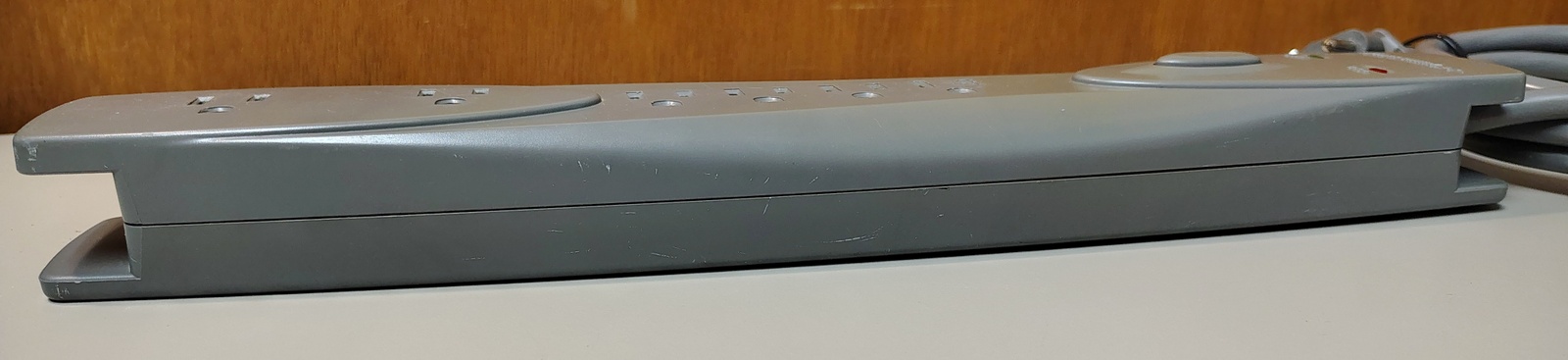 Side profile showing the elongated tapered enclosure, integrated cord-management guides, and push-button power switch.
 -
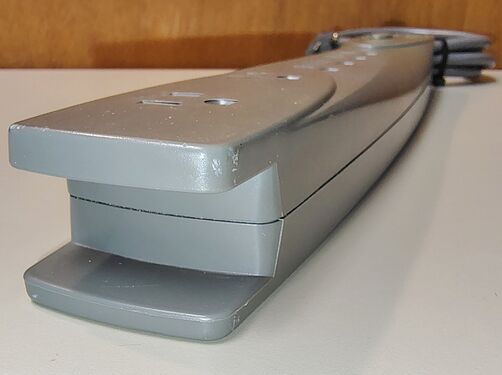 End view showing the integrated cord-storage guide used for wrapping and retaining the attached power cord.
 -
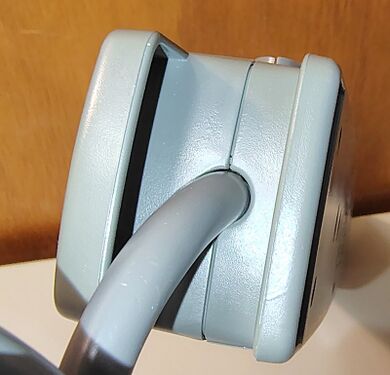 Cord-entry end showing the integrated cord-storage guide and strain-relief arrangement.
 -
 Side profile showing the push-button switching mechanism incorporated into the enclosure.
 -
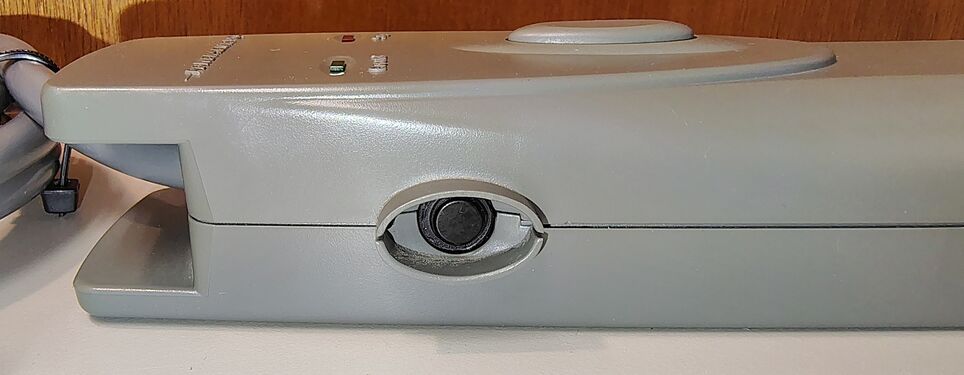 Detail view of the side-mounted resettable circuit-breaker assembly.
 -
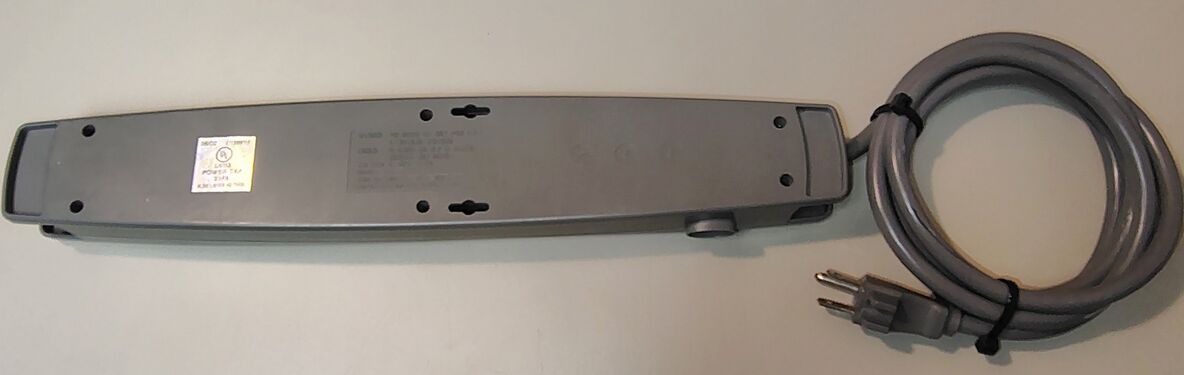 Underside overview showing mounting provisions, labels, date wheels, and power-cord assembly.
 -
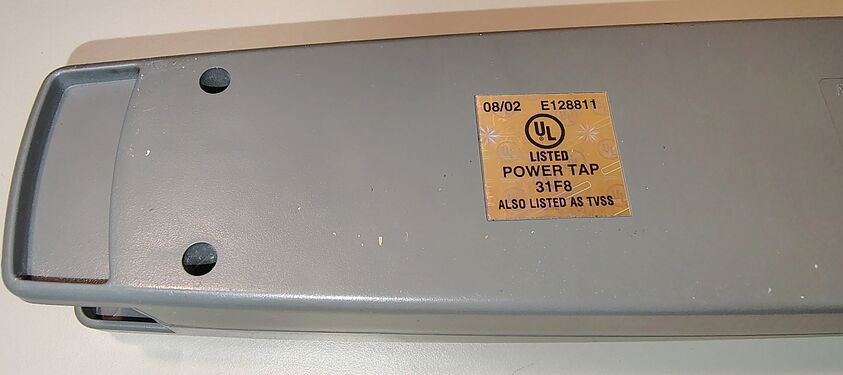 UL listing label showing 08/02 date marking and UL file number E128811.
 -
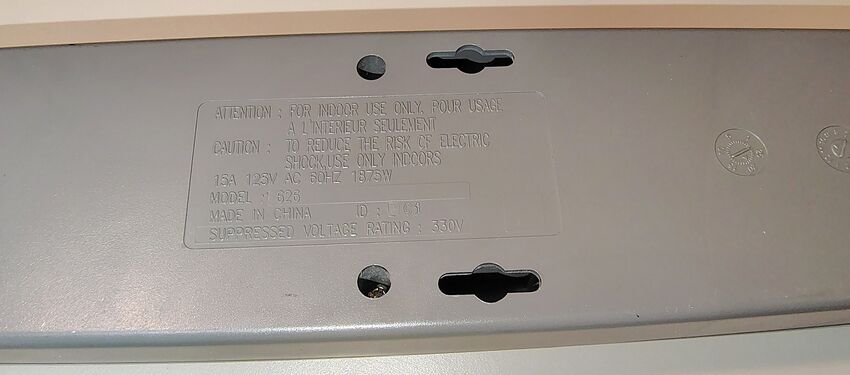 Model identification, electrical ratings, and suppressed voltage rating.
 -
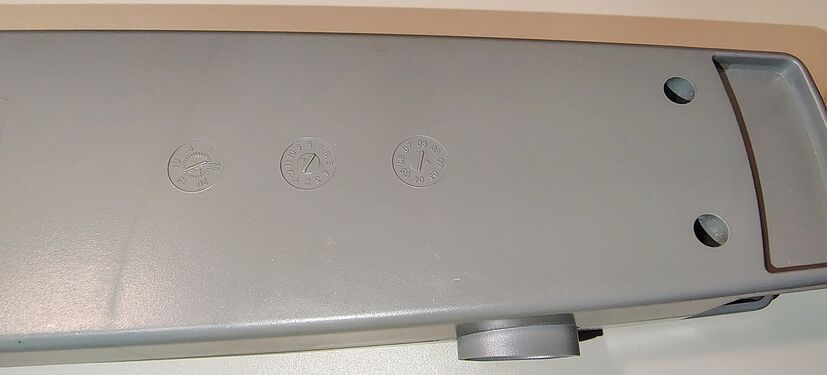 Molded date wheels indicating manufacture on 20 October 2002.
 -
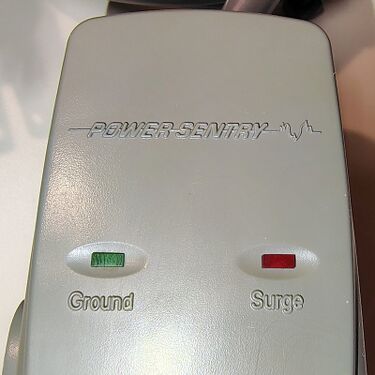 PowerSentry branding together with Ground and Surge status indicators.
 -
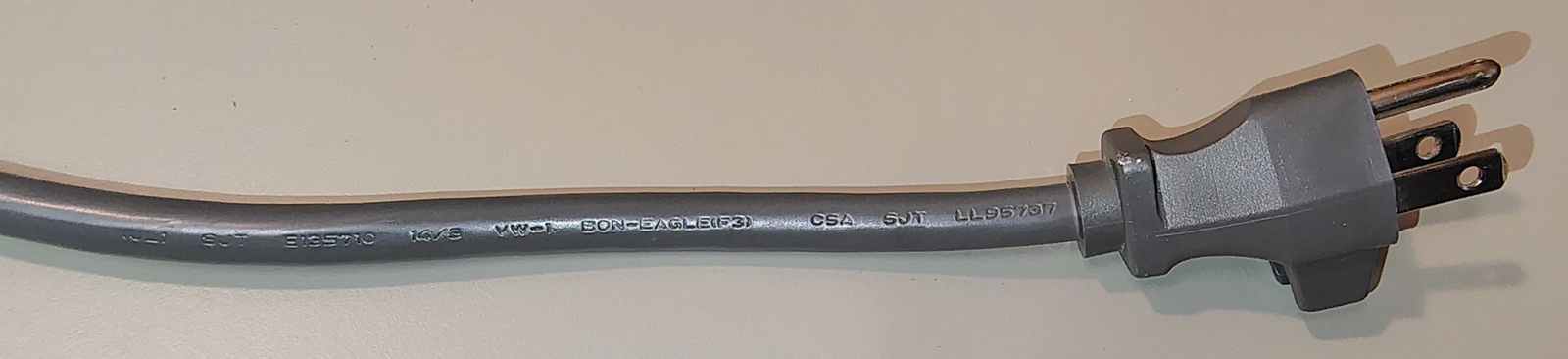 Power cord and attachment plug showing the integrated cord-retention clip and molded plug assembly.
 -
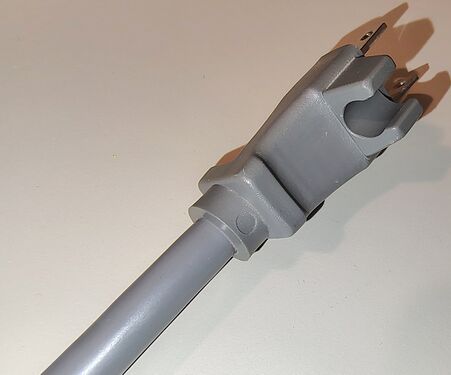 Close-up view of the integrated cord-retention clip incorporated into the attachment plug.
 -
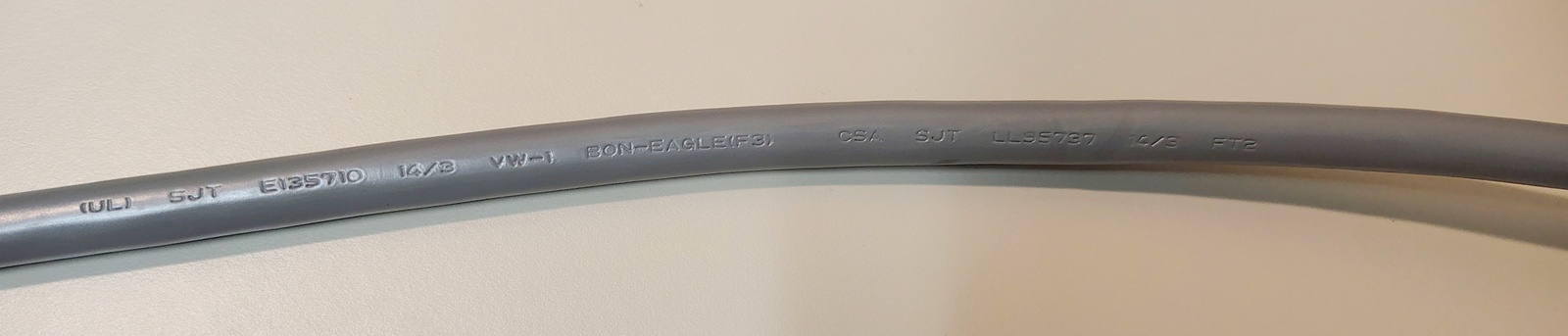 Power cord markings showing SJT construction, 14 AWG conductors, and approval information.
 -
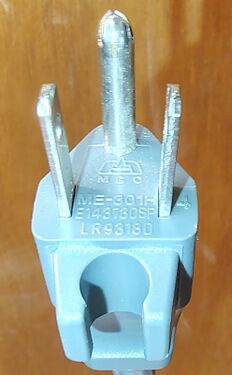 Attachment plug detail showing integrated cord-retention clip and approval markings.


Date Codes
The underside incorporates molded date wheels identifying manufacture on 20 October 2002.
An adjacent UL hologram label is marked "08/02" and provides additional manufacturing-period evidence consistent with late-2002 production.
Together these markings establish the documented example as a late-2002 product manufactured shortly before the earliest surviving PowerSentry product catalogs currently preserved by Archive.org.
-
Molded date wheels indicating manufacture on 20 October 2002.
Condition Upon Acquisition
The documented example was acquired as part of a lot purchased through eBay at an approximate cost of $8.
Light dust accumulation, minor scuffs, and normal cosmetic wear were visible prior to cleaning and documentation. The enclosure, indicators, power switch, circuit breaker, cord-management features, attachment plug, and receptacles appeared intact.
No evidence of melting, overheating, deformation, or significant damage was observed during external examination.

Functional Testing
The documented example was connected to utility power and evaluated for basic operation.
The Ground indicator illuminated when connected to a properly grounded receptacle. The Surge indicator also illuminated, indicating that surge-suppression circuitry remained active at the time of testing.
The push-button switch operated normally. Pressing the button caused it to mechanically latch in the depressed ON position, energizing the outlet bank. Pressing the button again released the mechanism, returning it to the raised OFF position and removing power from the outlets.
Testing with a receptacle tester confirmed correct hot, neutral, and ground wiring. No open-ground, open-neutral, reversed-polarity, or related wiring faults were detected.
The push-button latching arrangement differs from the rocker-style switches documented on all previously documented surge protectors preserved by the OldSurge Archive.
-
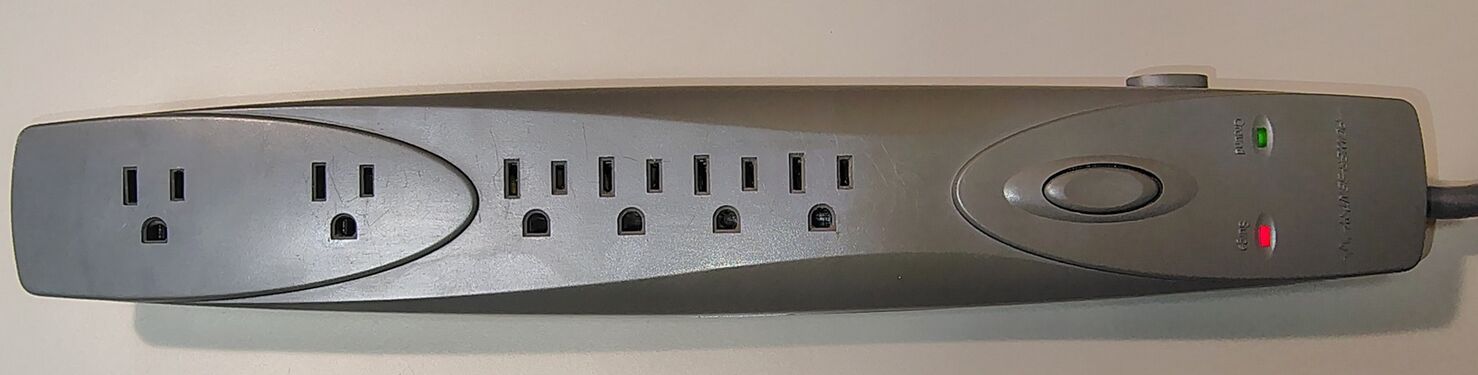 PowerSentry 626 connected to utility power with Ground and Surge indicators illuminated.
 -
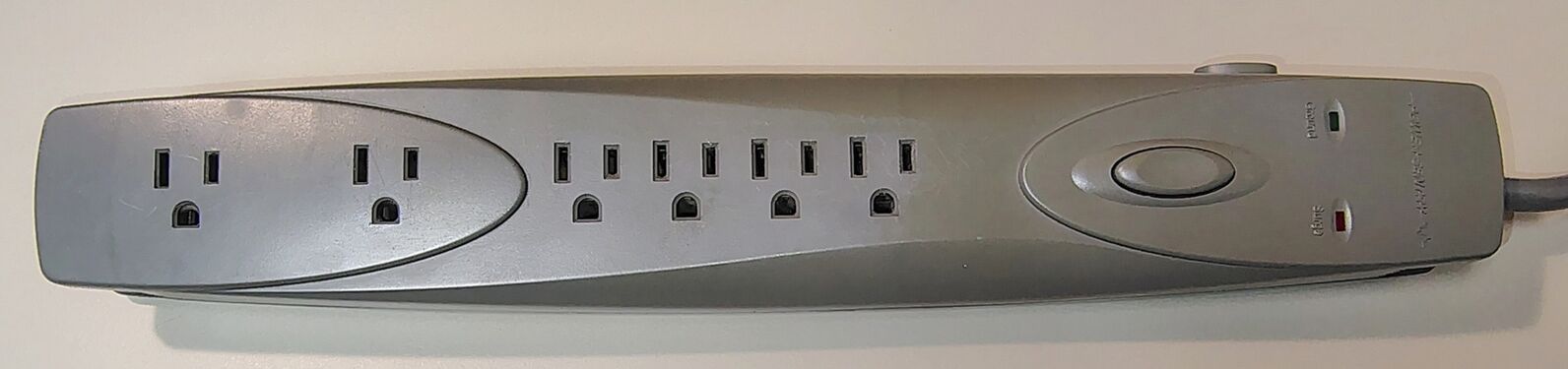 PowerSentry 626 connected to AC power with the push-button switch in the OFF position.
 -
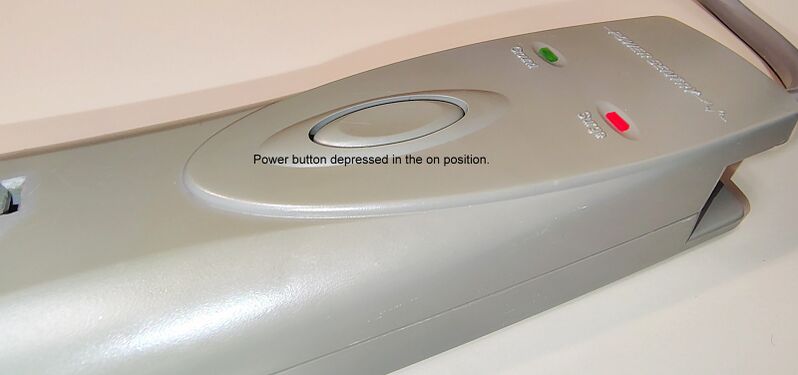 Push-button switch depressed and mechanically latched in the ON position.
 -
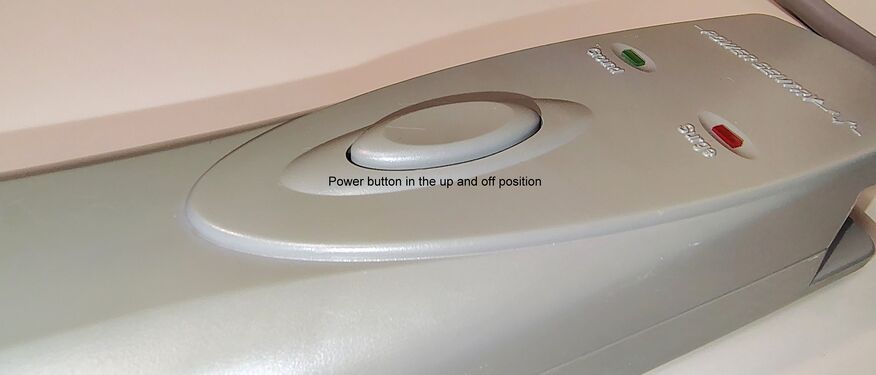 Push-button switch in the raised OFF position following release of power to the outlet bank.
 -
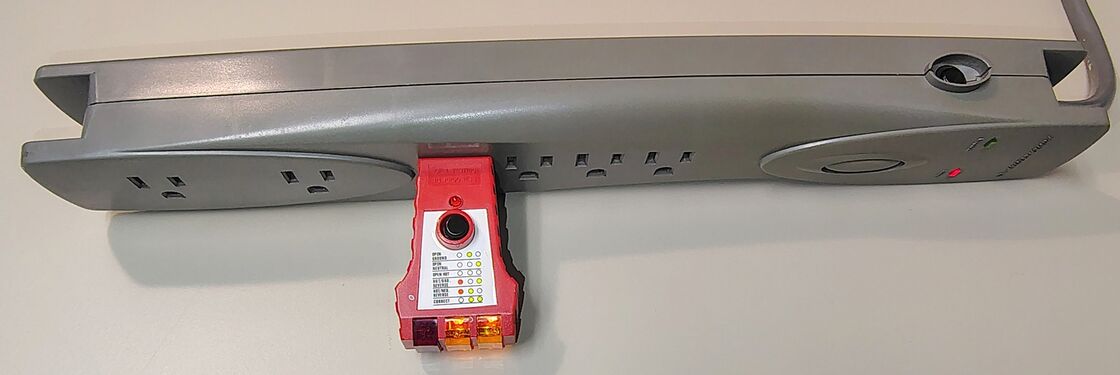 Outlet tester indicating correct wiring polarity and grounding.


Teardown
The enclosure is secured using multiple Phillips-head screws and can be opened non-destructively for examination.
Power distribution is accomplished through stamped brass conductors extending the length of the enclosure and supplying all seven receptacles.
Surge-protection circuitry is concentrated on a compact printed circuit board mounted near the cord-entry section. The board interfaces with the Ground and Surge indicators, the push-button latching switch assembly, and the resettable circuit breaker.
Compared with the APC SurgeArrest Professional PRO7 family documented elsewhere in the archive, the PowerSentry 626 utilizes a substantially smaller and simpler surge-suppression assembly while retaining a comparable outlet count and a 330-volt suppressed-voltage rating.
The upper housing incorporates molded outlet barriers, structural reinforcement ribs, cord-management structures, and support features for the outlet assembly. The internal mold includes the marking "UP057-7B-1," the significance of which has not been determined.
No evidence of overheating, melted components, catastrophic failure, or severe internal contamination was observed during examination.
-
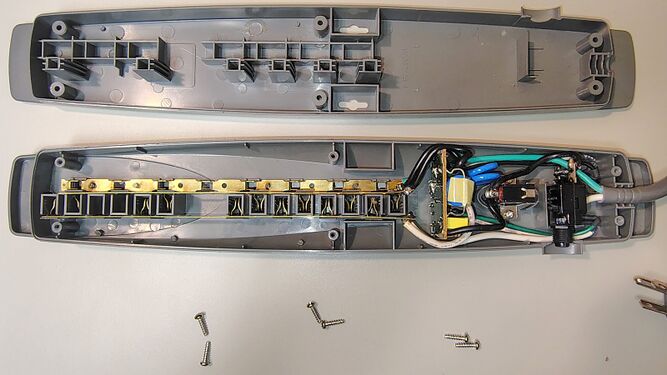 Overall internal construction following removal of the enclosure cover.
 -
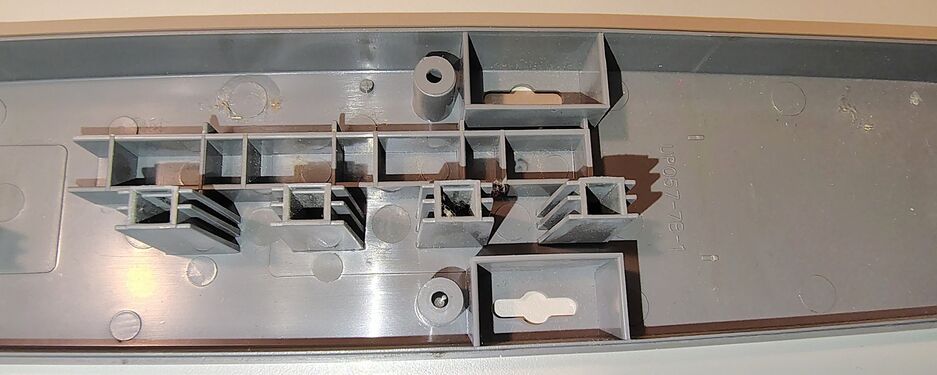 Upper enclosure showing outlet barriers and structural reinforcement features.
 -
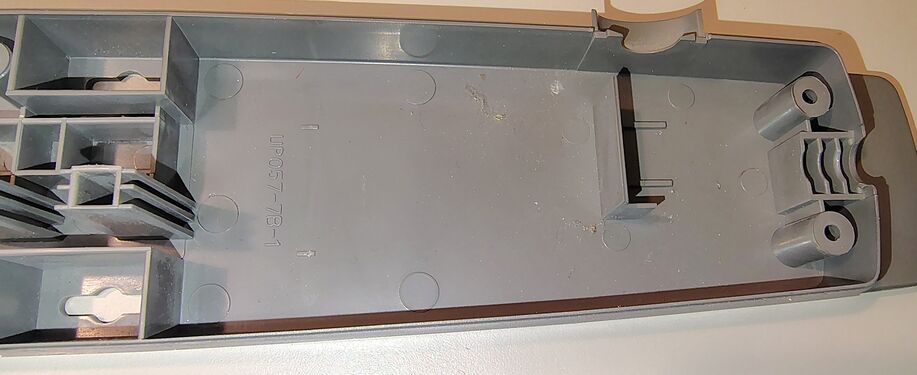 Upper housing detail showing cord-management and control-section structures.
 -
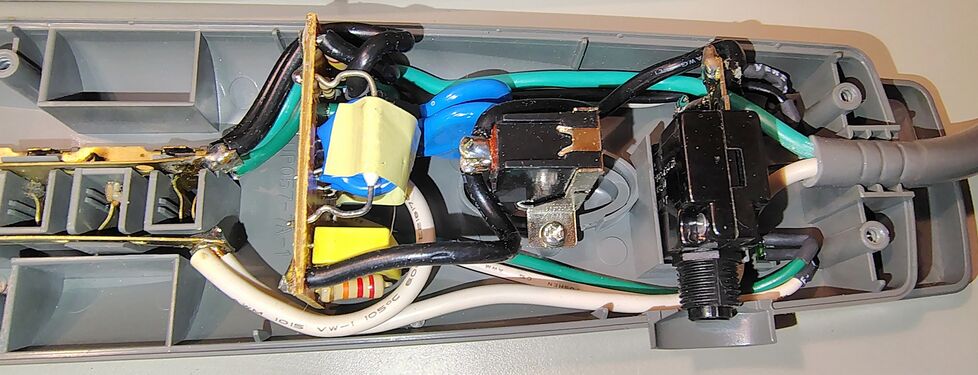 Cord-entry area showing the suppression board, circuit breaker, and push-button switch assembly.


Comparison Notes
The attached power cord utilizes SJT 14/3 construction and was manufactured by Bon-Eagle. Similar Bon-Eagle cord assemblies have been documented on multiple other surge protectors preserved by the OldSurge Archive, illustrating the common use of third-party cord suppliers within the power-protection industry.
The PowerSentry 626 is the first surge protector documented by the archive that utilizes a mechanically-latching push-button switch rather than a rocker switch. The design is functionally similar but operates using a push-on / push-off mechanism more commonly associated with certain lighting controls and power-distribution equipment.
The PowerSentry 626 demonstrates a markedly different design philosophy from the contemporaneous APC SurgeArrest Professional PRO7 series. While both products provide seven grounded outlets and a 330-volt suppression rating, the PowerSentry achieves this using a significantly smaller suppression assembly and simpler internal construction.
Recall Information
If applicable.
Historical References
Historical advertisements, archived manufacturer literature, patents, magazine references, archived web captures, and period specifications.

Notes
- Additional observations.
- Manufacturing details.
- Interesting findings.