Radio Shack 61-2140 Appliance Surge Protector: Difference between revisions
No edit summary |
No edit summary |
||
| (7 intermediate revisions by the same user not shown) | |||
| Line 8: | Line 8: | ||
== Overview == | == Overview == | ||
The '''Radio Shack 61-2140 Appliance Surge Protector''' is a six-outlet surge protector marketed for appliance and consumer-electronics applications. | |||
The | The documented example was assembled in Mexico and represents the first Radio Shack-branded surge protector documented by the OldSurge Archive. | ||
Unlike most surge protectors documented by the archive, the documented example was found to be non-functional during testing and did not pass utility power to connected devices. | |||
Despite its relatively simple appearance, examination revealed a 14 AWG power cord, resettable circuit breaker, metal bus bars, and dedicated surge-suppression circuitry. | |||
| Line 32: | Line 33: | ||
* Model: 61-2140 | * Model: 61-2140 | ||
* Device Type: Appliance Surge Protector | * Device Type: Appliance Surge Protector | ||
* Outlets: 6 grounded outlets | * Outlets: 6 grounded outlets | ||
* | * Country of Origin: Assembled in Mexico | ||
* Length: | * Length: | ||
| Line 47: | Line 46: | ||
** Approximately 1.0 in (2.5 cm) | ** Approximately 1.0 in (2.5 cm) | ||
* Electrical Rating: 120 VAC, 15 A, 60 Hz | |||
* Surge Suppression Rating: 449 joules | |||
* Power Cord Length: Approximately 4 ft (1.2 m) | |||
* Power Cord Type: SJT | |||
* Conductors: 14/3 | |||
* Cord Manufacturer: Bon-Eagle | |||
* UL File Number (Cord): E135710 | |||
* CSA File Number (Cord): LL95787 | |||
* UL File Number: E60255 | |||
== Weight == | == Weight == | ||
The documented example weighs approximately 12.4 oz (352 g). | |||
The relatively low weight is consistent with the device's compact dimensions, four-foot power cord, and small surge-suppression assembly. | |||
[[File:surge_RadioShack_61-2140_weight_01.jpg|center|600px|Radio Shack 61-2140 on a digital scale.]] | |||
== Physical Description == | == Physical Description == | ||
The Radio Shack 61-2140 utilizes a | The Radio Shack 61-2140 utilizes a narrow rectangular enclosure consisting of a six-outlet receptacle section and a widened control section incorporating a rocker switch. | ||
All six outlets are arranged in a standard receptacle orientation and are spaced evenly along the length of the device. | All six outlets are arranged in a standard receptacle orientation and are spaced evenly along the length of the device. The design does not provide transformer-spaced outlets and large plug-in adapters may obstruct adjacent receptacles. | ||
Unlike several | Unlike several surge protectors documented elsewhere in the archive, the 61-2140 does not incorporate telephone-line protection, coaxial protection, status indicators, wiring diagnostics, or other advanced features. | ||
The enclosure is relatively compact, measuring approximately 10.38 inches (26.4 cm) in length while standing approximately 1 inch (2.5 cm) tall. | |||
The | The underside incorporates four keyhole-style mounting slots that support wall or surface mounting. | ||
A separate resettable circuit breaker is located at the cord-entry end of the enclosure. | |||
The | The attached four-foot power cord is marked as SJT-type cable with 14 AWG conductors manufactured by Bon-Eagle. | ||
Unlike many surge protectors intended for office and computer applications, the Radio Shack 61-2140 utilizes a conventional straight attachment plug rather than a right-angle design. | |||
At 12.4 oz (352 g), the Radio Shack 61-2140 is among the lighter surge protectors documented by the OldSurge Archive. | |||
== Product Gallery == | == Product Gallery == | ||
| Line 83: | Line 98: | ||
File:surge_RadioShack_61-2140_side_cordonright_01.jpg|Right-side profile view. | File:surge_RadioShack_61-2140_side_cordonright_01.jpg|Right-side profile view. | ||
File:surge_RadioShack_61-2140_end_oppositecordentry_01.jpg|Outlet-end profile showing the six-outlet arrangement. | File:surge_RadioShack_61-2140_end_oppositecordentry_01.jpg|Outlet-end profile showing the six-outlet arrangement. | ||
File:surge_RadioShack_61-2140_end_cordentry_01.jpg|Cord-entry end showing the resettable circuit breaker and power-cord strain relief. | |||
File:surge_RadioShack_61-2140_bottom_overview_01.jpg|Underside view showing labels, mounting slots, enclosure fasteners, and attached power cord. | |||
File:surge_RadioShack_61-2140_bottom_data_01.jpg|Product information label identifying the Radio Shack 61-2140 Appliance Surge Protector and its electrical ratings. | |||
File:surge_RadioShack_61-2140_bottom_switcharea_01.jpg|Switch-end underside detail showing mounting provisions and enclosure construction. | |||
File:surge_RadioShack_61-2140_plugandcord_01.jpg|Attached four-foot power cord and grounded attachment plug. | |||
File:surge_RadioShack_61-2140_plugdetail_01.jpg|Close-up of the grounded attachment plug showing approval markings. | |||
File:surge_RadioShack_61-2140_corddetail_01.jpg|Power-cord markings showing SJT construction, conductor size, and manufacturer information. | |||
</gallery> | </gallery> | ||
| Line 89: | Line 111: | ||
== Testing == | == Testing == | ||
The documented example was tested for basic electrical operation. | |||
During testing, the device failed to provide power to any outlet. | |||
A receptacle tester connected to the surge protector failed to illuminate, indicating that utility power was not being passed through the device. | |||
No additional troubleshooting was performed to determine the specific cause of the failure. | No additional electrical troubleshooting was performed to determine the specific cause of the failure. | ||
The documented example is therefore considered non-functional as documented. | The documented example is therefore considered non-functional as documented. | ||
<gallery mode="packed" heights="250"> | <gallery mode="packed" heights="250"> | ||
File:surge_RadioShack_61-2140_testing_01.jpg|Documented example connected to power during testing. | |||
File:surge_RadioShack_61-2140_testing_groundingpolarity_01.jpg|Outlet tester indicating no power output during testing. | |||
</gallery> | </gallery> | ||
== Condition Upon Acquisition == | |||
The documented example was acquired for preservation and documentation by the OldSurge Archive. | |||
The enclosure exhibited light dust accumulation, minor cosmetic wear, and moderate discoloration of the attached power cord consistent with age and prior use. | |||
No significant cracking, melting, or external physical damage was observed. | |||
The unit was cleaned prior to detailed documentation and photography. | |||
[[File:surge_RadioShack_61-2140_beforecleaning_01.jpg|center|600px|Documented example prior to cleaning and photography.]] | |||
== Teardown == | |||
The Radio Shack 61-2140 Appliance Surge Protector is assembled using multiple screws and can be opened non-destructively. | |||
Following removal of the enclosure screws, the housing separated into upper and lower sections containing the outlet-contact assemblies, power-distribution bus bars, grounding strip, rocker switch, resettable circuit breaker, and surge-suppression circuitry. | |||
During disassembly, the grounding strip became partially displaced from the lower housing. Inspection revealed that one end of the strip was no longer adequately retained by the molded plastic locating features intended to secure it within the enclosure. | |||
The cause of the condition could not be determined. No obvious cracking or external damage was observed prior to opening the enclosure. | |||
The upper housing incorporates molded outlet barriers, mounting features, structural reinforcing ribs, and provisions for wall mounting. A circular blue inspection mark containing the characters "00" and "24" was observed inside the upper housing. The purpose of the marking could not be determined but may represent a quality-control, assembly, or manufacturing-inspection identifier. | |||
The | The lower housing contains the outlet-contact assemblies, power-distribution bus bars, power-cord termination, grounding strip, rocker switch, resettable circuit breaker, and surge-suppression circuitry. | ||
Inspection revealed a compact surge-suppression circuit board mounted near the cord-entry section of the enclosure. Compared with several surge protectors documented elsewhere in the archive, the suppression circuitry occupies only a small portion of the enclosure interior, with most of the enclosure volume dedicated to the outlet-contact assemblies, bus bars, switch assembly, and circuit breaker. | |||
Visible suppression and filtering components include: | |||
* Two metal-oxide varistors (MOVs) | |||
* Film capacitor | |||
* Protective component associated with the surge-suppression circuitry | |||
* Resettable circuit breaker | |||
* Rocker power switch | |||
Inspection revealed yellow residue around several circuit-breaker terminals and electrical connections. The origin and significance of the residue could not be determined during visual examination. | |||
Despite the documented failure to pass power, no obvious signs of overheating, charring, melted insulation, burned conductors, or catastrophic component failure were identified during visual inspection. | |||
The cause of the documented electrical failure remains unknown, as no troubleshooting beyond basic functional testing, disassembly, and visual inspection was performed. | |||
<gallery mode="packed" heights="250"> | <gallery mode="packed" heights="250"> | ||
File:surge_RadioShack_61-2140_teardown_open_01.jpg|61-2140 opened following removal of the enclosure screws. | |||
File:surge_RadioShack_61-2140_teardown_screws_01.jpg|Enclosure screws removed during disassembly. | |||
File:surge_RadioShack_61-2140_teardown_toppanel_outletsend_01.jpg|Upper housing interior showing outlet barriers and structural details. | |||
File:surge_RadioShack_61-2140_teardown_toppanel_switchend_01.jpg|Switch-end interior of the upper housing showing mounting features for the rocker switch and circuit breaker. | |||
File:surge_RadioShack_61-2140_teardown_groundingbar_up_01.jpg|Grounding strip displaced during disassembly. | |||
File:surge_RadioShack_61-2140_teardown_bottompanel_busbars_01.jpg|Lower housing showing outlet contacts, bus bars, wiring, and suppression circuitry. | |||
File:surge_RadioShack_61-2140_teardown_bottompanel_switch_01.jpg|Switch-end interior showing the rocker switch, circuit breaker, and power-cord wiring. | |||
File:surge_RadioShack_61-2140_teardown_circuitboard_detail_01.jpg|Surge-suppression circuit board showing MOVs, filtering components, and power-cord connections. | |||
File:surge_RadioShack_61-2140_teardown_circuitboard_detail_02.jpg|Close-up of the surge-suppression circuit board, circuit breaker terminals, and power-cord wiring. | |||
</gallery> | </gallery> | ||
== Notable Characteristics == | == Notable Characteristics == | ||
* First Radio Shack-branded surge protector documented by the OldSurge Archive | |||
* First Radio | * First documented artifact assembled in Mexico | ||
* First documented artifact | * 449-joule surge-suppression rating | ||
* | * Four-foot 14 AWG power cord | ||
* Non-functional upon testing | * Non-functional upon testing | ||
* Cause of failure undetermined following visual inspection | |||
Latest revision as of 16:29, 28 September 2026
Radio Shack 61-2140 Appliance Surge Protector

Overview
The Radio Shack 61-2140 Appliance Surge Protector is a six-outlet surge protector marketed for appliance and consumer-electronics applications.
The documented example was assembled in Mexico and represents the first Radio Shack-branded surge protector documented by the OldSurge Archive.
Unlike most surge protectors documented by the archive, the documented example was found to be non-functional during testing and did not pass utility power to connected devices.
Despite its relatively simple appearance, examination revealed a 14 AWG power cord, resettable circuit breaker, metal bus bars, and dedicated surge-suppression circuitry.
Documented Example
- OldSurge ID: OS-0016
- Manufacturer: Radio Shack
- Model: 61-2140
- Country of Origin: Mexico
Specifications
- Manufacturer: Radio Shack
- Model: 61-2140
- Device Type: Appliance Surge Protector
- Outlets: 6 grounded outlets
- Country of Origin: Assembled in Mexico
- Length:
- Approximately 10.38 in (26.4 cm)
- Width:
- Approximately 2.0 in (5.1 cm) at the switch section
- Approximately 1.75 in (4.4 cm) at the outlet section
- Height:
- Approximately 1.0 in (2.5 cm)
- Electrical Rating: 120 VAC, 15 A, 60 Hz
- Surge Suppression Rating: 449 joules
- Power Cord Length: Approximately 4 ft (1.2 m)
- Power Cord Type: SJT
- Conductors: 14/3
- Cord Manufacturer: Bon-Eagle
- UL File Number (Cord): E135710
- CSA File Number (Cord): LL95787
- UL File Number: E60255
Weight
The documented example weighs approximately 12.4 oz (352 g).
The relatively low weight is consistent with the device's compact dimensions, four-foot power cord, and small surge-suppression assembly.

Physical Description
The Radio Shack 61-2140 utilizes a narrow rectangular enclosure consisting of a six-outlet receptacle section and a widened control section incorporating a rocker switch.
All six outlets are arranged in a standard receptacle orientation and are spaced evenly along the length of the device. The design does not provide transformer-spaced outlets and large plug-in adapters may obstruct adjacent receptacles.
Unlike several surge protectors documented elsewhere in the archive, the 61-2140 does not incorporate telephone-line protection, coaxial protection, status indicators, wiring diagnostics, or other advanced features.
The enclosure is relatively compact, measuring approximately 10.38 inches (26.4 cm) in length while standing approximately 1 inch (2.5 cm) tall.
The underside incorporates four keyhole-style mounting slots that support wall or surface mounting.
A separate resettable circuit breaker is located at the cord-entry end of the enclosure.
The attached four-foot power cord is marked as SJT-type cable with 14 AWG conductors manufactured by Bon-Eagle.
Unlike many surge protectors intended for office and computer applications, the Radio Shack 61-2140 utilizes a conventional straight attachment plug rather than a right-angle design.
At 12.4 oz (352 g), the Radio Shack 61-2140 is among the lighter surge protectors documented by the OldSurge Archive.
Product Gallery
-
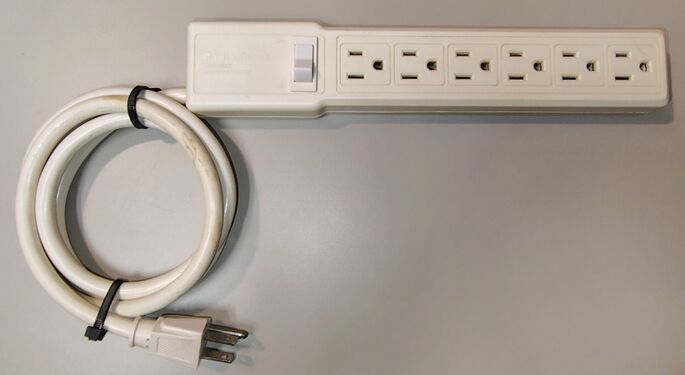 Overall view of the documented Radio Shack 61-2140 surge protector.
 -
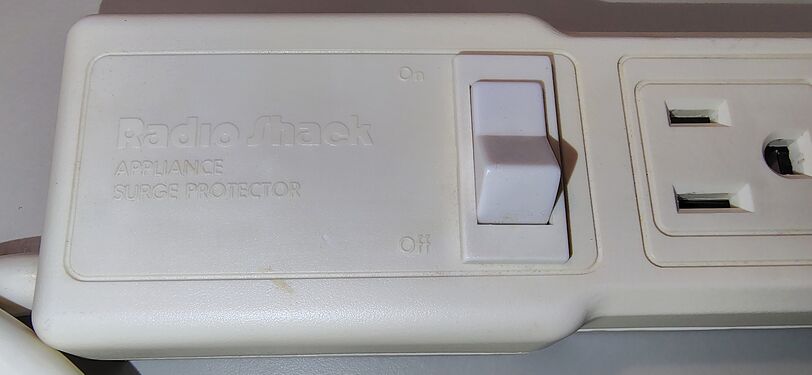 Radio Shack branding and illuminated rocker-switch section.
 -
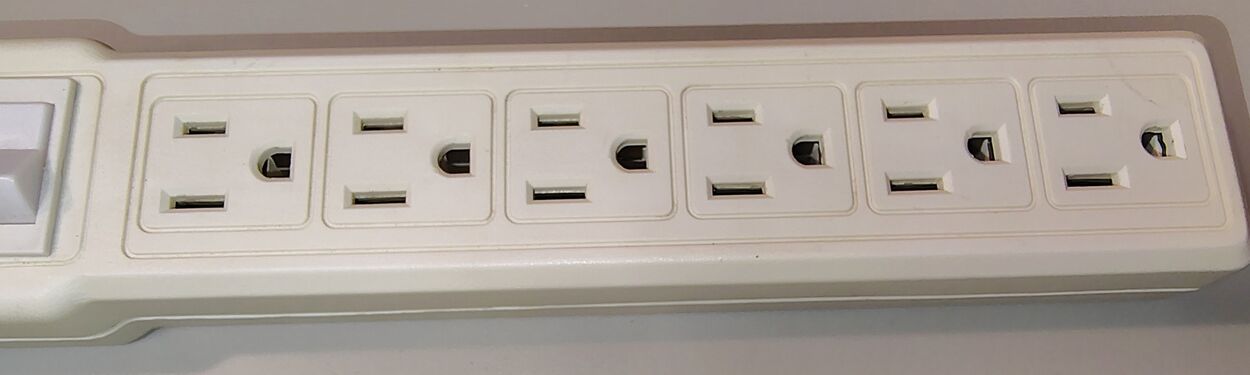 Outlet section showing six grounded receptacles arranged in a standard receptacle orientation.
 -
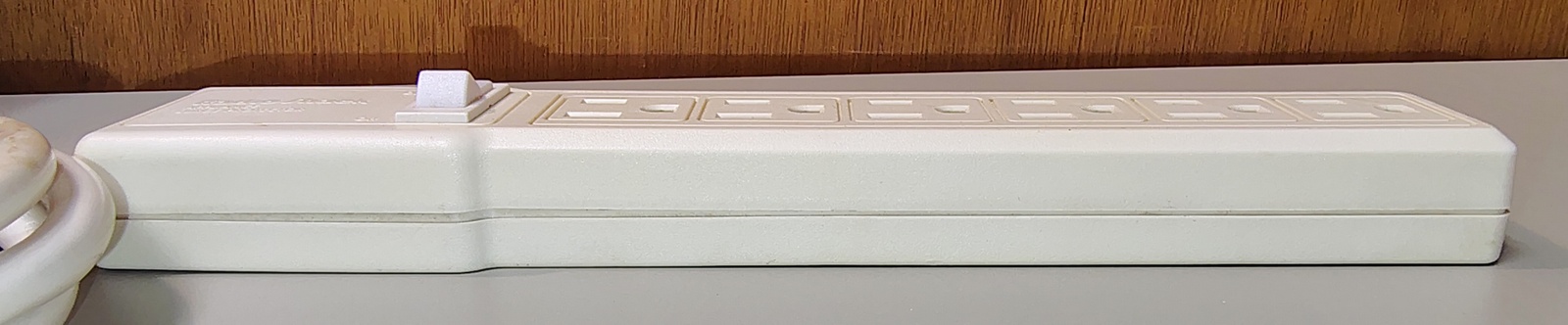 Left-side profile view.
 -
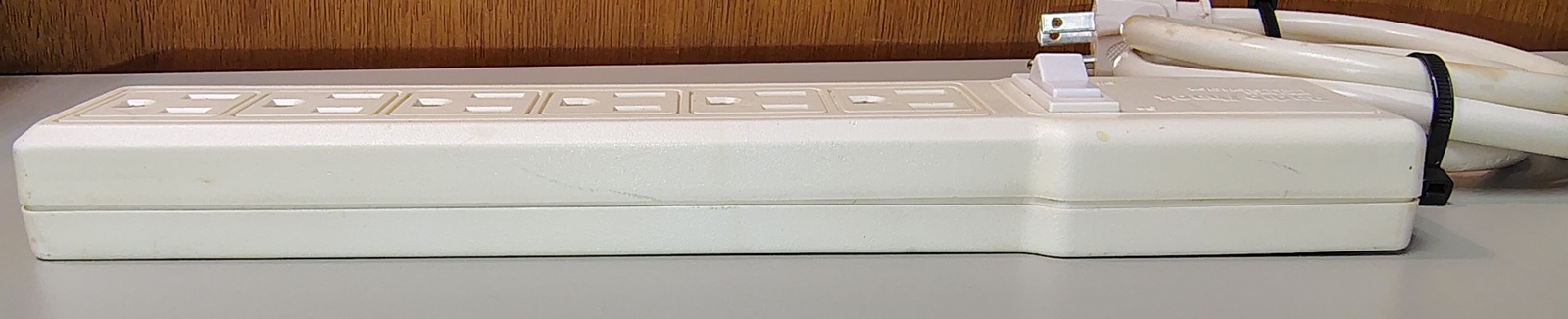 Right-side profile view.
 -
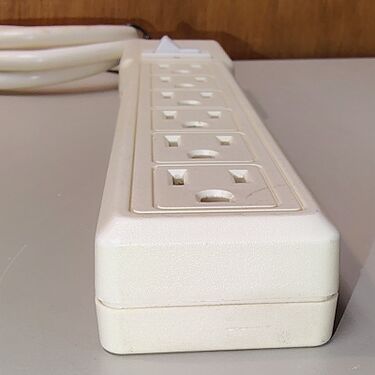 Outlet-end profile showing the six-outlet arrangement.
 -
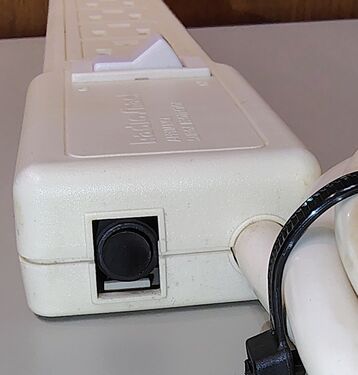 Cord-entry end showing the resettable circuit breaker and power-cord strain relief.
 -
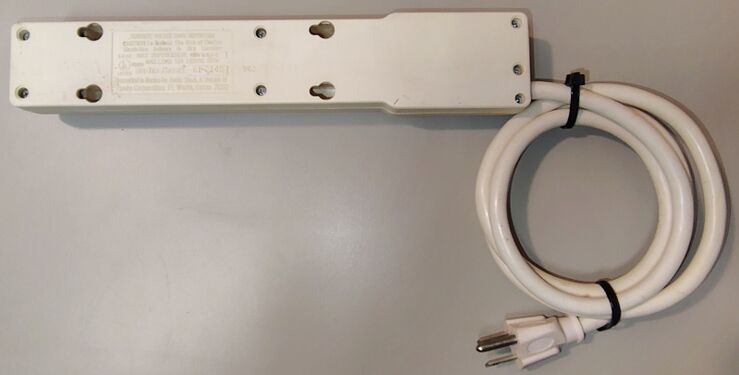 Underside view showing labels, mounting slots, enclosure fasteners, and attached power cord.
 -
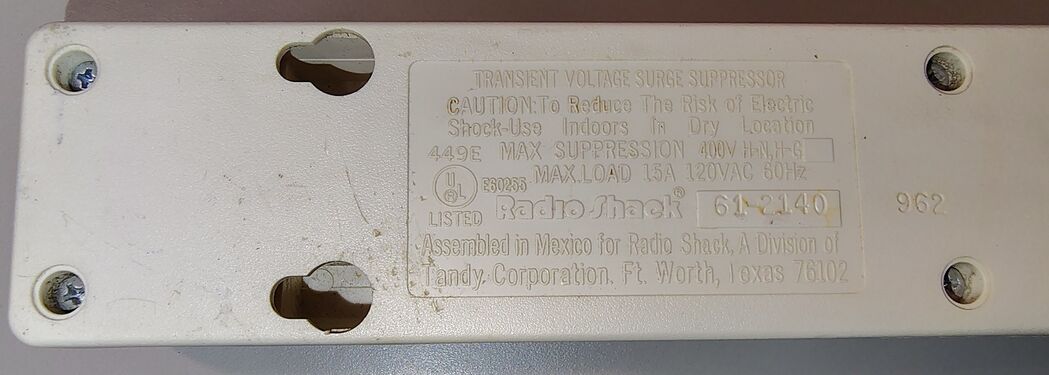 Product information label identifying the Radio Shack 61-2140 Appliance Surge Protector and its electrical ratings.
 -
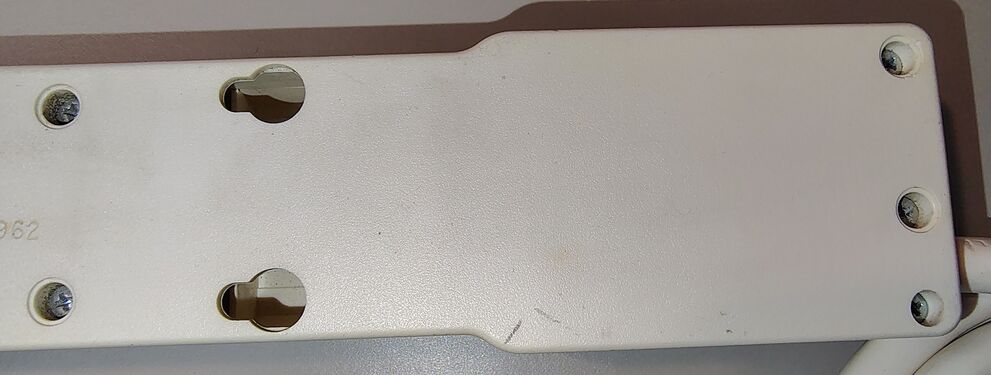 Switch-end underside detail showing mounting provisions and enclosure construction.
 -
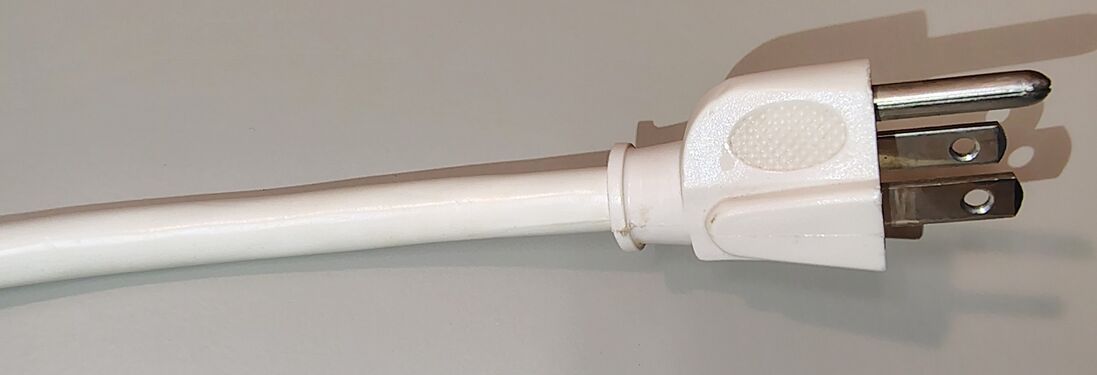 Attached four-foot power cord and grounded attachment plug.
 -
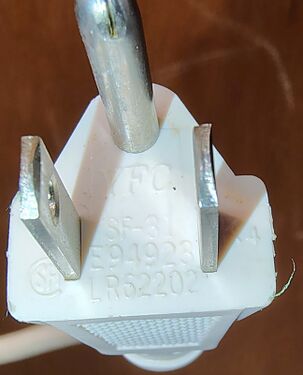 Close-up of the grounded attachment plug showing approval markings.
 -
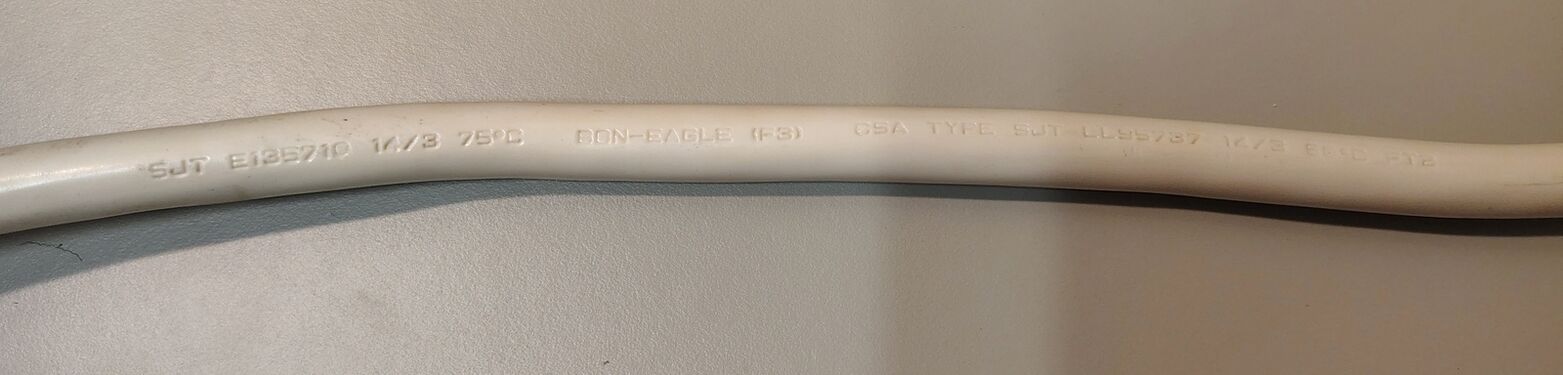 Power-cord markings showing SJT construction, conductor size, and manufacturer information.


Testing
The documented example was tested for basic electrical operation.
During testing, the device failed to provide power to any outlet.
A receptacle tester connected to the surge protector failed to illuminate, indicating that utility power was not being passed through the device.
No additional electrical troubleshooting was performed to determine the specific cause of the failure.
The documented example is therefore considered non-functional as documented.
-
 Documented example connected to power during testing.
 -
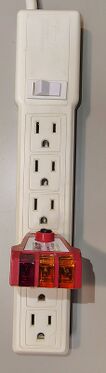 Outlet tester indicating no power output during testing.


Condition Upon Acquisition
The documented example was acquired for preservation and documentation by the OldSurge Archive.
The enclosure exhibited light dust accumulation, minor cosmetic wear, and moderate discoloration of the attached power cord consistent with age and prior use.
No significant cracking, melting, or external physical damage was observed.
The unit was cleaned prior to detailed documentation and photography.

Teardown
The Radio Shack 61-2140 Appliance Surge Protector is assembled using multiple screws and can be opened non-destructively.
Following removal of the enclosure screws, the housing separated into upper and lower sections containing the outlet-contact assemblies, power-distribution bus bars, grounding strip, rocker switch, resettable circuit breaker, and surge-suppression circuitry.
During disassembly, the grounding strip became partially displaced from the lower housing. Inspection revealed that one end of the strip was no longer adequately retained by the molded plastic locating features intended to secure it within the enclosure.
The cause of the condition could not be determined. No obvious cracking or external damage was observed prior to opening the enclosure.
The upper housing incorporates molded outlet barriers, mounting features, structural reinforcing ribs, and provisions for wall mounting. A circular blue inspection mark containing the characters "00" and "24" was observed inside the upper housing. The purpose of the marking could not be determined but may represent a quality-control, assembly, or manufacturing-inspection identifier.
The lower housing contains the outlet-contact assemblies, power-distribution bus bars, power-cord termination, grounding strip, rocker switch, resettable circuit breaker, and surge-suppression circuitry.
Inspection revealed a compact surge-suppression circuit board mounted near the cord-entry section of the enclosure. Compared with several surge protectors documented elsewhere in the archive, the suppression circuitry occupies only a small portion of the enclosure interior, with most of the enclosure volume dedicated to the outlet-contact assemblies, bus bars, switch assembly, and circuit breaker.
Visible suppression and filtering components include:
- Two metal-oxide varistors (MOVs)
- Film capacitor
- Protective component associated with the surge-suppression circuitry
- Resettable circuit breaker
- Rocker power switch
Inspection revealed yellow residue around several circuit-breaker terminals and electrical connections. The origin and significance of the residue could not be determined during visual examination.
Despite the documented failure to pass power, no obvious signs of overheating, charring, melted insulation, burned conductors, or catastrophic component failure were identified during visual inspection.
The cause of the documented electrical failure remains unknown, as no troubleshooting beyond basic functional testing, disassembly, and visual inspection was performed.
-
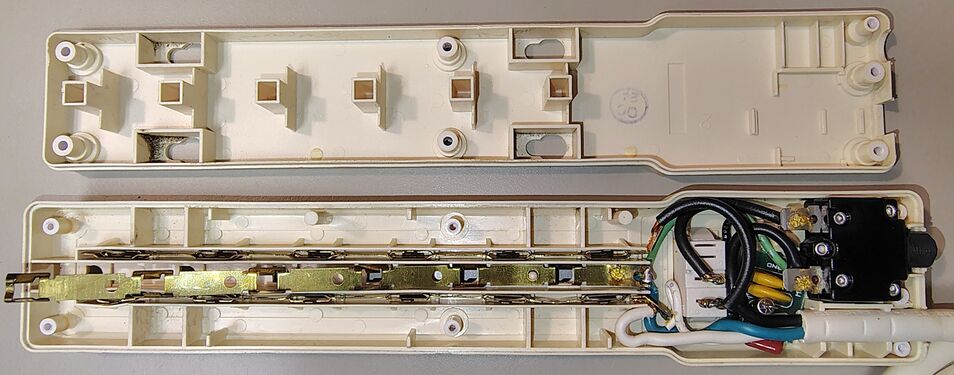 61-2140 opened following removal of the enclosure screws.
 -
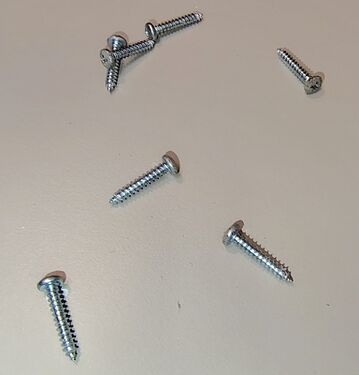 Enclosure screws removed during disassembly.
 -
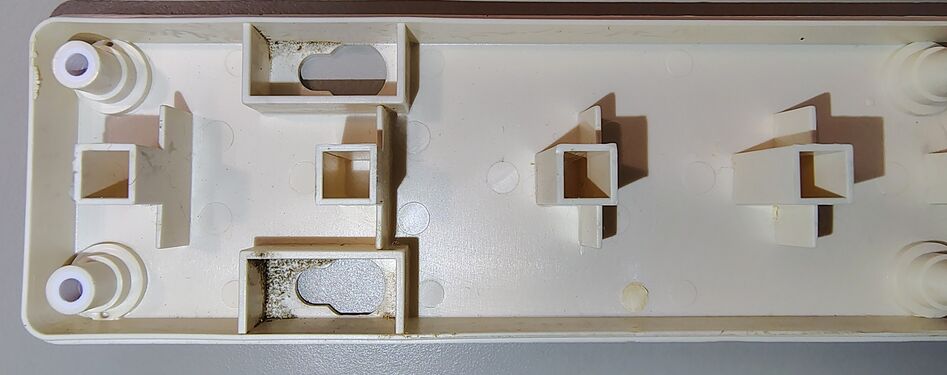 Upper housing interior showing outlet barriers and structural details.
 -
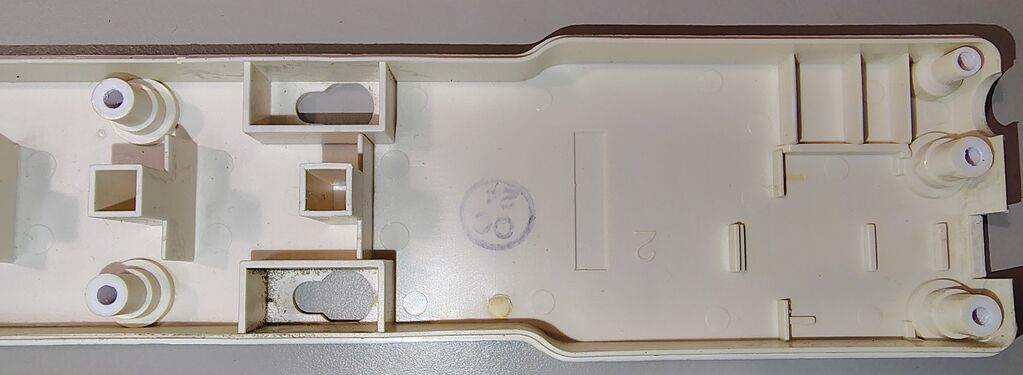 Switch-end interior of the upper housing showing mounting features for the rocker switch and circuit breaker.
 -
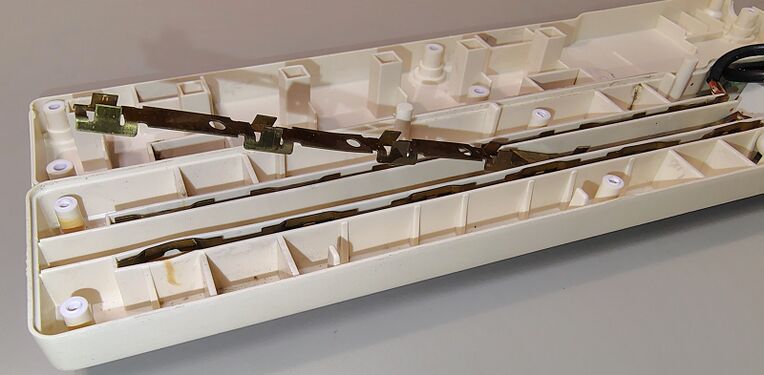 Grounding strip displaced during disassembly.
 -
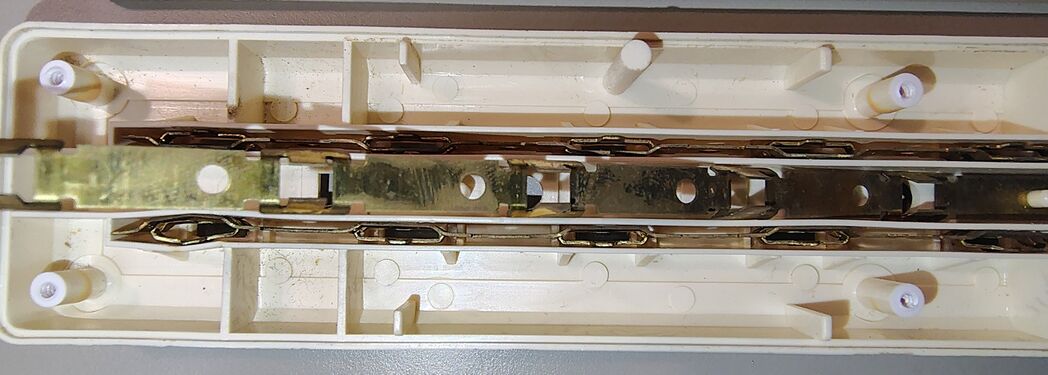 Lower housing showing outlet contacts, bus bars, wiring, and suppression circuitry.
 -
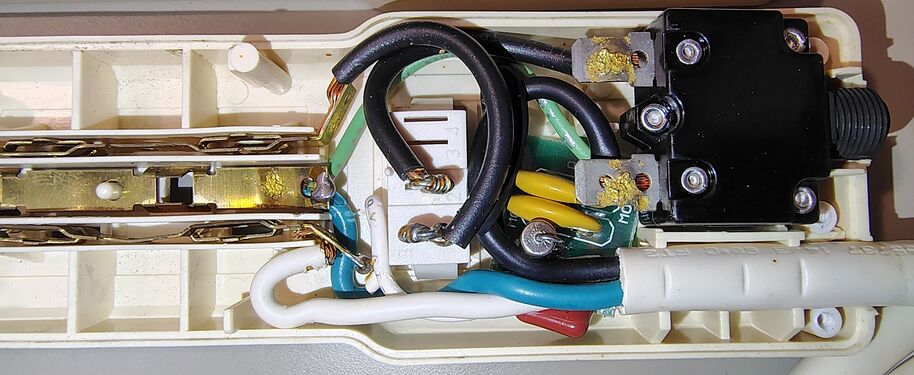 Switch-end interior showing the rocker switch, circuit breaker, and power-cord wiring.
 -
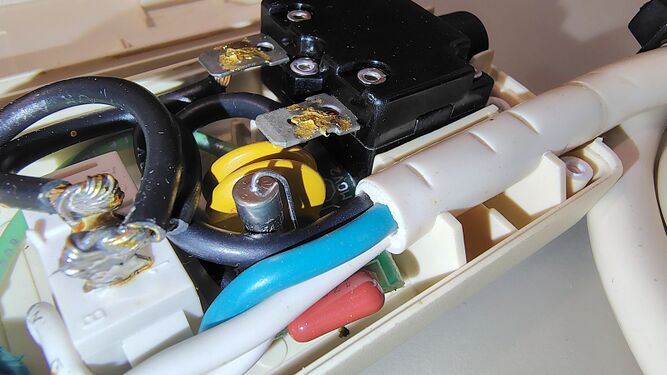 Surge-suppression circuit board showing MOVs, filtering components, and power-cord connections.
 -
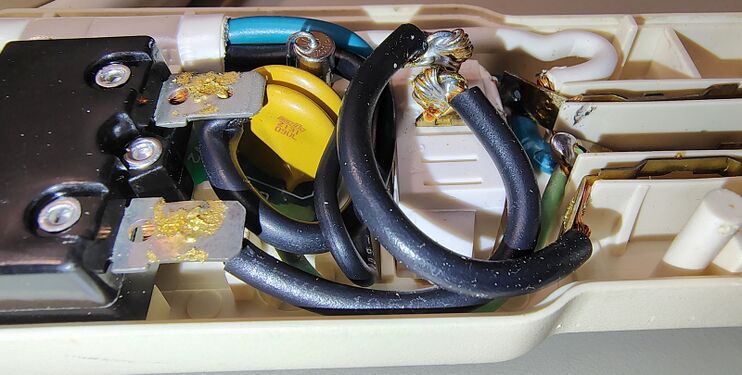 Close-up of the surge-suppression circuit board, circuit breaker terminals, and power-cord wiring.


Notable Characteristics
- First Radio Shack-branded surge protector documented by the OldSurge Archive
- First documented artifact assembled in Mexico
- 449-joule surge-suppression rating
- Four-foot 14 AWG power cord
- Non-functional upon testing
- Cause of failure undetermined following visual inspection